%20--%3e%3csvg%20version='1.0'%20id='Layer_1'%20xmlns='http://www.w3.org/2000/svg'%20xmlns:xlink='http://www.w3.org/1999/xlink'%20x='0px'%20y='0px'%20viewBox='0%200%20755.52%20814.35'%20style='enable-background:new%200%200%20755.52%20814.35;'%20xml:space='preserve'%3e%3cstyle%20type='text/css'%3e%20.st0{fill:%231ae5ce;stroke:%231ae5ce;stroke-width:7;stroke-miterlimit:10;}%20.st1{fill:%23FFFFFF;stroke:%231ae5ce;stroke-width:7;stroke-miterlimit:10;}%20.st2{fill:%231ae5ce;stroke:%23FFFFFF;stroke-width:7;stroke-miterlimit:10;}%20.st3{fill:%23FFFFFF;stroke:%23FFFFFF;stroke-width:6;stroke-miterlimit:10;}%20%3c/style%3e%3cg%20id='Dark_Logo_00000159431215648494653180000015900878925932721032_'%3e%3cpath%20id='shield_00000152259091539869183100000001926543869452564382_'%20class='st0'%20d='M711.13,173.42%20c-3.37-49.07-38.92-44.9-75.96-52.18c-67.4-13.25-130.47-34.47-192.36-63.92c-22.48-10.7-41.88-25.74-65.05-26.28%20c-23.17,0.54-42.58,15.59-65.05,26.28c-61.89,29.45-124.95,50.68-192.36,63.92c-37.04,7.28-72.59,3.11-75.96,52.18%20c-1.55,22.6,0.34,46.4,1.05,68.92c5.99,190.78,52.91,345.39,206.27,466.46c29.71,23.46,74.51,55.8,108.84,70.75%20c5.99,2.61,11.7,3.73,17.21,3.75c5.51-0.02,11.22-1.14,17.21-3.75c34.33-14.95,79.12-47.3,108.84-70.75%20c153.37-121.07,200.28-275.68,206.27-466.46C710.79,219.82,712.68,196.02,711.13,173.42z'/%3e%3cpath%20id='magnifyingglass_00000073685934697636024790000000342567780940956808_'%20class='st1'%20d='M648.78,624.21l-96.64-104.65%20c34.89-40.63,55.98-93.46,55.98-151.21c0-128.27-103.98-232.24-232.24-232.24S143.63,240.08,143.63,368.35%20s103.98,232.24,232.24,232.24c48.87,0,94.21-15.11,131.62-40.89l97.18,105.24c11.25,12.18,30.24,12.93,42.42,1.69l0,0%20C659.27,655.38,660.03,636.39,648.78,624.21z'/%3e%3ccircle%20id='ellipse_00000129904010550392394720000017056154833629780114_'%20class='st2'%20cx='375.87'%20cy='368.35'%20r='181.21'/%3e%3cpath%20id='dollarsign_00000057140127156649725250000003772530148495155891_'%20class='st3'%20d='M362.91,492.03v-23.91%20c0-2.01-1.58-3.69-3.59-3.77c-18.49-0.78-37.12-5.4-49.4-11.83c-1.75-0.92-2.53-3.01-1.76-4.84l5.87-13.89%20c0.86-2.02,3.23-2.88,5.2-1.89c12.94,6.52,30.45,11.44,49.18,11.44c26.02,0,43.6-12.73,43.6-30.43c0-17.08-14.29-27.63-41.4-36.95%20c-37.37-12.42-60.46-26.7-60.46-53.72c0-24.97,20.29-44.11,52.22-49.51c1.8-0.31,3.11-1.89,3.11-3.72v-24.35%20c0-2.09,1.69-3.78,3.78-3.78h15.16c2.09,0,3.78,1.69,3.78,3.78v22.71c0,2.01,1.58,3.67,3.58,3.77c17.85,0.92,30.88,4.75,40.61,9.1%20c1.92,0.86,2.79,3.09,1.94,5.01l-6.08,13.6c-0.85,1.91-3.09,2.77-4.99,1.91c-8.37-3.8-22.38-8.95-42.75-8.95%20c-28.21,0-38.84,14.28-38.84,26.7c0,16.15,13.56,24.22,45.44,35.4c37.74,13.04,56.79,29.19,56.79,56.82%20c0,23.85-19.05,46.23-54.78,52.3c-1.8,0.31-3.11,1.89-3.11,3.72v25.28c0,2.09-1.69,3.78-3.78,3.78h-15.53%20C364.6,495.81,362.91,494.12,362.91,492.03z'/%3e%3c/g%3e%3c/svg%3e)
CT Abdomen/Pelvis with contrast Diagnostic Imaging
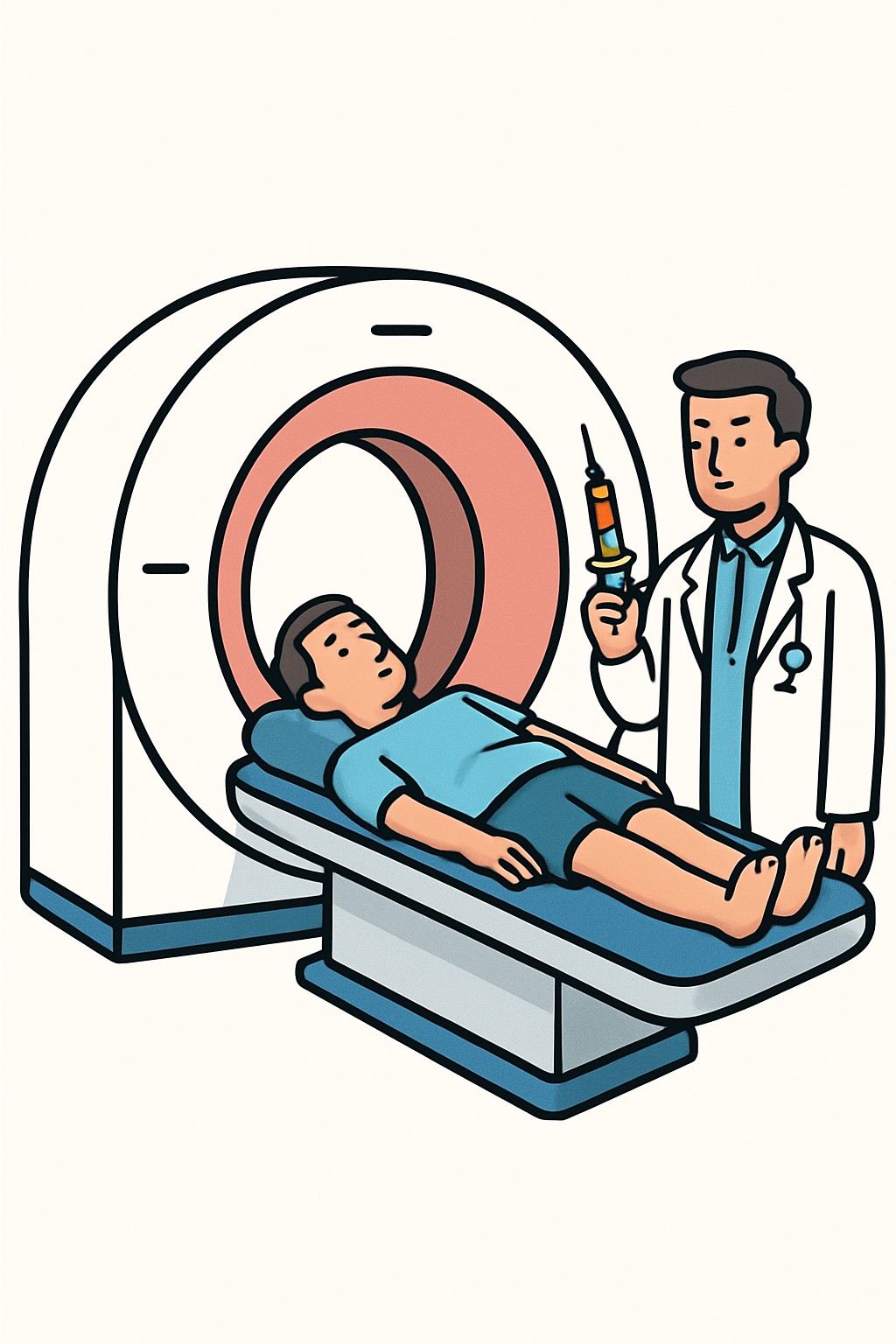
A CT Abdomen/Pelvis with contrast is an imaging test that uses X-rays and a computer to create detailed pictures of the belly and pelvic areas.
Overview
A CT Abdomen/Pelvis with contrast is an imaging test that uses X-rays and a computer to create detailed pictures of the belly and pelvic areas. Iodinated contrast is given through an IV to make blood vessels and organs easier to see. This scan helps find causes of pain, infection, bleeding, or blockage and can help monitor injuries, tumors, or treatment response. The exam is usually quick and does not require recovery time for most people.
Also known as: CT A/P with contrast, Contrast-enhanced CT abdomen and pelvis, Abdominal and pelvic CT with contrast
Preparation & Next Steps
Everything you need to know before and after your procedure
Before Care
- Bring your imaging order, photo ID, and any prior relevant imaging or reports.
- Tell the staff about all allergies, especially any past reactions to contrast.
- Share recent kidney function results if available; some centers request these before contrast.
- Follow the facility’s fasting instructions; many ask for no solid food for a few hours before the scan.
- Drink water ahead of time unless you were told otherwise.
- Ask about medicines; some people receive special instructions for metformin or other drugs.
- Wear comfortable clothing without metal; leave jewelry and valuables at home.
- Arrive early for check-in, screening questions, and IV placement.
- Inform the team about possible pregnancy or if you are breastfeeding.
- Confirm whether oral contrast is needed and when to arrive if it must be taken before the scan.
After Care
- You can usually return to normal activities and diet unless the facility gave other instructions.
- Drink fluids after the scan unless you were told otherwise.
- Keep the small bandage over the IV site for a few hours and watch for redness, swelling, or pain.
- Mild warmth or a metallic taste from contrast should fade quickly.
- Contact a clinician if you notice rash, itching, swelling, trouble breathing, fever, or very low urine output.
- Follow any medicine-specific instructions you were given (for example, metformin).
- Know how and when results will be shared; many reports post to the patient portal within a few days.
- Keep copies of your imaging report for your records and future visits.
Clinical Information
Important medical details about this procedure
Indications
- Unexplained abdominal or pelvic pain
- Suspected appendicitis or diverticulitis
- Bowel obstruction or perforation
- Kidney stones or urinary tract problems
- Infection or abscess
- Trauma to the abdomen or pelvis
- Cancer detection, staging, or follow-up
- Unexplained fever or weight loss
- Vascular issues such as aneurysm or bleeding
- Postoperative complications
Alternatives
- Ultrasound of the abdomen or pelvis
- MRI abdomen/pelvis (with or without contrast)
- Non-contrast CT when appropriate
- Abdominal X-ray series for basic evaluation
- Watchful waiting with clinical follow-up
- Laboratory tests and targeted imaging
Risks
- Radiation exposure from the CT scan
- Allergic reaction to iodinated contrast
- Contrast leaking under the skin at the IV site (extravasation)
- Temporary warmth, flushing, or metallic taste during injection
- Effects on kidney function in some people
- Thyroid flare in people with uncontrolled hyperthyroidism
- Incidental findings that may lead to more tests
Contraindications
- Known severe allergy to iodinated contrast
- Significant kidney impairment without safeguards
- Pregnancy unless benefits clearly outweigh risks
- Uncontrolled hyperthyroidism
Recovery Timeline
What to expect during your recovery
Most people resume normal activities right after the scan. Minor bruising or soreness at the IV site may last a day or two.
Typical Range
Same day
Return to Work
Same day
Recovery Milestones
Resume usual daily activities
Drink fluids as allowed and monitor IV site
Bruising or tenderness at IV site improves
Review results via portal or with your clinician
Frequently Asked Questions
Common questions and expert answers about this procedure
What is the contrast and why is it used?
What is the contrast and why is it used?
Iodinated contrast is a clear liquid given through an IV. It highlights blood vessels and organs so the CT images show more detail.
How long does the scan take?
How long does the scan take?
The scan itself is often 5–10 minutes. With check-in, screening, IV placement, and possible oral contrast, the visit may take 30–90 minutes.
Will I feel anything when the contrast is injected?
Will I feel anything when the contrast is injected?
Many people feel a brief warm sensation or a metallic taste. These feelings usually pass in under a minute.
Can I eat or drink before the exam?
Can I eat or drink before the exam?
Centers often ask for no solid food for a few hours before contrast CT. Water is commonly allowed. Follow the instructions from your imaging site.
What if I have kidney disease or take metformin?
What if I have kidney disease or take metformin?
The team may review your kidney function and give medicine instructions. In some cases, timing or alternatives are considered.
Is the radiation exposure high?
Is the radiation exposure high?
CT uses more radiation than plain X-rays. Imaging teams use the lowest dose that still produces quality images.
Can I have this scan if I am pregnant?
Can I have this scan if I am pregnant?
CT may be avoided during pregnancy unless clearly needed. Ultrasound or MRI is often considered first.
Will I get oral contrast too?
Will I get oral contrast too?
Some centers use oral contrast to outline the bowel. If needed, you may drink it before the scan or when you arrive.
References
Medical literature and sources