%20--%3e%3csvg%20version='1.0'%20id='Layer_1'%20xmlns='http://www.w3.org/2000/svg'%20xmlns:xlink='http://www.w3.org/1999/xlink'%20x='0px'%20y='0px'%20viewBox='0%200%20755.52%20814.35'%20style='enable-background:new%200%200%20755.52%20814.35;'%20xml:space='preserve'%3e%3cstyle%20type='text/css'%3e%20.st0{fill:%231ae5ce;stroke:%231ae5ce;stroke-width:7;stroke-miterlimit:10;}%20.st1{fill:%23FFFFFF;stroke:%231ae5ce;stroke-width:7;stroke-miterlimit:10;}%20.st2{fill:%231ae5ce;stroke:%23FFFFFF;stroke-width:7;stroke-miterlimit:10;}%20.st3{fill:%23FFFFFF;stroke:%23FFFFFF;stroke-width:6;stroke-miterlimit:10;}%20%3c/style%3e%3cg%20id='Dark_Logo_00000159431215648494653180000015900878925932721032_'%3e%3cpath%20id='shield_00000152259091539869183100000001926543869452564382_'%20class='st0'%20d='M711.13,173.42%20c-3.37-49.07-38.92-44.9-75.96-52.18c-67.4-13.25-130.47-34.47-192.36-63.92c-22.48-10.7-41.88-25.74-65.05-26.28%20c-23.17,0.54-42.58,15.59-65.05,26.28c-61.89,29.45-124.95,50.68-192.36,63.92c-37.04,7.28-72.59,3.11-75.96,52.18%20c-1.55,22.6,0.34,46.4,1.05,68.92c5.99,190.78,52.91,345.39,206.27,466.46c29.71,23.46,74.51,55.8,108.84,70.75%20c5.99,2.61,11.7,3.73,17.21,3.75c5.51-0.02,11.22-1.14,17.21-3.75c34.33-14.95,79.12-47.3,108.84-70.75%20c153.37-121.07,200.28-275.68,206.27-466.46C710.79,219.82,712.68,196.02,711.13,173.42z'/%3e%3cpath%20id='magnifyingglass_00000073685934697636024790000000342567780940956808_'%20class='st1'%20d='M648.78,624.21l-96.64-104.65%20c34.89-40.63,55.98-93.46,55.98-151.21c0-128.27-103.98-232.24-232.24-232.24S143.63,240.08,143.63,368.35%20s103.98,232.24,232.24,232.24c48.87,0,94.21-15.11,131.62-40.89l97.18,105.24c11.25,12.18,30.24,12.93,42.42,1.69l0,0%20C659.27,655.38,660.03,636.39,648.78,624.21z'/%3e%3ccircle%20id='ellipse_00000129904010550392394720000017056154833629780114_'%20class='st2'%20cx='375.87'%20cy='368.35'%20r='181.21'/%3e%3cpath%20id='dollarsign_00000057140127156649725250000003772530148495155891_'%20class='st3'%20d='M362.91,492.03v-23.91%20c0-2.01-1.58-3.69-3.59-3.77c-18.49-0.78-37.12-5.4-49.4-11.83c-1.75-0.92-2.53-3.01-1.76-4.84l5.87-13.89%20c0.86-2.02,3.23-2.88,5.2-1.89c12.94,6.52,30.45,11.44,49.18,11.44c26.02,0,43.6-12.73,43.6-30.43c0-17.08-14.29-27.63-41.4-36.95%20c-37.37-12.42-60.46-26.7-60.46-53.72c0-24.97,20.29-44.11,52.22-49.51c1.8-0.31,3.11-1.89,3.11-3.72v-24.35%20c0-2.09,1.69-3.78,3.78-3.78h15.16c2.09,0,3.78,1.69,3.78,3.78v22.71c0,2.01,1.58,3.67,3.58,3.77c17.85,0.92,30.88,4.75,40.61,9.1%20c1.92,0.86,2.79,3.09,1.94,5.01l-6.08,13.6c-0.85,1.91-3.09,2.77-4.99,1.91c-8.37-3.8-22.38-8.95-42.75-8.95%20c-28.21,0-38.84,14.28-38.84,26.7c0,16.15,13.56,24.22,45.44,35.4c37.74,13.04,56.79,29.19,56.79,56.82%20c0,23.85-19.05,46.23-54.78,52.3c-1.8,0.31-3.11,1.89-3.11,3.72v25.28c0,2.09-1.69,3.78-3.78,3.78h-15.53%20C364.6,495.81,362.91,494.12,362.91,492.03z'/%3e%3c/g%3e%3c/svg%3e)
Ultrasound Abdomen (complete) Diagnostic Imaging
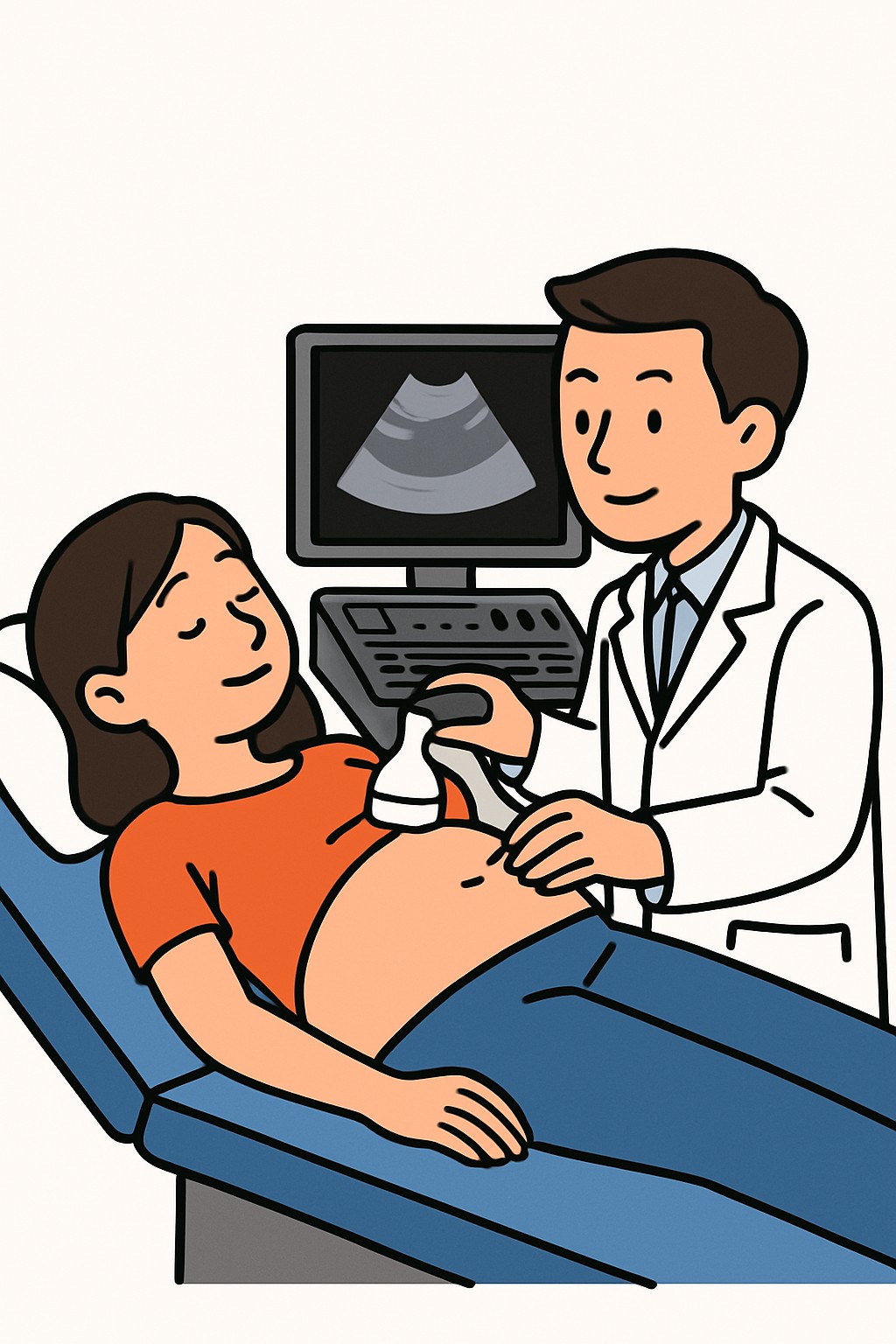
A complete abdominal ultrasound is an imaging test that uses sound waves to create pictures of organs in your abdomen.
Overview
A complete abdominal ultrasound is an imaging test that uses sound waves to create pictures of organs in your abdomen. It typically assesses the liver, gallbladder, bile ducts, pancreas, spleen, kidneys, and large blood vessels like the aorta. There is no ionizing radiation. Clinicians use it to look for causes of pain, swelling, abnormal blood tests, or other concerns. It can help detect gallstones, liver disease, kidney blockage, and other conditions, and may guide next steps such as labs or additional imaging.
Also known as: Complete abdominal ultrasound, Abdominal ultrasound, Ultrasound of abdomen
Preparation & Next Steps
Everything you need to know before and after your procedure
Before Care
- Expect to change into a gown or expose the abdomen; wear loose, two-piece clothing for easy access
- Many centers ask adults to avoid eating for 6–8 hours so the gallbladder is better seen; confirm instructions with the facility
- You may be allowed small sips of water for thirst or medicines; follow the facility’s policy
- Bring your photo ID, insurance card, and the imaging order or appointment details
- Carry a list of your current medicines, allergies, and any prior abdominal surgeries
- Arrive a little early to check in and complete paperwork
- If prior abdominal imaging exists, bring reports or share where and when it was done
- Ask the facility whether a full bladder is needed; most complete abdominal studies do not require one
After Care
- The gel is water-based and wipes off easily; normal skin care is usually fine
- Most people return to regular eating and activities right after the scan
- If breath-holding or probe pressure caused brief soreness, it typically fades quickly
- Results are read by a radiologist; reports usually go to your ordering clinician
- Use your patient portal or clinic contact to learn when results will be available
- Keep notes of any new or worsening symptoms to share with your clinician
- Bring the report to future appointments if you see other clinicians
- If skin irritation from gel appears, wash with mild soap and water and inform the facility if it persists
Clinical Information
Important medical details about this procedure
Indications
- Right upper quadrant or general abdominal pain
- Suspected gallstones or gallbladder inflammation
- Abnormal liver enzymes or known liver disease
- Jaundice or suspected bile duct blockage
- Kidney pain, stones, or urinary blockage
- Enlarged spleen
- Pulsatile abdominal mass or concern for aortic enlargement
- Follow-up of known cysts, masses, or prior imaging findings
Alternatives
- Targeted or limited ultrasound (for a focused area such as right upper quadrant)
- CT scan of the abdomen and pelvis
- MRI of the abdomen with or without contrast
- Nuclear medicine HIDA scan for gallbladder function
- Blood tests and watchful waiting when appropriate
Risks
- Temporary discomfort from probe pressure
- Skin irritation from gel in rare cases
- Incomplete visualization due to bowel gas or body habitus
- Incidental findings that may lead to more tests
- False negatives or false positives that may require follow-up imaging
Contraindications
- Few absolute contraindications
- Open wounds or bulky dressings over the area may limit imaging
- Inability to cooperate with breath-holding or positioning
- Severe pain preventing gentle probe pressure
Recovery Timeline
What to expect during your recovery
There is no medical recovery period for a standard abdominal ultrasound. Most people resume normal activities and diet right away.
Typical Range
Same day
Return to Work
Same day
Recovery Milestones
Resume normal daily activities and diet
Review preliminary notes in the portal if available
Discuss the final report and next steps with your clinician
Frequently Asked Questions
Common questions and expert answers about this procedure
What does complete abdominal ultrasound mean?
What does complete abdominal ultrasound mean?
It is a survey of the major abdominal organs, usually including the liver, gallbladder, bile ducts, pancreas, spleen, kidneys, and the aorta.
Does an abdominal ultrasound use radiation?
Does an abdominal ultrasound use radiation?
No. It uses sound waves, not ionizing radiation.
How long does the exam take?
How long does the exam take?
Most studies take about 20–45 minutes, but time can vary by facility and the findings.
Do I need to fast before the test?
Do I need to fast before the test?
Many facilities ask adults to avoid eating for 6–8 hours to reduce bowel gas and better visualize the gallbladder. Check the instructions on your appointment reminder.
What conditions can it detect?
What conditions can it detect?
It commonly helps detect gallstones, gallbladder inflammation, liver disease, bile duct blockage, kidney stones or blockage, enlarged spleen, and aortic enlargement.
Will it find the cause of all abdominal pain?
Will it find the cause of all abdominal pain?
Not always. Some conditions are better assessed with CT, MRI, or other tests. The ultrasound results may guide next steps.
Can I drive afterward?
Can I drive afterward?
Yes. No sedation is used for a standard abdominal ultrasound.
When will I get results?
When will I get results?
A radiologist interprets the images and sends a report to the ordering clinician. Timing varies by facility and portal setup.
References
Medical literature and sources