%20--%3e%3csvg%20version='1.0'%20id='Layer_1'%20xmlns='http://www.w3.org/2000/svg'%20xmlns:xlink='http://www.w3.org/1999/xlink'%20x='0px'%20y='0px'%20viewBox='0%200%20755.52%20814.35'%20style='enable-background:new%200%200%20755.52%20814.35;'%20xml:space='preserve'%3e%3cstyle%20type='text/css'%3e%20.st0{fill:%231ae5ce;stroke:%231ae5ce;stroke-width:7;stroke-miterlimit:10;}%20.st1{fill:%23FFFFFF;stroke:%231ae5ce;stroke-width:7;stroke-miterlimit:10;}%20.st2{fill:%231ae5ce;stroke:%23FFFFFF;stroke-width:7;stroke-miterlimit:10;}%20.st3{fill:%23FFFFFF;stroke:%23FFFFFF;stroke-width:6;stroke-miterlimit:10;}%20%3c/style%3e%3cg%20id='Dark_Logo_00000159431215648494653180000015900878925932721032_'%3e%3cpath%20id='shield_00000152259091539869183100000001926543869452564382_'%20class='st0'%20d='M711.13,173.42%20c-3.37-49.07-38.92-44.9-75.96-52.18c-67.4-13.25-130.47-34.47-192.36-63.92c-22.48-10.7-41.88-25.74-65.05-26.28%20c-23.17,0.54-42.58,15.59-65.05,26.28c-61.89,29.45-124.95,50.68-192.36,63.92c-37.04,7.28-72.59,3.11-75.96,52.18%20c-1.55,22.6,0.34,46.4,1.05,68.92c5.99,190.78,52.91,345.39,206.27,466.46c29.71,23.46,74.51,55.8,108.84,70.75%20c5.99,2.61,11.7,3.73,17.21,3.75c5.51-0.02,11.22-1.14,17.21-3.75c34.33-14.95,79.12-47.3,108.84-70.75%20c153.37-121.07,200.28-275.68,206.27-466.46C710.79,219.82,712.68,196.02,711.13,173.42z'/%3e%3cpath%20id='magnifyingglass_00000073685934697636024790000000342567780940956808_'%20class='st1'%20d='M648.78,624.21l-96.64-104.65%20c34.89-40.63,55.98-93.46,55.98-151.21c0-128.27-103.98-232.24-232.24-232.24S143.63,240.08,143.63,368.35%20s103.98,232.24,232.24,232.24c48.87,0,94.21-15.11,131.62-40.89l97.18,105.24c11.25,12.18,30.24,12.93,42.42,1.69l0,0%20C659.27,655.38,660.03,636.39,648.78,624.21z'/%3e%3ccircle%20id='ellipse_00000129904010550392394720000017056154833629780114_'%20class='st2'%20cx='375.87'%20cy='368.35'%20r='181.21'/%3e%3cpath%20id='dollarsign_00000057140127156649725250000003772530148495155891_'%20class='st3'%20d='M362.91,492.03v-23.91%20c0-2.01-1.58-3.69-3.59-3.77c-18.49-0.78-37.12-5.4-49.4-11.83c-1.75-0.92-2.53-3.01-1.76-4.84l5.87-13.89%20c0.86-2.02,3.23-2.88,5.2-1.89c12.94,6.52,30.45,11.44,49.18,11.44c26.02,0,43.6-12.73,43.6-30.43c0-17.08-14.29-27.63-41.4-36.95%20c-37.37-12.42-60.46-26.7-60.46-53.72c0-24.97,20.29-44.11,52.22-49.51c1.8-0.31,3.11-1.89,3.11-3.72v-24.35%20c0-2.09,1.69-3.78,3.78-3.78h15.16c2.09,0,3.78,1.69,3.78,3.78v22.71c0,2.01,1.58,3.67,3.58,3.77c17.85,0.92,30.88,4.75,40.61,9.1%20c1.92,0.86,2.79,3.09,1.94,5.01l-6.08,13.6c-0.85,1.91-3.09,2.77-4.99,1.91c-8.37-3.8-22.38-8.95-42.75-8.95%20c-28.21,0-38.84,14.28-38.84,26.7c0,16.15,13.56,24.22,45.44,35.4c37.74,13.04,56.79,29.19,56.79,56.82%20c0,23.85-19.05,46.23-54.78,52.3c-1.8,0.31-3.11,1.89-3.11,3.72v25.28c0,2.09-1.69,3.78-3.78,3.78h-15.53%20C364.6,495.81,362.91,494.12,362.91,492.03z'/%3e%3c/g%3e%3c/svg%3e)
Removal of impacted ear wax (one or both) Ent Surgery
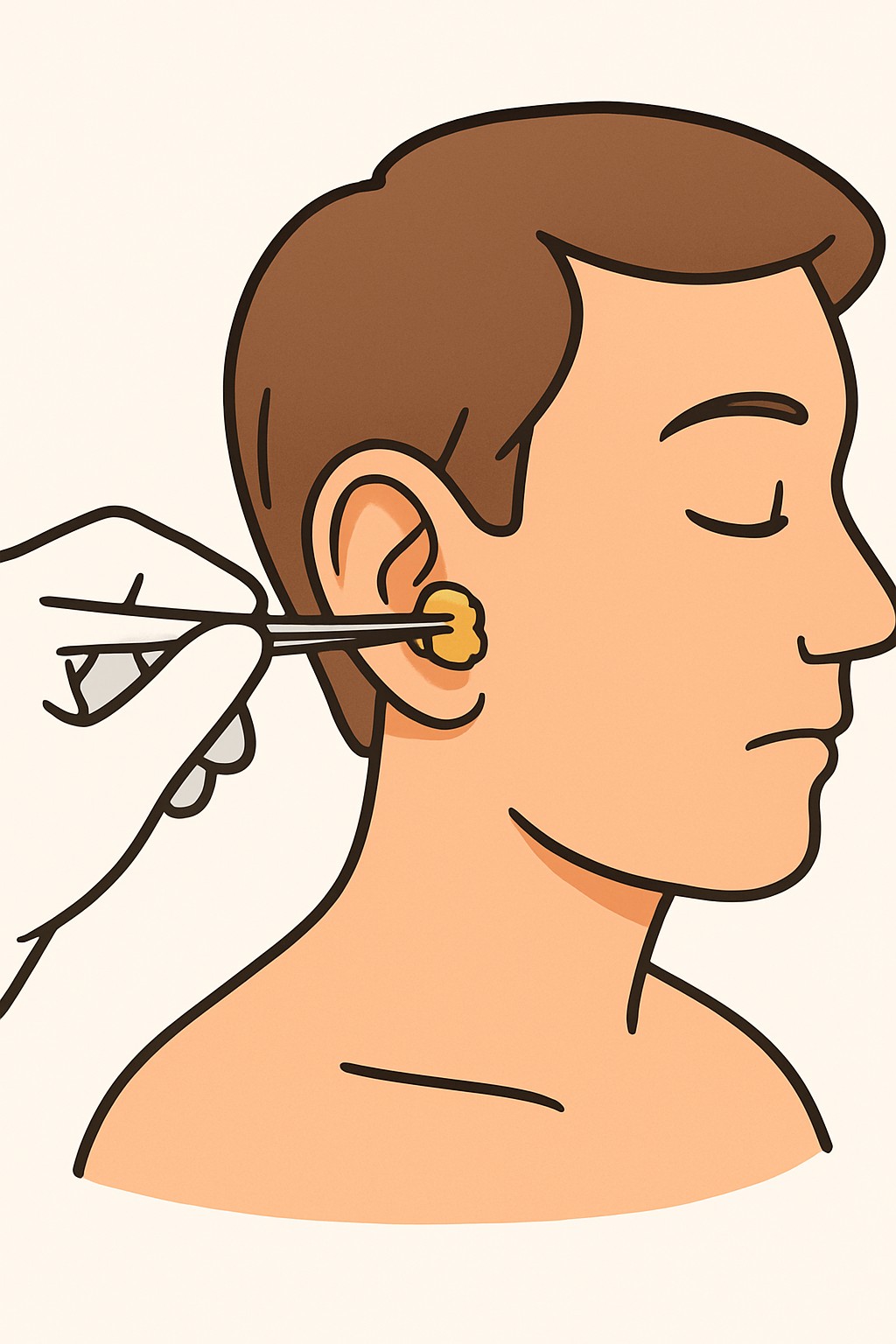
Removal of impacted ear wax is a clinical procedure to clear hardened wax that blocks the ear canal.
Overview
Removal of impacted ear wax is a clinical procedure to clear hardened wax that blocks the ear canal. A clinician looks in the ear with a lighted scope and removes the wax using gentle irrigation with water, suction, or small instruments. This procedure can be done for one ear or both during the same visit. Clearing the blockage can help relieve fullness, improve hearing, and allow a better view of the eardrum to check for other ear problems.
Also known as: Ear wax removal, Cerumen removal, Cerumen disimpaction
Preparation & Next Steps
Everything you need to know before and after your procedure
Before Care
- Do not insert cotton swabs, fingers, or objects into the ear before the visit
- Bring a list of symptoms, when they started, and what makes them better or worse
- Let the clinic know about prior ear surgery, ear tubes, eardrum perforation, or frequent ear infections
- Carry a list of all medicines and supplements, including blood thinners
- Remove hearing aids before the exam and bring them, their case, and extra batteries
- Ask the clinic if they prefer you to avoid ear drops before the appointment
- Plan for a brief visit; timing can vary based on how hard the wax is
- Arrange a ride if you tend to get dizzy with ear procedures
After Care
- Avoid placing cotton swabs or objects in the ear canal
- Keep the ear canal dry as advised, especially if irrigation was used
- Use any prescribed or recommended ear drops exactly as directed by your clinician
- Resume hearing aids when the ear feels comfortable and dry
- Expect temporary fullness, mild soreness, crackling, or brief dizziness to improve over hours
- Contact the clinic if you notice severe pain, fever, persistent or foul-smelling drainage, worsening hearing, intense ringing, or spinning sensation
- Schedule follow-up if wax tends to recur or if hearing concerns continue
- Protect ears from excessive water exposure and discuss swim plugs if you swim often
Clinical Information
Important medical details about this procedure
Indications
- Symptoms of ear blockage such as fullness, pressure, or decreased hearing
- Trouble hearing aids fit or feedback due to wax
- Ear pain, itching, or ringing related to wax buildup
- Chronic wax buildup that interferes with exams or treatment
- Before a hearing test when wax limits accuracy
Alternatives
- Observation if the wax is not causing symptoms
- Over-the-counter ear drops that soften wax (cerumenolytics)
- Home bulb-syringe irrigation kits when appropriate and safe
- Hearing aid cleaning and use of wax guards to reduce buildup
Risks
- Ear canal irritation, soreness, or small abrasions
- Temporary dizziness or nausea
- Minor bleeding
- Outer ear infection (otitis externa)
- Perforated eardrum
- Temporary changes in hearing or ringing
- Cough or gag reflex during removal
Contraindications
- Suspected or known eardrum perforation
- Current ear tubes (tympanostomy tubes) unless managed in a specialist setting
- Active ear infection or drainage
- Recent ear surgery
- History of complications with prior ear procedures
- Very narrow or abnormally shaped ear canal that limits safe access
Recovery Timeline
What to expect during your recovery
Most people return to normal activities the same day. Temporary soreness, fullness, or mild dizziness can occur and usually settles within a day.
Typical Range
0–1 days
Return to Work
0–1 days
Recovery Milestones
Resume normal daily activities
If irrigation was used, keep ear dry as instructed and monitor for dizziness
Temporary fullness or mild soreness usually fades
Frequently Asked Questions
Common questions and expert answers about this procedure
What is impacted ear wax?
What is impacted ear wax?
It is hardened or excessive ear wax that blocks the ear canal and can reduce hearing, cause fullness, or make it hard to examine the ear.
How is ear wax removed in the clinic?
How is ear wax removed in the clinic?
A clinician examines the ear and may use warm water irrigation, gentle suction, or small instruments under direct vision to remove the wax.
Does the procedure hurt?
Does the procedure hurt?
Most people feel pressure or brief discomfort. You might notice temporary dizziness or coughing during removal. Tell the clinician if you feel pain.
How long does it take?
How long does it take?
It is often a short visit, but timing depends on how hard and deep the wax is and whether both ears are treated.
Can both ears be treated at the same visit?
Can both ears be treated at the same visit?
Yes. If needed, wax can be removed from one or both ears during the same appointment.
Are there risks if I have an eardrum perforation or ear tubes?
Are there risks if I have an eardrum perforation or ear tubes?
Certain methods, especially irrigation, may not be suitable. Tell the clinic about prior perforation, tubes, or ear surgery so they can choose an appropriate approach.
Can I try to remove ear wax at home?
Can I try to remove ear wax at home?
Some people use softening drops or a bulb syringe kit. Avoid inserting objects into the ear canal. Ask a clinician which approach is appropriate for your situation.
Are ear candles safe?
Are ear candles safe?
No. The FDA warns that ear candles are not effective and can cause burns, blockage, or injury to the ear.
References
Medical literature and sources