%20--%3e%3csvg%20version='1.0'%20id='Layer_1'%20xmlns='http://www.w3.org/2000/svg'%20xmlns:xlink='http://www.w3.org/1999/xlink'%20x='0px'%20y='0px'%20viewBox='0%200%20755.52%20814.35'%20style='enable-background:new%200%200%20755.52%20814.35;'%20xml:space='preserve'%3e%3cstyle%20type='text/css'%3e%20.st0{fill:%231ae5ce;stroke:%231ae5ce;stroke-width:7;stroke-miterlimit:10;}%20.st1{fill:%23FFFFFF;stroke:%231ae5ce;stroke-width:7;stroke-miterlimit:10;}%20.st2{fill:%231ae5ce;stroke:%23FFFFFF;stroke-width:7;stroke-miterlimit:10;}%20.st3{fill:%23FFFFFF;stroke:%23FFFFFF;stroke-width:6;stroke-miterlimit:10;}%20%3c/style%3e%3cg%20id='Dark_Logo_00000159431215648494653180000015900878925932721032_'%3e%3cpath%20id='shield_00000152259091539869183100000001926543869452564382_'%20class='st0'%20d='M711.13,173.42%20c-3.37-49.07-38.92-44.9-75.96-52.18c-67.4-13.25-130.47-34.47-192.36-63.92c-22.48-10.7-41.88-25.74-65.05-26.28%20c-23.17,0.54-42.58,15.59-65.05,26.28c-61.89,29.45-124.95,50.68-192.36,63.92c-37.04,7.28-72.59,3.11-75.96,52.18%20c-1.55,22.6,0.34,46.4,1.05,68.92c5.99,190.78,52.91,345.39,206.27,466.46c29.71,23.46,74.51,55.8,108.84,70.75%20c5.99,2.61,11.7,3.73,17.21,3.75c5.51-0.02,11.22-1.14,17.21-3.75c34.33-14.95,79.12-47.3,108.84-70.75%20c153.37-121.07,200.28-275.68,206.27-466.46C710.79,219.82,712.68,196.02,711.13,173.42z'/%3e%3cpath%20id='magnifyingglass_00000073685934697636024790000000342567780940956808_'%20class='st1'%20d='M648.78,624.21l-96.64-104.65%20c34.89-40.63,55.98-93.46,55.98-151.21c0-128.27-103.98-232.24-232.24-232.24S143.63,240.08,143.63,368.35%20s103.98,232.24,232.24,232.24c48.87,0,94.21-15.11,131.62-40.89l97.18,105.24c11.25,12.18,30.24,12.93,42.42,1.69l0,0%20C659.27,655.38,660.03,636.39,648.78,624.21z'/%3e%3ccircle%20id='ellipse_00000129904010550392394720000017056154833629780114_'%20class='st2'%20cx='375.87'%20cy='368.35'%20r='181.21'/%3e%3cpath%20id='dollarsign_00000057140127156649725250000003772530148495155891_'%20class='st3'%20d='M362.91,492.03v-23.91%20c0-2.01-1.58-3.69-3.59-3.77c-18.49-0.78-37.12-5.4-49.4-11.83c-1.75-0.92-2.53-3.01-1.76-4.84l5.87-13.89%20c0.86-2.02,3.23-2.88,5.2-1.89c12.94,6.52,30.45,11.44,49.18,11.44c26.02,0,43.6-12.73,43.6-30.43c0-17.08-14.29-27.63-41.4-36.95%20c-37.37-12.42-60.46-26.7-60.46-53.72c0-24.97,20.29-44.11,52.22-49.51c1.8-0.31,3.11-1.89,3.11-3.72v-24.35%20c0-2.09,1.69-3.78,3.78-3.78h15.16c2.09,0,3.78,1.69,3.78,3.78v22.71c0,2.01,1.58,3.67,3.58,3.77c17.85,0.92,30.88,4.75,40.61,9.1%20c1.92,0.86,2.79,3.09,1.94,5.01l-6.08,13.6c-0.85,1.91-3.09,2.77-4.99,1.91c-8.37-3.8-22.38-8.95-42.75-8.95%20c-28.21,0-38.84,14.28-38.84,26.7c0,16.15,13.56,24.22,45.44,35.4c37.74,13.04,56.79,29.19,56.79,56.82%20c0,23.85-19.05,46.23-54.78,52.3c-1.8,0.31-3.11,1.89-3.11,3.72v25.28c0,2.09-1.69,3.78-3.78,3.78h-15.53%20C364.6,495.81,362.91,494.12,362.91,492.03z'/%3e%3c/g%3e%3c/svg%3e)
Removal of impacted ear wax (unilateral) Ent Surgery
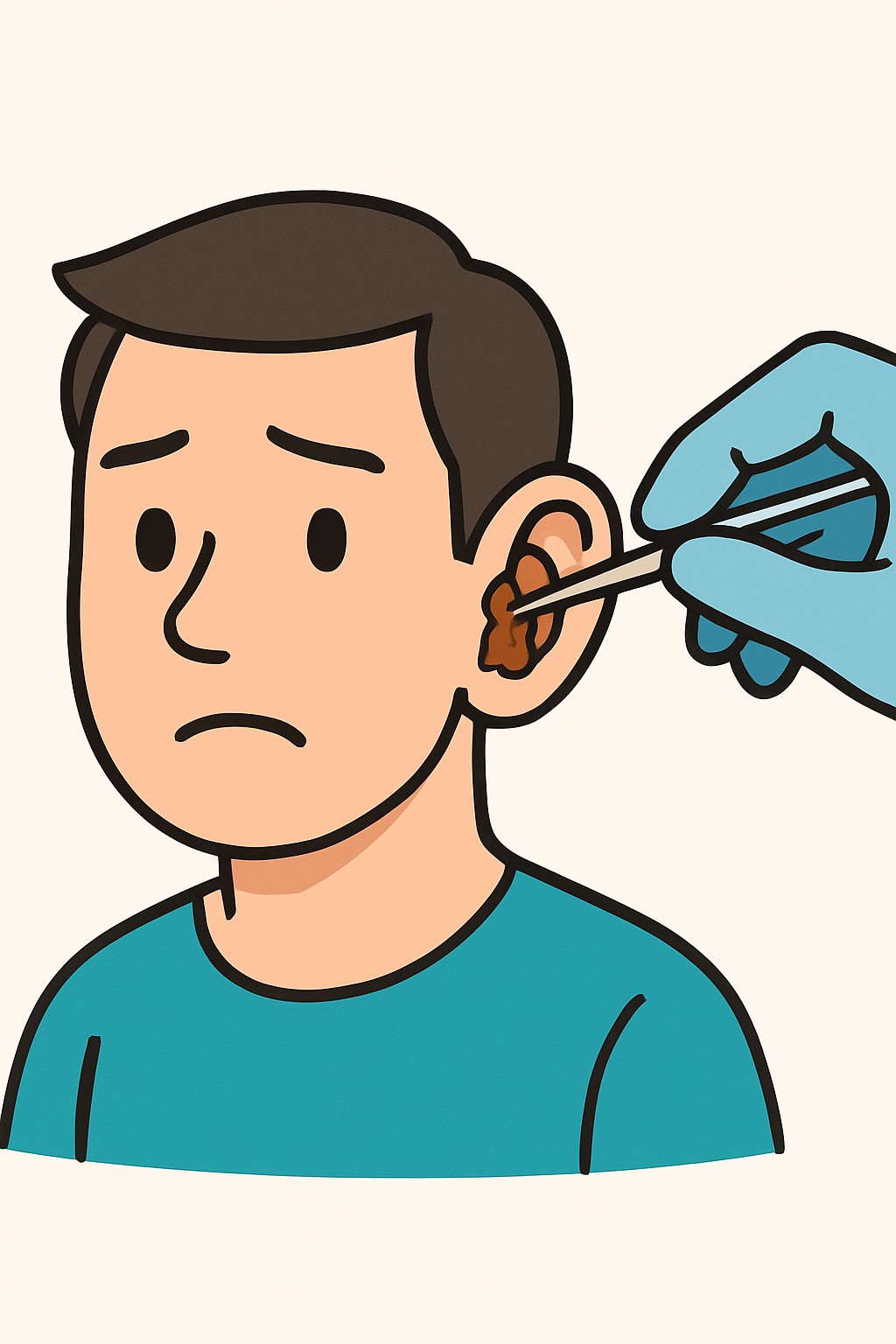
Removal of impacted ear wax (unilateral) is a procedure to clear a complete or stubborn wax blockage from one ear.
Overview
Removal of impacted ear wax (unilateral) is a procedure to clear a complete or stubborn wax blockage from one ear. Impacted means the wax is stuck and cannot come out on its own, which can make hearing difficult and cause a feeling of fullness. Clinicians may use ear drops to soften the wax, gentle irrigation with body-temperature water, small instruments, or suction under direct view. Clearing the blockage can help relieve symptoms and allow the ear and eardrum to be examined.
Also known as: Earwax removal (one ear), Cerumen impaction removal (one ear), Cerumen removal unilateral
Preparation & Next Steps
Everything you need to know before and after your procedure
Before Care
- Tell the clinic about ear symptoms, how long they have lasted, and any prior ear problems or surgeries
- Bring a list of your medicines and allergies, including blood thinners
- Avoid inserting cotton swabs, bobby pins, ear candles, or other objects into the ear
- Ask the clinic if softening drops are recommended before the visit and follow any instructions they provide
- If you wear hearing aids, bring them and a case; you may be asked to remove them for the procedure
- Let the clinic know if you have ear pain, fever, or drainage before the appointment
- Arrange a ride if you tend to get dizzy or have balance problems after ear procedures
- Wear comfortable clothing that allows you to tilt your head easily
- Arrive a bit early to review forms and confirm your preferred pharmacy
After Care
- You may feel quick relief in fullness and hearing; mild aching or brief dizziness can occur the same day
- Keep the ear dry for about 24 hours if irrigation was used; avoid swimming and diving during this time
- Do not insert cotton swabs or other objects into the ear canal
- Use only ear drops that were provided or recommended by your clinician and follow the label directions
- Resume hearing aids when the ear feels comfortable and dry; clean tips or domes per manufacturer instructions
- Protect the ear from soapy water in the shower if advised by the clinic
- Schedule follow-up if you build wax often or use hearing aids and need periodic maintenance
- Contact a clinician if you develop severe pain, persistent hearing loss, worsening ringing, fever, foul-smelling drainage, spinning dizziness, or bleeding more than a small amount
- Keep any follow-up audiology or ear exam appointments as scheduled
Clinical Information
Important medical details about this procedure
Indications
- Fullness or pressure in one ear
- Decreased hearing in one ear
- Ringing or buzzing (tinnitus)
- Itching or irritation of the ear canal
- Cough triggered by ear canal stimulation
- Ear pain linked to wax buildup
- Need to view the eardrum or fit a hearing aid
Alternatives
- Observation if symptoms are mild or absent
- Over-the-counter softening drops (for example, carbamide peroxide or mineral/olive oil)
- Careful at-home irrigation kits when appropriate and not contraindicated
- Periodic ear checks without immediate removal
Risks
- Scrape or cut of the ear canal skin
- Outer ear infection (swimmer's ear)
- Perforated eardrum
- Temporary dizziness or nausea
- Temporary hearing changes or ringing
- Ear pain or minor bleeding
- Allergic reaction or irritation from drops
Contraindications
- Known or suspected eardrum perforation
- Ear tubes in place
- Recent ear surgery
- Active ear infection with severe pain or drainage
- History of severe ear canal narrowing or bony growths (exostoses)
- Inability to cooperate or sit still for the procedure
Recovery Timeline
What to expect during your recovery
Most people return to normal activities right after the visit. Mild ear tenderness or a sense of fullness may last up to a day or two.
Typical Range
0–2 days
Return to Work
0–1 days
Recovery Milestones
Resume normal daily activities
Keep ear dry if irrigation was used
Most temporary fullness or mild soreness resolves
Frequently Asked Questions
Common questions and expert answers about this procedure
What does unilateral mean?
What does unilateral mean?
Unilateral means the procedure is done on one ear only.
How is impacted ear wax removed?
How is impacted ear wax removed?
Clinicians may soften the wax with drops, flush it with gentle warm water, or remove it with small tools or suction while looking into the ear.
Does the procedure hurt?
Does the procedure hurt?
Most people feel pressure and brief discomfort. Tell the clinician if you feel pain so they can adjust the method.
How long does it take?
How long does it take?
It is usually a short visit. Simple cases can be cleared in minutes; tougher blockages may take longer or more than one attempt.
Will my hearing improve right away?
Will my hearing improve right away?
Hearing often improves immediately after the blockage is cleared. Some people notice gradual improvement over the next day.
Are ear candles safe?
Are ear candles safe?
No. Ear candles are not safe and can cause burns or ear injuries. They are not recommended for wax removal.
When is irrigation not advised?
When is irrigation not advised?
Irrigation is generally avoided with a perforated eardrum, ear tubes, recent ear surgery, or severe ear canal infection. Other methods may be used instead.
How can I reduce future wax buildup?
How can I reduce future wax buildup?
Avoid putting objects in the ear canal. Some people need periodic checks or drops; your clinician can suggest a plan based on your history.
References
Medical literature and sources