%20--%3e%3csvg%20version='1.0'%20id='Layer_1'%20xmlns='http://www.w3.org/2000/svg'%20xmlns:xlink='http://www.w3.org/1999/xlink'%20x='0px'%20y='0px'%20viewBox='0%200%20755.52%20814.35'%20style='enable-background:new%200%200%20755.52%20814.35;'%20xml:space='preserve'%3e%3cstyle%20type='text/css'%3e%20.st0{fill:%231ae5ce;stroke:%231ae5ce;stroke-width:7;stroke-miterlimit:10;}%20.st1{fill:%23FFFFFF;stroke:%231ae5ce;stroke-width:7;stroke-miterlimit:10;}%20.st2{fill:%231ae5ce;stroke:%23FFFFFF;stroke-width:7;stroke-miterlimit:10;}%20.st3{fill:%23FFFFFF;stroke:%23FFFFFF;stroke-width:6;stroke-miterlimit:10;}%20%3c/style%3e%3cg%20id='Dark_Logo_00000159431215648494653180000015900878925932721032_'%3e%3cpath%20id='shield_00000152259091539869183100000001926543869452564382_'%20class='st0'%20d='M711.13,173.42%20c-3.37-49.07-38.92-44.9-75.96-52.18c-67.4-13.25-130.47-34.47-192.36-63.92c-22.48-10.7-41.88-25.74-65.05-26.28%20c-23.17,0.54-42.58,15.59-65.05,26.28c-61.89,29.45-124.95,50.68-192.36,63.92c-37.04,7.28-72.59,3.11-75.96,52.18%20c-1.55,22.6,0.34,46.4,1.05,68.92c5.99,190.78,52.91,345.39,206.27,466.46c29.71,23.46,74.51,55.8,108.84,70.75%20c5.99,2.61,11.7,3.73,17.21,3.75c5.51-0.02,11.22-1.14,17.21-3.75c34.33-14.95,79.12-47.3,108.84-70.75%20c153.37-121.07,200.28-275.68,206.27-466.46C710.79,219.82,712.68,196.02,711.13,173.42z'/%3e%3cpath%20id='magnifyingglass_00000073685934697636024790000000342567780940956808_'%20class='st1'%20d='M648.78,624.21l-96.64-104.65%20c34.89-40.63,55.98-93.46,55.98-151.21c0-128.27-103.98-232.24-232.24-232.24S143.63,240.08,143.63,368.35%20s103.98,232.24,232.24,232.24c48.87,0,94.21-15.11,131.62-40.89l97.18,105.24c11.25,12.18,30.24,12.93,42.42,1.69l0,0%20C659.27,655.38,660.03,636.39,648.78,624.21z'/%3e%3ccircle%20id='ellipse_00000129904010550392394720000017056154833629780114_'%20class='st2'%20cx='375.87'%20cy='368.35'%20r='181.21'/%3e%3cpath%20id='dollarsign_00000057140127156649725250000003772530148495155891_'%20class='st3'%20d='M362.91,492.03v-23.91%20c0-2.01-1.58-3.69-3.59-3.77c-18.49-0.78-37.12-5.4-49.4-11.83c-1.75-0.92-2.53-3.01-1.76-4.84l5.87-13.89%20c0.86-2.02,3.23-2.88,5.2-1.89c12.94,6.52,30.45,11.44,49.18,11.44c26.02,0,43.6-12.73,43.6-30.43c0-17.08-14.29-27.63-41.4-36.95%20c-37.37-12.42-60.46-26.7-60.46-53.72c0-24.97,20.29-44.11,52.22-49.51c1.8-0.31,3.11-1.89,3.11-3.72v-24.35%20c0-2.09,1.69-3.78,3.78-3.78h15.16c2.09,0,3.78,1.69,3.78,3.78v22.71c0,2.01,1.58,3.67,3.58,3.77c17.85,0.92,30.88,4.75,40.61,9.1%20c1.92,0.86,2.79,3.09,1.94,5.01l-6.08,13.6c-0.85,1.91-3.09,2.77-4.99,1.91c-8.37-3.8-22.38-8.95-42.75-8.95%20c-28.21,0-38.84,14.28-38.84,26.7c0,16.15,13.56,24.22,45.44,35.4c37.74,13.04,56.79,29.19,56.79,56.82%20c0,23.85-19.05,46.23-54.78,52.3c-1.8,0.31-3.11,1.89-3.11,3.72v25.28c0,2.09-1.69,3.78-3.78,3.78h-15.53%20C364.6,495.81,362.91,494.12,362.91,492.03z'/%3e%3c/g%3e%3c/svg%3e)
Emergency Department Visit (High Severity) Evaluation Management
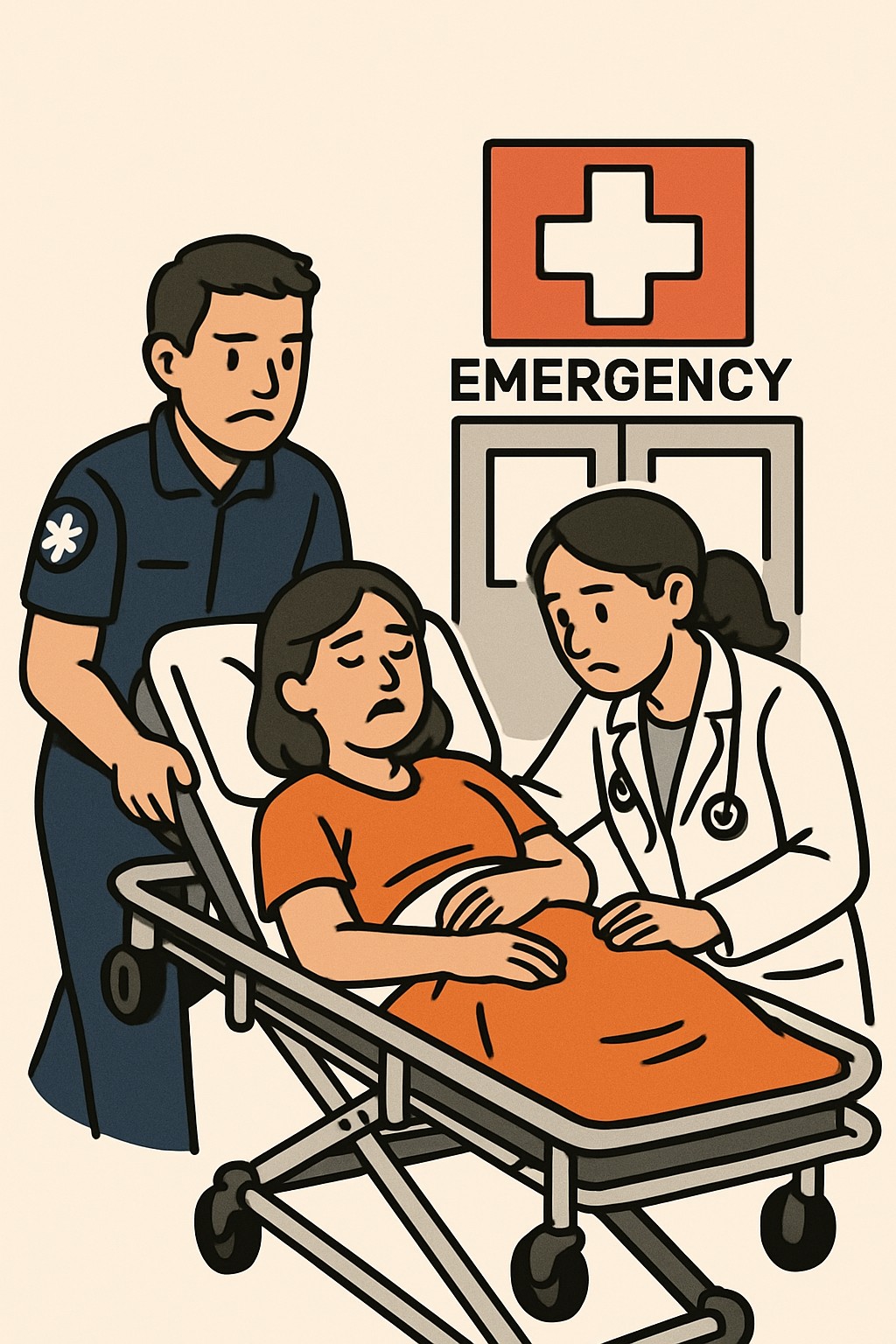
A high severity Emergency Department visit is hospital-based care for serious or potentially life-threatening problems.
Overview
A high severity Emergency Department visit is hospital-based care for serious or potentially life-threatening problems. It typically involves rapid assessment, continuous monitoring, and coordination by an emergency care team. During this visit, clinicians review your symptoms and history, perform a focused exam, order tests such as blood work or imaging, start treatments, and may consult specialists. You may be observed in the ED, discharged with close follow-up, or admitted to the hospital depending on the findings.
Also known as: ER visit, high severity, ED visit, high complexity, ED E/M Level 5
Preparation & Next Steps
Everything you need to know before and after your procedure
Before Care
- Bring a photo ID, insurance card, and a payment method if available
- Carry a current list of all medicines and supplements with doses and allergies
- Know your medical conditions, recent surgeries, and past reactions to medicines
- Have an emergency contact and, if applicable, advance directive information
- Bring recent test results, implant cards, or device information if you have them
- For a minor, bring a parent/guardian or legal consent documents
- Arrange transportation home, especially if you might receive sedating medicines
- Keep your phone charged and bring a charger to help with communication
- Use the patient portal if offered to access summaries and results later
After Care
- Review your discharge paperwork and the list of medicines provided by the care team
- Fill prescribed medicines and follow the instructions given by your clinicians
- Confirm how you will receive pending test results and that your contact details are correct
- Schedule follow-up appointments with primary care or specialists as listed in your paperwork
- Avoid driving or operating machinery if you received sedating medicines
- Care for any wounds or IV sites as instructed and keep dressings clean and dry
- Track symptoms, temperature, and any side effects to discuss at follow-up
- Store copies of test results and visit summaries in your personal health records
- Contact a clinician or return for care if symptoms worsen or new concerning symptoms appear
Clinical Information
Important medical details about this procedure
Indications
- Chest pain or pressure
- Shortness of breath or severe breathing trouble
- Severe abdominal pain
- Stroke symptoms (face drooping, arm weakness, speech difficulty)
- Head injury or major trauma
- Uncontrolled bleeding
- Severe allergic reaction (trouble breathing, swelling)
- High fever with confusion or severe illness
- Serious infection or sepsis concern
- Severe dehydration or fainting
Alternatives
- Urgent care clinic for minor, non-urgent problems
- Primary care visit for routine issues
- Telehealth for advice on minor or stable concerns
Risks
- Delays due to crowding and triage based on urgency
- False-negative or false-positive test results
- Radiation exposure from some imaging tests
- Side effects from medicines or treatments
- Procedure-related discomfort (IVs, blood draws)
- Miscommunication if results and next steps are unclear
- Out-of-pocket costs depending on coverage and services
Recovery Timeline
What to expect during your recovery
Recovery depends on the condition evaluated and the treatments received. High severity visits often require longer ED stays and sometimes hospital admission. Some people go home with close follow-up.
Typical Range
Same day
Return to Work
Same day
Recovery Milestones
Rest, review discharge instructions, and organize medicines
Arrange follow-up visits and complete any ordered tests
Gradually resume light daily activities if not restricted by your care plan
Review pending results and confirm next steps with your clinicians
Frequently Asked Questions
Common questions and expert answers about this procedure
What does high severity mean in the Emergency Department?
What does high severity mean in the Emergency Department?
It describes complex, high-risk problems that may threaten life or function. Care often includes continuous monitoring, multiple tests, and coordination with specialists.
What happens during a high severity ED visit?
What happens during a high severity ED visit?
You are triaged, monitored, examined, and may have blood tests, imaging, and treatments. The team reassesses you, reviews results, and decides on discharge, observation, or admission.
How long will I be in the ED?
How long will I be in the ED?
Time varies. High severity visits often take several hours due to testing, monitoring, and consultations. Some people are admitted for inpatient care.
Will I be admitted to the hospital?
Will I be admitted to the hospital?
Admission depends on your condition and test results. Some patients go home with close follow-up; others are admitted for further treatment and monitoring.
Who will care for me in the ED?
Who will care for me in the ED?
An emergency physician, nurses, and advanced practice clinicians lead your care. Technicians, pharmacists, and specialists may also be involved.
Why might tests still be pending when I leave?
Why might tests still be pending when I leave?
Some labs or cultures take time. Your paperwork should explain how you will get results and whom to contact for questions.
How are costs for an ED visit determined?
How are costs for an ED visit determined?
Costs reflect the visit level, facility fee, clinician services, tests, medicines, and procedures, and depend on your insurance coverage and network status.
Can a family member stay with me?
Can a family member stay with me?
Visitor policies vary by hospital and situation. Ask the staff about current rules and any limits related to patient care needs.