%20--%3e%3csvg%20version='1.0'%20id='Layer_1'%20xmlns='http://www.w3.org/2000/svg'%20xmlns:xlink='http://www.w3.org/1999/xlink'%20x='0px'%20y='0px'%20viewBox='0%200%20755.52%20814.35'%20style='enable-background:new%200%200%20755.52%20814.35;'%20xml:space='preserve'%3e%3cstyle%20type='text/css'%3e%20.st0{fill:%231ae5ce;stroke:%231ae5ce;stroke-width:7;stroke-miterlimit:10;}%20.st1{fill:%23FFFFFF;stroke:%231ae5ce;stroke-width:7;stroke-miterlimit:10;}%20.st2{fill:%231ae5ce;stroke:%23FFFFFF;stroke-width:7;stroke-miterlimit:10;}%20.st3{fill:%23FFFFFF;stroke:%23FFFFFF;stroke-width:6;stroke-miterlimit:10;}%20%3c/style%3e%3cg%20id='Dark_Logo_00000159431215648494653180000015900878925932721032_'%3e%3cpath%20id='shield_00000152259091539869183100000001926543869452564382_'%20class='st0'%20d='M711.13,173.42%20c-3.37-49.07-38.92-44.9-75.96-52.18c-67.4-13.25-130.47-34.47-192.36-63.92c-22.48-10.7-41.88-25.74-65.05-26.28%20c-23.17,0.54-42.58,15.59-65.05,26.28c-61.89,29.45-124.95,50.68-192.36,63.92c-37.04,7.28-72.59,3.11-75.96,52.18%20c-1.55,22.6,0.34,46.4,1.05,68.92c5.99,190.78,52.91,345.39,206.27,466.46c29.71,23.46,74.51,55.8,108.84,70.75%20c5.99,2.61,11.7,3.73,17.21,3.75c5.51-0.02,11.22-1.14,17.21-3.75c34.33-14.95,79.12-47.3,108.84-70.75%20c153.37-121.07,200.28-275.68,206.27-466.46C710.79,219.82,712.68,196.02,711.13,173.42z'/%3e%3cpath%20id='magnifyingglass_00000073685934697636024790000000342567780940956808_'%20class='st1'%20d='M648.78,624.21l-96.64-104.65%20c34.89-40.63,55.98-93.46,55.98-151.21c0-128.27-103.98-232.24-232.24-232.24S143.63,240.08,143.63,368.35%20s103.98,232.24,232.24,232.24c48.87,0,94.21-15.11,131.62-40.89l97.18,105.24c11.25,12.18,30.24,12.93,42.42,1.69l0,0%20C659.27,655.38,660.03,636.39,648.78,624.21z'/%3e%3ccircle%20id='ellipse_00000129904010550392394720000017056154833629780114_'%20class='st2'%20cx='375.87'%20cy='368.35'%20r='181.21'/%3e%3cpath%20id='dollarsign_00000057140127156649725250000003772530148495155891_'%20class='st3'%20d='M362.91,492.03v-23.91%20c0-2.01-1.58-3.69-3.59-3.77c-18.49-0.78-37.12-5.4-49.4-11.83c-1.75-0.92-2.53-3.01-1.76-4.84l5.87-13.89%20c0.86-2.02,3.23-2.88,5.2-1.89c12.94,6.52,30.45,11.44,49.18,11.44c26.02,0,43.6-12.73,43.6-30.43c0-17.08-14.29-27.63-41.4-36.95%20c-37.37-12.42-60.46-26.7-60.46-53.72c0-24.97,20.29-44.11,52.22-49.51c1.8-0.31,3.11-1.89,3.11-3.72v-24.35%20c0-2.09,1.69-3.78,3.78-3.78h15.16c2.09,0,3.78,1.69,3.78,3.78v22.71c0,2.01,1.58,3.67,3.58,3.77c17.85,0.92,30.88,4.75,40.61,9.1%20c1.92,0.86,2.79,3.09,1.94,5.01l-6.08,13.6c-0.85,1.91-3.09,2.77-4.99,1.91c-8.37-3.8-22.38-8.95-42.75-8.95%20c-28.21,0-38.84,14.28-38.84,26.7c0,16.15,13.56,24.22,45.44,35.4c37.74,13.04,56.79,29.19,56.79,56.82%20c0,23.85-19.05,46.23-54.78,52.3c-1.8,0.31-3.11,1.89-3.11,3.72v25.28c0,2.09-1.69,3.78-3.78,3.78h-15.53%20C364.6,495.81,362.91,494.12,362.91,492.03z'/%3e%3c/g%3e%3c/svg%3e)
Emergency Department Visit (Low/Moderate) Evaluation Management
An Emergency Department visit is an unscheduled hospital-based evaluation for urgent health concerns.
Overview
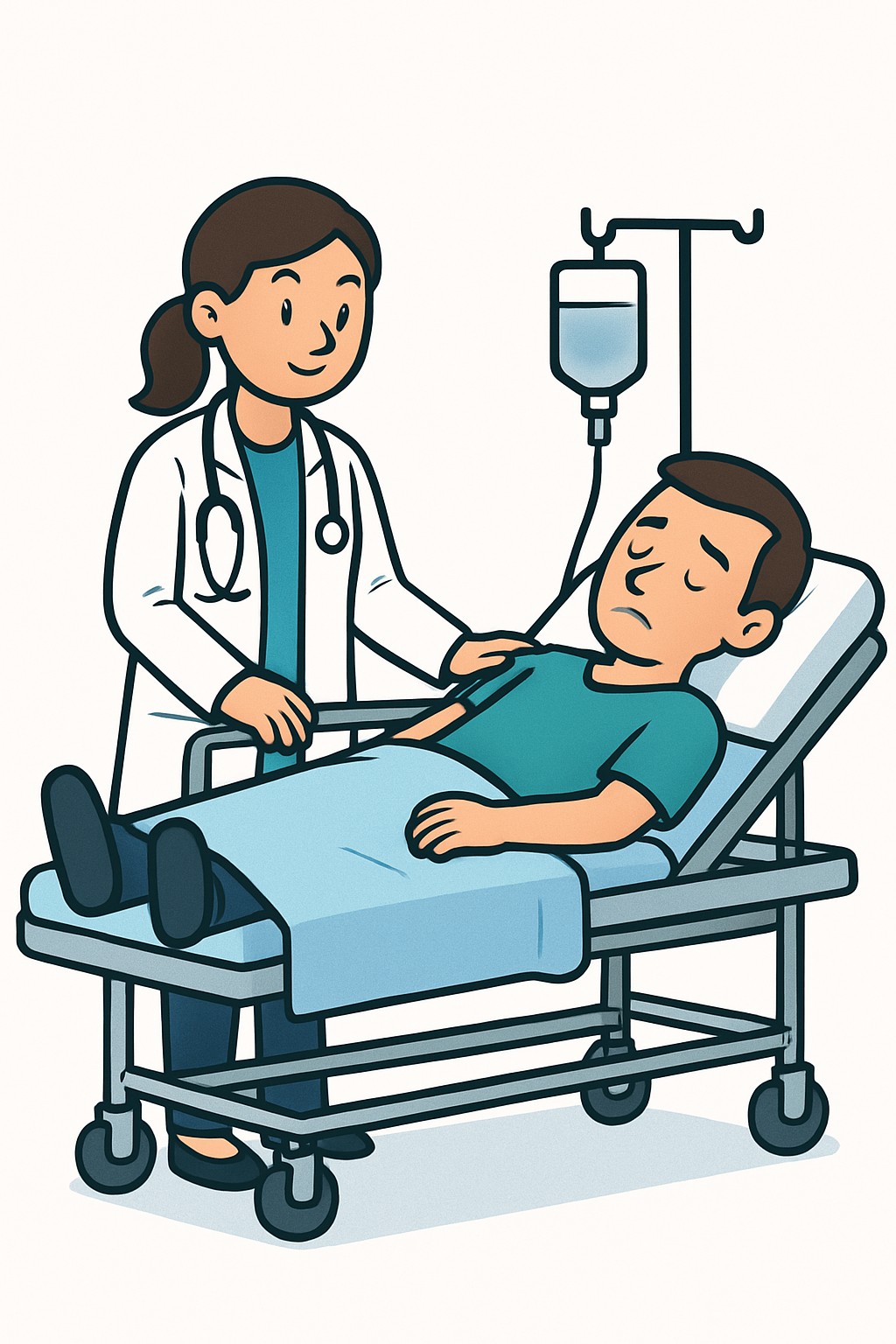
An Emergency Department visit is an unscheduled hospital-based evaluation for urgent health concerns. Low or moderate refers to the complexity of medical decision making documented by the clinician, not necessarily how you feel. Many people with low or moderate complexity visits are evaluated, treated, and discharged the same day. During the visit, a team reviews your symptoms, medical history, and vital signs. They may order tests, provide medicines, perform minor procedures, or monitor you for a short time. The goal is to identify urgent problems, start treatment, and decide if you can safely go home or need further care.
Also known as: ER visit, ED evaluation, Emergency room visit
Preparation & Next Steps
Everything you need to know before and after your procedure
Before Care
- Bring a photo ID, insurance card, and a payment method if costs apply
- Carry a current list of all medicines and supplements with doses
- Know your allergies and past reactions to medicines or contrast dyes
- Bring recent test results, imaging reports, or discharge papers if available
- Have contact information for your primary clinician and specialists
- Bring device readings such as blood pressure, glucose, or oxygen logs if relevant
- Bring glasses, hearing aids, mobility aids, and needed chargers
- Keep your phone charged and have an emergency contact listed
- If you might receive sedating medicines, consider arranging a ride home
- Bring any advance directive or medical decision documents if you have them
After Care
- Review the discharge instructions and medication list provided at the visit
- Follow instructions for any medicines given or prescribed
- Schedule recommended follow-up with your primary clinician or specialist
- Complete any ordered labs or imaging within the suggested timeframe
- Care for wounds, splints, or dressings as outlined in your instructions
- Monitor your symptoms and contact a clinician if they change or worsen
- Avoid driving or operating machinery if you received sedating medicines
- Use the patient portal or provided numbers to access test results
- Keep copies of results and visit summaries for your records
- Check your insurance benefits and review any bills or explanations of benefits
Clinical Information
Important medical details about this procedure
Indications
- Urgent symptoms that need same-day assessment
- Injuries such as sprains, simple cuts, or minor fractures
- Breathing problems that improve with initial treatments
- Dehydration or fainting episodes
- Fever or infections that require urgent evaluation
- Abdominal, chest, or head pain needing timely assessment
- Allergic reactions that respond to initial care
- Asthma or migraine flares not improving at home
Alternatives
- Urgent care center for minor illnesses or injuries
- Same-day primary care appointment when available
- Telehealth visit for non-urgent concerns
- Nurse advice line for guidance on next steps
Risks
- Long wait times due to triage and high demand
- Exposure to infectious illnesses in waiting areas
- Side effects from medicines or contrast agents
- Radiation exposure from imaging when ordered
- IV line or injection site discomfort
- Missed or evolving diagnoses that require follow-up
- Unplanned admission or observation stay
- Potential out-of-pocket costs depending on coverage
Recovery Timeline
What to expect during your recovery
There is no recovery period from the visit itself. Many people resume normal activities the same day. Any limits depend on the condition treated and the tests or medicines given.
Typical Range
Same day
Return to Work
Same day
Recovery Milestones
Resume light daily activities as you feel able
Complete any same-day or next-day labs or imaging if ordered
Review results and arrange follow-up as instructed
Frequently Asked Questions
Common questions and expert answers about this procedure
What do low and moderate mean for an ED visit?
What do low and moderate mean for an ED visit?
They describe the complexity of medical decision making recorded by the clinician. It reflects the number and risk of problems, data reviewed, and treatments considered.
What happens during a low or moderate ED visit?
What happens during a low or moderate ED visit?
Staff check vital signs, review your history and symptoms, and may order tests, give medicines, or do minor procedures. Most people are discharged with instructions.
How long will I be in the Emergency Department?
How long will I be in the Emergency Department?
Time varies based on triage priority, tests, and bed availability. Visits can range from under an hour to several hours.
Will I get tests like X-rays or blood work?
Will I get tests like X-rays or blood work?
Tests are ordered when they help answer key questions about your symptoms. Some low complexity visits need no tests; moderate visits may include targeted testing.
Who will I see in the ED?
Who will I see in the ED?
A team may include physicians, nurse practitioners or physician assistants, nurses, technicians, and registration staff.
Can I eat or drink while I wait?
Can I eat or drink while I wait?
Ask the care team. Some tests or procedures work best if you have not eaten or had certain drinks.
Will I be admitted to the hospital?
Will I be admitted to the hospital?
Admission depends on your evaluation and response to treatment. Many low or moderate visits end with discharge and outpatient follow-up.
How will I get my results and follow-up plan?
How will I get my results and follow-up plan?
Results and next steps are provided in your discharge instructions or portal. The ED may also send a summary to your primary clinician.
References
Medical literature and sources