%20--%3e%3csvg%20version='1.0'%20id='Layer_1'%20xmlns='http://www.w3.org/2000/svg'%20xmlns:xlink='http://www.w3.org/1999/xlink'%20x='0px'%20y='0px'%20viewBox='0%200%20755.52%20814.35'%20style='enable-background:new%200%200%20755.52%20814.35;'%20xml:space='preserve'%3e%3cstyle%20type='text/css'%3e%20.st0{fill:%231ae5ce;stroke:%231ae5ce;stroke-width:7;stroke-miterlimit:10;}%20.st1{fill:%23FFFFFF;stroke:%231ae5ce;stroke-width:7;stroke-miterlimit:10;}%20.st2{fill:%231ae5ce;stroke:%23FFFFFF;stroke-width:7;stroke-miterlimit:10;}%20.st3{fill:%23FFFFFF;stroke:%23FFFFFF;stroke-width:6;stroke-miterlimit:10;}%20%3c/style%3e%3cg%20id='Dark_Logo_00000159431215648494653180000015900878925932721032_'%3e%3cpath%20id='shield_00000152259091539869183100000001926543869452564382_'%20class='st0'%20d='M711.13,173.42%20c-3.37-49.07-38.92-44.9-75.96-52.18c-67.4-13.25-130.47-34.47-192.36-63.92c-22.48-10.7-41.88-25.74-65.05-26.28%20c-23.17,0.54-42.58,15.59-65.05,26.28c-61.89,29.45-124.95,50.68-192.36,63.92c-37.04,7.28-72.59,3.11-75.96,52.18%20c-1.55,22.6,0.34,46.4,1.05,68.92c5.99,190.78,52.91,345.39,206.27,466.46c29.71,23.46,74.51,55.8,108.84,70.75%20c5.99,2.61,11.7,3.73,17.21,3.75c5.51-0.02,11.22-1.14,17.21-3.75c34.33-14.95,79.12-47.3,108.84-70.75%20c153.37-121.07,200.28-275.68,206.27-466.46C710.79,219.82,712.68,196.02,711.13,173.42z'/%3e%3cpath%20id='magnifyingglass_00000073685934697636024790000000342567780940956808_'%20class='st1'%20d='M648.78,624.21l-96.64-104.65%20c34.89-40.63,55.98-93.46,55.98-151.21c0-128.27-103.98-232.24-232.24-232.24S143.63,240.08,143.63,368.35%20s103.98,232.24,232.24,232.24c48.87,0,94.21-15.11,131.62-40.89l97.18,105.24c11.25,12.18,30.24,12.93,42.42,1.69l0,0%20C659.27,655.38,660.03,636.39,648.78,624.21z'/%3e%3ccircle%20id='ellipse_00000129904010550392394720000017056154833629780114_'%20class='st2'%20cx='375.87'%20cy='368.35'%20r='181.21'/%3e%3cpath%20id='dollarsign_00000057140127156649725250000003772530148495155891_'%20class='st3'%20d='M362.91,492.03v-23.91%20c0-2.01-1.58-3.69-3.59-3.77c-18.49-0.78-37.12-5.4-49.4-11.83c-1.75-0.92-2.53-3.01-1.76-4.84l5.87-13.89%20c0.86-2.02,3.23-2.88,5.2-1.89c12.94,6.52,30.45,11.44,49.18,11.44c26.02,0,43.6-12.73,43.6-30.43c0-17.08-14.29-27.63-41.4-36.95%20c-37.37-12.42-60.46-26.7-60.46-53.72c0-24.97,20.29-44.11,52.22-49.51c1.8-0.31,3.11-1.89,3.11-3.72v-24.35%20c0-2.09,1.69-3.78,3.78-3.78h15.16c2.09,0,3.78,1.69,3.78,3.78v22.71c0,2.01,1.58,3.67,3.58,3.77c17.85,0.92,30.88,4.75,40.61,9.1%20c1.92,0.86,2.79,3.09,1.94,5.01l-6.08,13.6c-0.85,1.91-3.09,2.77-4.99,1.91c-8.37-3.8-22.38-8.95-42.75-8.95%20c-28.21,0-38.84,14.28-38.84,26.7c0,16.15,13.56,24.22,45.44,35.4c37.74,13.04,56.79,29.19,56.79,56.82%20c0,23.85-19.05,46.23-54.78,52.3c-1.8,0.31-3.11,1.89-3.11,3.72v25.28c0,2.09-1.69,3.78-3.78,3.78h-15.53%20C364.6,495.81,362.91,494.12,362.91,492.03z'/%3e%3c/g%3e%3c/svg%3e)
Office Visit – Established Patient (High Complexity) Evaluation Management
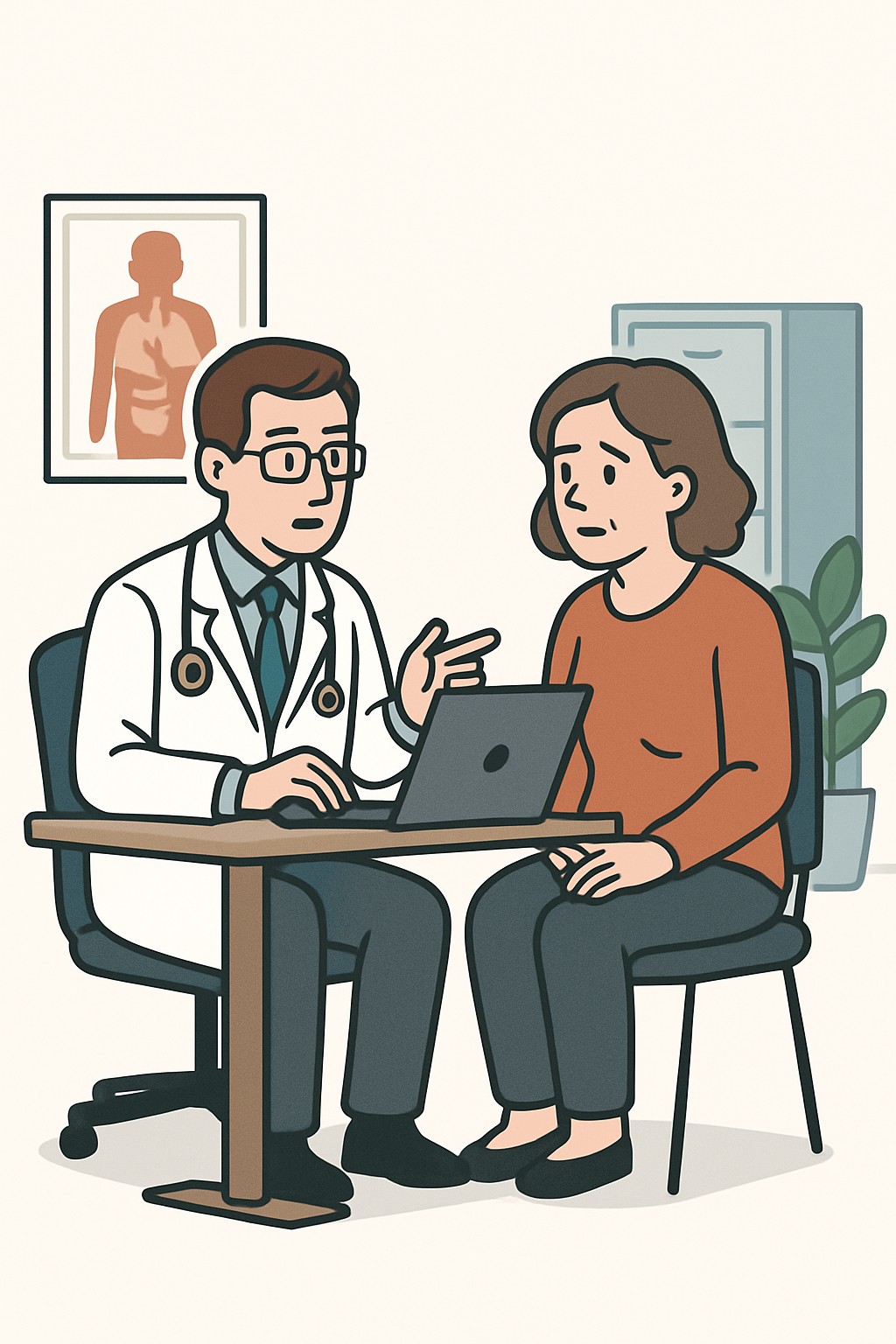
A high complexity established patient office visit is an in-person or telehealth appointment with a clinician who has seen you in the same practice and specialty within the past three years.
Overview
A high complexity established patient office visit is an in-person or telehealth appointment with a clinician who has seen you in the same practice and specialty within the past three years. Established means your records are already on file. High complexity describes the level of medical decision making. This often involves multiple or serious health problems, review of extensive records and test results, coordination with other clinicians, and discussion of treatment risks and options. The visit may include a focused exam, counseling, and ordering or interpreting tests.
Also known as: High complexity follow-up visit, Established patient high complexity office visit, Complex follow-up appointment
Preparation & Next Steps
Everything you need to know before and after your procedure
Before Care
- Bring a photo ID, insurance card, and a payment method if a copay applies
- Carry a current list of all medicines and supplements with doses and schedules
- List allergies and any prior reactions to medicines or contrast dyes
- Bring recent records, imaging reports, device readings, and hospital discharge papers if available
- Write a brief timeline of key symptoms, triggers, and what has helped or not
- Prepare names and contact information for all specialists involved in your care
- Complete any pre-visit forms or questionnaires sent by the clinic
- Consider bringing a support person if communication, memory, or complex decisions are expected
- Enroll in or update access to the patient portal for results and messages
- Arrive a bit early to allow time for check-in and medication reconciliation
After Care
- Review the visit summary and care plan in your portal and note next steps
- Fill new prescriptions and follow the instructions provided by your clinician
- Schedule ordered labs, imaging, or referrals and set reminders to complete them
- Share updates with your other clinicians so care plans stay aligned
- Track symptoms and any side effects to discuss at follow-up
- Keep your medication list current and bring it to all visits
- Use secure messaging or clinic phone for questions or clarifications
- Schedule the recommended follow-up appointment window
- Contact the clinic about new or worsening symptoms, unexpected test results, or trouble with medicines
- Verify insurance coverage for tests or referrals to avoid surprise bills
Clinical Information
Important medical details about this procedure
Indications
- Multiple chronic conditions with complications or flare-ups
- New serious symptoms that require a detailed assessment but are not an emergency
- Medication management that requires close monitoring for side effects or interactions
- Complex diagnostic work-up with extensive data review
- Recent hospital or emergency visit that needs comprehensive follow-up
- Care coordination across several specialists
- Decisions about high-risk treatments or procedures
Alternatives
- Standard or moderate complexity office visit when issues are simpler
- Telehealth visit when a physical exam is not essential
- Secure portal messaging for limited, non-urgent questions
- Nurse advice line for basic guidance
- Urgent care or emergency department for time-sensitive or severe symptoms
Risks
- Limited time may not cover all concerns in one visit
- Delays if prior records or test results are unavailable
- Miscommunication about the plan or follow-up steps
- Out-of-pocket costs depending on coverage and any tests ordered
- Anxiety from incidental findings or unexpected results
- Side effects from new medicines or changes to treatment
Contraindications
- Severe or life-threatening symptoms needing emergency care
- Known highly contagious illness without clinic precautions arranged
- Inability to participate in history or decision making when a required support person is unavailable
Recovery Timeline
What to expect during your recovery
There is no medical recovery period from the visit itself. Most people return to normal activities right away, though tests or follow-up steps may occur over days to weeks.
Typical Range
Same day
Return to Work
Same day
Recovery Milestones
Resume normal daily activities
Complete any same-day or next-day labs if ordered
Review results and confirm referrals or follow-up timing
Frequently Asked Questions
Common questions and expert answers about this procedure
What does high complexity mean for an office visit?
What does high complexity mean for an office visit?
It refers to a high level of medical decision making. The clinician addresses serious or multiple problems, reviews and interprets a lot of data, and weighs treatments that may have significant risks.
How long does a high complexity visit usually take?
How long does a high complexity visit usually take?
Time can vary. Under current E/M guidelines, a high complexity established patient visit is often supported by either high medical decision making or total clinician time around 40–54 minutes on the date of the visit.
Who can conduct this visit?
Who can conduct this visit?
Physicians and advanced practice clinicians such as nurse practitioners and physician assistants can provide established patient visits within their scope and state rules.
Will tests be done the same day?
Will tests be done the same day?
Basic labs may be drawn the same day. Imaging or specialized tests are often scheduled later. The clinician will explain what is needed and when.
Can a high complexity visit be done by telehealth?
Can a high complexity visit be done by telehealth?
Some high complexity visits are appropriate by video when a physical exam is not essential. In-person visits are used when an exam or procedures are needed.
What should I bring to the appointment?
What should I bring to the appointment?
Bring your ID, insurance card, medication list, allergies, recent results, and contact details for your other clinicians. A brief symptom timeline also helps.
How are follow-up plans decided?
How are follow-up plans decided?
Plans are based on your concerns, exam, and test review. They may include new medicines, referrals, monitoring, and a timeframe for recheck.
How much will it cost?
How much will it cost?
Costs depend on your insurance benefits, network status, and any tests or procedures. Ask the clinic about estimated charges and check your plan.