%20--%3e%3csvg%20version='1.0'%20id='Layer_1'%20xmlns='http://www.w3.org/2000/svg'%20xmlns:xlink='http://www.w3.org/1999/xlink'%20x='0px'%20y='0px'%20viewBox='0%200%20755.52%20814.35'%20style='enable-background:new%200%200%20755.52%20814.35;'%20xml:space='preserve'%3e%3cstyle%20type='text/css'%3e%20.st0{fill:%231ae5ce;stroke:%231ae5ce;stroke-width:7;stroke-miterlimit:10;}%20.st1{fill:%23FFFFFF;stroke:%231ae5ce;stroke-width:7;stroke-miterlimit:10;}%20.st2{fill:%231ae5ce;stroke:%23FFFFFF;stroke-width:7;stroke-miterlimit:10;}%20.st3{fill:%23FFFFFF;stroke:%23FFFFFF;stroke-width:6;stroke-miterlimit:10;}%20%3c/style%3e%3cg%20id='Dark_Logo_00000159431215648494653180000015900878925932721032_'%3e%3cpath%20id='shield_00000152259091539869183100000001926543869452564382_'%20class='st0'%20d='M711.13,173.42%20c-3.37-49.07-38.92-44.9-75.96-52.18c-67.4-13.25-130.47-34.47-192.36-63.92c-22.48-10.7-41.88-25.74-65.05-26.28%20c-23.17,0.54-42.58,15.59-65.05,26.28c-61.89,29.45-124.95,50.68-192.36,63.92c-37.04,7.28-72.59,3.11-75.96,52.18%20c-1.55,22.6,0.34,46.4,1.05,68.92c5.99,190.78,52.91,345.39,206.27,466.46c29.71,23.46,74.51,55.8,108.84,70.75%20c5.99,2.61,11.7,3.73,17.21,3.75c5.51-0.02,11.22-1.14,17.21-3.75c34.33-14.95,79.12-47.3,108.84-70.75%20c153.37-121.07,200.28-275.68,206.27-466.46C710.79,219.82,712.68,196.02,711.13,173.42z'/%3e%3cpath%20id='magnifyingglass_00000073685934697636024790000000342567780940956808_'%20class='st1'%20d='M648.78,624.21l-96.64-104.65%20c34.89-40.63,55.98-93.46,55.98-151.21c0-128.27-103.98-232.24-232.24-232.24S143.63,240.08,143.63,368.35%20s103.98,232.24,232.24,232.24c48.87,0,94.21-15.11,131.62-40.89l97.18,105.24c11.25,12.18,30.24,12.93,42.42,1.69l0,0%20C659.27,655.38,660.03,636.39,648.78,624.21z'/%3e%3ccircle%20id='ellipse_00000129904010550392394720000017056154833629780114_'%20class='st2'%20cx='375.87'%20cy='368.35'%20r='181.21'/%3e%3cpath%20id='dollarsign_00000057140127156649725250000003772530148495155891_'%20class='st3'%20d='M362.91,492.03v-23.91%20c0-2.01-1.58-3.69-3.59-3.77c-18.49-0.78-37.12-5.4-49.4-11.83c-1.75-0.92-2.53-3.01-1.76-4.84l5.87-13.89%20c0.86-2.02,3.23-2.88,5.2-1.89c12.94,6.52,30.45,11.44,49.18,11.44c26.02,0,43.6-12.73,43.6-30.43c0-17.08-14.29-27.63-41.4-36.95%20c-37.37-12.42-60.46-26.7-60.46-53.72c0-24.97,20.29-44.11,52.22-49.51c1.8-0.31,3.11-1.89,3.11-3.72v-24.35%20c0-2.09,1.69-3.78,3.78-3.78h15.16c2.09,0,3.78,1.69,3.78,3.78v22.71c0,2.01,1.58,3.67,3.58,3.77c17.85,0.92,30.88,4.75,40.61,9.1%20c1.92,0.86,2.79,3.09,1.94,5.01l-6.08,13.6c-0.85,1.91-3.09,2.77-4.99,1.91c-8.37-3.8-22.38-8.95-42.75-8.95%20c-28.21,0-38.84,14.28-38.84,26.7c0,16.15,13.56,24.22,45.44,35.4c37.74,13.04,56.79,29.19,56.79,56.82%20c0,23.85-19.05,46.23-54.78,52.3c-1.8,0.31-3.11,1.89-3.11,3.72v25.28c0,2.09-1.69,3.78-3.78,3.78h-15.53%20C364.6,495.81,362.91,494.12,362.91,492.03z'/%3e%3c/g%3e%3c/svg%3e)
Colonoscopy with polyp removal General Surgery
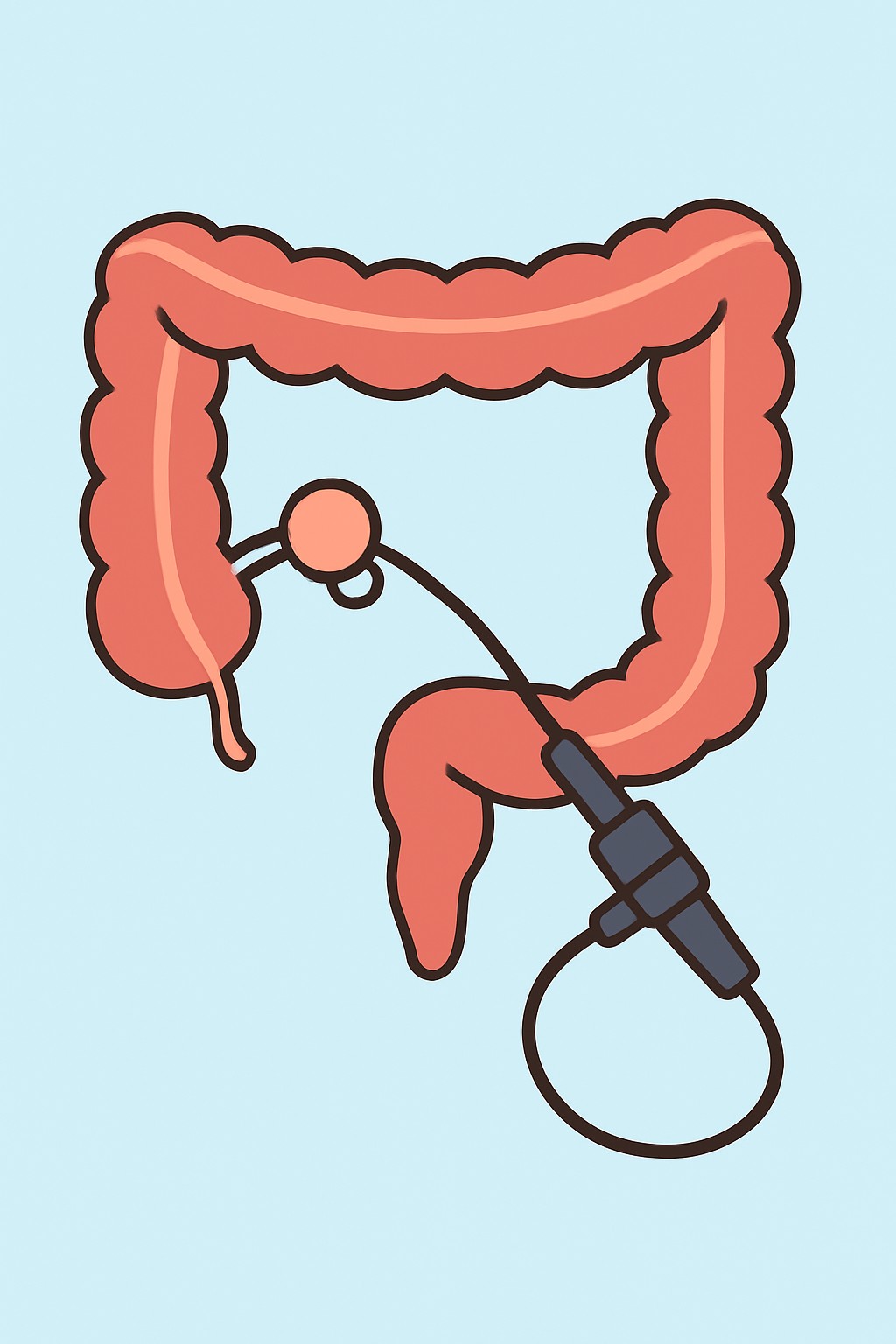
A colonoscopy with polyp removal is an exam of the large intestine using a flexible tube with a camera.
Overview
A colonoscopy with polyp removal is an exam of the large intestine using a flexible tube with a camera. If the clinician finds growths called polyps, they can remove them during the same procedure using tools passed through the scope. Polyps are common and most are benign. Removing them lowers the chance that some types of polyps could develop into colorectal cancer over time.
Also known as: Colonoscopy with polypectomy, Polyp removal during colonoscopy
Preparation & Next Steps
Everything you need to know before and after your procedure
Before Care
- Review the bowel prep instructions provided by the clinic and plan time for the prep and bathroom access
- Arrange a responsible adult to take you home since sedation is typically used
- Confirm medicines, including blood thinners and diabetes drugs, with the care team for any timing adjustments
- Follow clear-liquid and fasting directions from the facility for the day before and day of the test
- Stay well hydrated with allowed clear liquids during the prep, unless told otherwise by the care team
- Bring an up-to-date list of medicines, allergies, and prior surgeries or GI procedures
- Wear comfortable clothing and leave valuables at home
- Let the team know about implanted devices, sleep apnea, or prior issues with anesthesia or sedation
- Confirm arrival time, parking, and check-in location, and bring ID and insurance information
After Care
- Expect mild cramping, gas, or bloating as air leaves the colon; these usually improve the same day
- Because of sedation, facilities commonly advise avoiding driving, operating machinery, or important decisions until effects wear off
- Start with light foods and advance as you feel comfortable unless the care team provides different instructions
- Drink fluids to rehydrate after the bowel prep unless you have fluid limits for another condition
- Follow the facility’s guidance on resuming regular medicines, including blood thinners or diabetes medicines
- A small amount of rectal blood can occur after polyp removal; contact a clinician if bleeding is heavy or does not stop
- Call the care team if you develop severe belly pain, fever, repeated vomiting, dizziness, or worsening symptoms
- Review the report and check how and when pathology results (biopsies/polyps) will be shared
- Schedule any recommended follow-up or surveillance based on the final report
Clinical Information
Important medical details about this procedure
Indications
- Routine colorectal cancer screening
- Positive stool-based screening test (such as FIT or stool DNA)
- Follow-up after prior polyps
- Evaluation of rectal bleeding or unexplained iron-deficiency anemia
- Unexplained changes in bowel habits
- Abnormal findings on imaging or sigmoidoscopy
- Surveillance in higher-risk conditions as advised by guidelines
Alternatives
- Stool-based tests (FIT, gFOBT, stool DNA test) for screening when no immediate removal is needed
- CT colonography (virtual colonoscopy) for imaging-based screening
- Flexible sigmoidoscopy when a full colon exam is not performed
- Watchful waiting with repeat testing when recommended by guidelines
Risks
- Bleeding, especially after polyp removal
- Tear or perforation of the colon wall
- Reactions to sedation such as low blood pressure or breathing problems
- Infection, which is uncommon
- Incomplete exam or missed lesions due to factors like poor bowel prep
Contraindications
- Known or suspected bowel perforation
- Severe active colitis or diverticulitis
- Unstable heart or lung conditions that make sedation unsafe
- Uncorrected bleeding disorders or anticoagulation that cannot be managed
- Inadequate bowel preparation that prevents a safe, effective exam
Recovery Timeline
What to expect during your recovery
Most people go home the same day. Light activity is typical the day of the test, with a return to normal routines within 1 to 2 days after polyp removal.
Typical Range
0–2 days
Return to Work
1–2 days
Recovery Milestones
Rest at home and do light activities as sedation wears off
Resume most normal daily activities if you feel well
Review pathology results and the follow-up plan
Frequently Asked Questions
Common questions and expert answers about this procedure
What is a polyp and why remove it?
What is a polyp and why remove it?
A polyp is a small growth on the inner lining of the colon. Some polyps can slowly turn into cancer. Removing them lowers cancer risk.
How are polyps removed during colonoscopy?
How are polyps removed during colonoscopy?
Tools passed through the scope cut or snare the polyp, sometimes with a small electric current to seal tissue. The polyp is then sent to a lab.
Will I be awake?
Will I be awake?
Most people receive sedation to help them relax or sleep. You may not remember the procedure and will need a ride home.
How long does the procedure take?
How long does the procedure take?
The exam often takes 30 to 60 minutes. Time varies with factors like bowel prep quality and the number and size of polyps.
What will I feel like after?
What will I feel like after?
You may feel gassy or bloated from air used during the exam. These symptoms usually improve the same day as you pass the air.
When will I get results?
When will I get results?
You typically get a procedure report the same day. Lab results on removed polyps are usually available in a few days.
What are signs to contact a clinician after polyp removal?
What are signs to contact a clinician after polyp removal?
Heavy rectal bleeding, severe or worsening belly pain, fever, repeated vomiting, or dizziness warrant a call to the care team.
What if my bowel prep is not clear?
What if my bowel prep is not clear?
If the colon is not clean, parts of the exam can be missed. The exam may take longer or be repeated on another day.
References
Medical literature and sources