%20--%3e%3csvg%20version='1.0'%20id='Layer_1'%20xmlns='http://www.w3.org/2000/svg'%20xmlns:xlink='http://www.w3.org/1999/xlink'%20x='0px'%20y='0px'%20viewBox='0%200%20755.52%20814.35'%20style='enable-background:new%200%200%20755.52%20814.35;'%20xml:space='preserve'%3e%3cstyle%20type='text/css'%3e%20.st0{fill:%231ae5ce;stroke:%231ae5ce;stroke-width:7;stroke-miterlimit:10;}%20.st1{fill:%23FFFFFF;stroke:%231ae5ce;stroke-width:7;stroke-miterlimit:10;}%20.st2{fill:%231ae5ce;stroke:%23FFFFFF;stroke-width:7;stroke-miterlimit:10;}%20.st3{fill:%23FFFFFF;stroke:%23FFFFFF;stroke-width:6;stroke-miterlimit:10;}%20%3c/style%3e%3cg%20id='Dark_Logo_00000159431215648494653180000015900878925932721032_'%3e%3cpath%20id='shield_00000152259091539869183100000001926543869452564382_'%20class='st0'%20d='M711.13,173.42%20c-3.37-49.07-38.92-44.9-75.96-52.18c-67.4-13.25-130.47-34.47-192.36-63.92c-22.48-10.7-41.88-25.74-65.05-26.28%20c-23.17,0.54-42.58,15.59-65.05,26.28c-61.89,29.45-124.95,50.68-192.36,63.92c-37.04,7.28-72.59,3.11-75.96,52.18%20c-1.55,22.6,0.34,46.4,1.05,68.92c5.99,190.78,52.91,345.39,206.27,466.46c29.71,23.46,74.51,55.8,108.84,70.75%20c5.99,2.61,11.7,3.73,17.21,3.75c5.51-0.02,11.22-1.14,17.21-3.75c34.33-14.95,79.12-47.3,108.84-70.75%20c153.37-121.07,200.28-275.68,206.27-466.46C710.79,219.82,712.68,196.02,711.13,173.42z'/%3e%3cpath%20id='magnifyingglass_00000073685934697636024790000000342567780940956808_'%20class='st1'%20d='M648.78,624.21l-96.64-104.65%20c34.89-40.63,55.98-93.46,55.98-151.21c0-128.27-103.98-232.24-232.24-232.24S143.63,240.08,143.63,368.35%20s103.98,232.24,232.24,232.24c48.87,0,94.21-15.11,131.62-40.89l97.18,105.24c11.25,12.18,30.24,12.93,42.42,1.69l0,0%20C659.27,655.38,660.03,636.39,648.78,624.21z'/%3e%3ccircle%20id='ellipse_00000129904010550392394720000017056154833629780114_'%20class='st2'%20cx='375.87'%20cy='368.35'%20r='181.21'/%3e%3cpath%20id='dollarsign_00000057140127156649725250000003772530148495155891_'%20class='st3'%20d='M362.91,492.03v-23.91%20c0-2.01-1.58-3.69-3.59-3.77c-18.49-0.78-37.12-5.4-49.4-11.83c-1.75-0.92-2.53-3.01-1.76-4.84l5.87-13.89%20c0.86-2.02,3.23-2.88,5.2-1.89c12.94,6.52,30.45,11.44,49.18,11.44c26.02,0,43.6-12.73,43.6-30.43c0-17.08-14.29-27.63-41.4-36.95%20c-37.37-12.42-60.46-26.7-60.46-53.72c0-24.97,20.29-44.11,52.22-49.51c1.8-0.31,3.11-1.89,3.11-3.72v-24.35%20c0-2.09,1.69-3.78,3.78-3.78h15.16c2.09,0,3.78,1.69,3.78,3.78v22.71c0,2.01,1.58,3.67,3.58,3.77c17.85,0.92,30.88,4.75,40.61,9.1%20c1.92,0.86,2.79,3.09,1.94,5.01l-6.08,13.6c-0.85,1.91-3.09,2.77-4.99,1.91c-8.37-3.8-22.38-8.95-42.75-8.95%20c-28.21,0-38.84,14.28-38.84,26.7c0,16.15,13.56,24.22,45.44,35.4c37.74,13.04,56.79,29.19,56.79,56.82%20c0,23.85-19.05,46.23-54.78,52.3c-1.8,0.31-3.11,1.89-3.11,3.72v25.28c0,2.09-1.69,3.78-3.78,3.78h-15.53%20C364.6,495.81,362.91,494.12,362.91,492.03z'/%3e%3c/g%3e%3c/svg%3e)
Blood lead level test Laboratory Test
A blood lead level test measures the amount of lead in your blood.
Overview
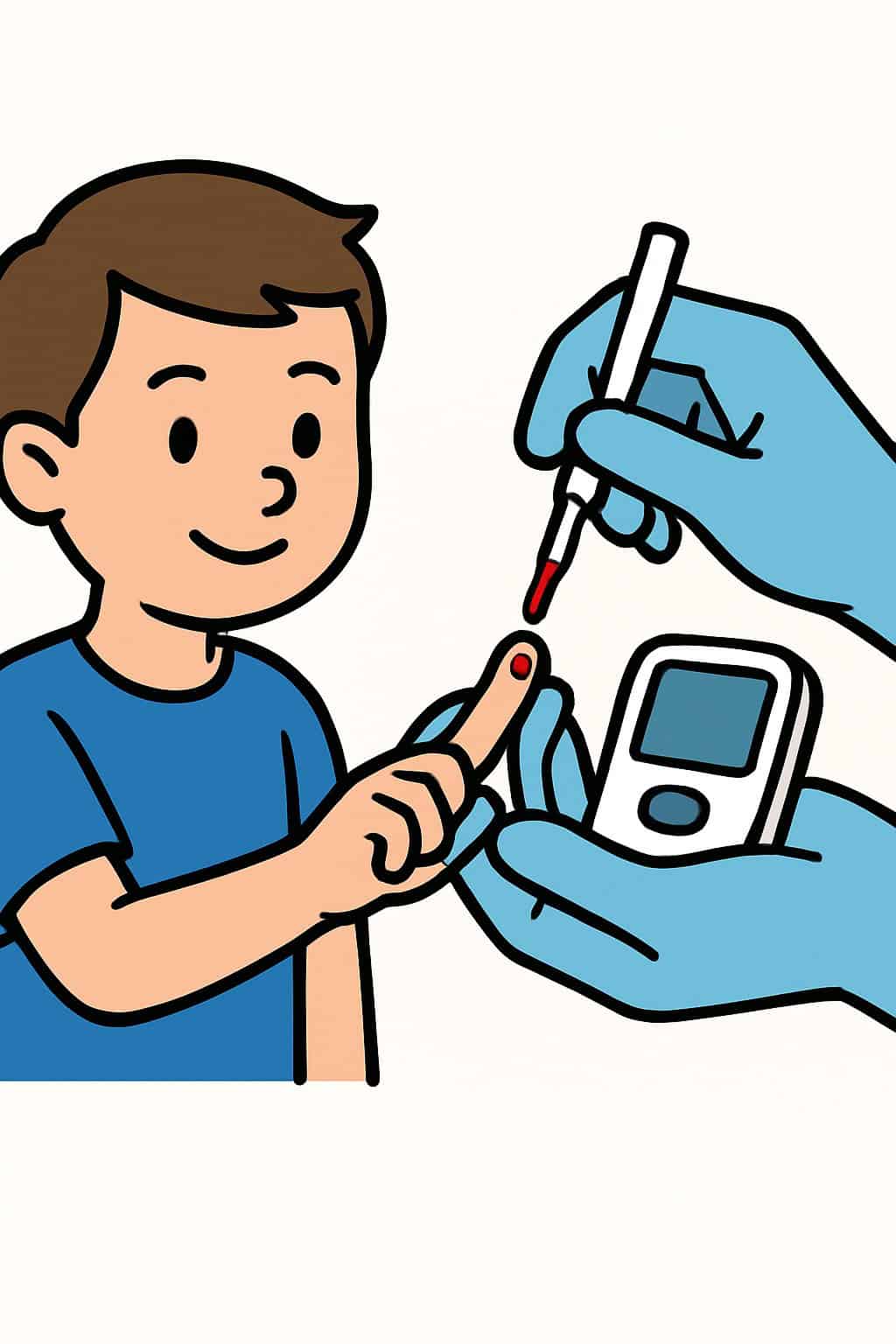
A blood lead level test measures the amount of lead in your blood. Results are reported in micrograms per deciliter (µg/dL). Clinics use this test to check for recent or ongoing lead exposure. A small blood sample is taken by fingerstick (capillary) or from a vein in the arm (venous). A venous test is often used to confirm an elevated fingerstick result.
Also known as: Blood lead test, BLL test, Lead blood test, Blood lead level (BLL)
Preparation & Next Steps
Everything you need to know before and after your procedure
Before Care
- No fasting is usually needed for a blood lead test; follow any clinic instructions provided
- Bring a photo ID and any lab order or form your clinic gave you
- Share recent or potential sources of lead exposure, including work and hobbies
- Tell the staff about bleeding problems, fainting with blood draws, or difficult draws in the past
- Drink water beforehand so veins are easier to access unless you were told otherwise
- For fingerstick screening, wash hands with soap and water and avoid lotions or powders to reduce contamination
- Plan how you will get your results, such as through a patient portal or phone call
- If a child is being tested, bring a comfort item and plan for gentle restraint to keep the hand or arm still
After Care
- Keep the bandage on and apply gentle pressure for several minutes to limit bleeding or bruising
- Expect mild soreness or a small bruise; using a cool pack briefly can help with tenderness
- If bleeding does not stop with pressure or you feel lightheaded, contact the clinic
- Resume normal activities as you feel able
- Check your portal or with the clinic about when results will be available
- If a fingerstick result is elevated, a venous blood test may be arranged to confirm
- Ask the clinic or local health department about resources to identify and reduce environmental lead sources
- Keep follow-up appointments and any repeat testing that the clinic schedules
Clinical Information
Important medical details about this procedure
Indications
- Screening for children at ages or in areas where risk is higher
- Possible exposure to lead in older housing, water, soil, or hobbies
- Workplace exposure to lead (for example, construction, battery, smelting)
- Follow-up after a prior elevated blood lead level
- Pregnancy with possible exposure to lead
- Evaluation of symptoms that may be linked to lead exposure
Alternatives
- Environmental testing of home paint, dust, soil, or water to find sources of lead
- Zinc protoporphyrin (ZPP) blood test in some occupational settings, not a substitute for a blood lead level
Risks
- Brief pain, bruising, or bleeding at the collection site
- Lightheadedness or fainting during or after the draw
- Rare infection at the puncture site
- Fingerstick screening can be falsely high if the skin is contaminated with lead dust
Contraindications
- Active skin infection at the puncture site
- Severe bleeding disorder that may require special handling
Recovery Timeline
What to expect during your recovery
Most people return to normal activities right after the blood draw. Minor soreness or bruising may occur for a day or two.
Typical Range
Same day
Return to Work
Same day
Recovery Milestones
Resume normal daily activities
Keep bandage on and monitor the site for bleeding or increasing pain
Review results via portal or clinic call
Complete any recommended confirmatory or follow-up testing
Frequently Asked Questions
Common questions and expert answers about this procedure
What is a blood lead level test?
What is a blood lead level test?
It measures how much lead is in your blood, reported in micrograms per deciliter (µg/dL). It helps check for recent or ongoing lead exposure.
How is the sample collected?
How is the sample collected?
A small sample is taken by fingerstick (capillary) or from a vein in your arm (venous). A venous test is often used to confirm an elevated fingerstick result.
Do I need to fast or stop medicines?
Do I need to fast or stop medicines?
No special preparation is usually needed. Follow any instructions from your clinic and tell staff about medicines and supplements you take.
How long do results take?
How long do results take?
Timing varies by clinic and lab. Many results are ready within a few days. Point-of-care fingerstick analyzers may provide same-day screening results.
What do the numbers mean?
What do the numbers mean?
Results are in µg/dL. Public health agencies use reference values and guidelines to decide on follow-up and environmental actions.
Are home lead test kits the same as a blood test?
Are home lead test kits the same as a blood test?
No. Home kits check for lead in paint or surfaces, not in people. They can help find sources but do not replace a blood test.
Is a fingerstick test accurate?
Is a fingerstick test accurate?
Fingerstick tests are useful for screening but can be falsely high if the skin has lead dust. A venous blood draw is used to confirm elevated results.
Who gets tested?
Who gets tested?
Testing is common for young children, people with possible exposure at home or work, and for follow-up after a prior elevated result.
References
Medical literature and sources