%20--%3e%3csvg%20version='1.0'%20id='Layer_1'%20xmlns='http://www.w3.org/2000/svg'%20xmlns:xlink='http://www.w3.org/1999/xlink'%20x='0px'%20y='0px'%20viewBox='0%200%20755.52%20814.35'%20style='enable-background:new%200%200%20755.52%20814.35;'%20xml:space='preserve'%3e%3cstyle%20type='text/css'%3e%20.st0{fill:%231ae5ce;stroke:%231ae5ce;stroke-width:7;stroke-miterlimit:10;}%20.st1{fill:%23FFFFFF;stroke:%231ae5ce;stroke-width:7;stroke-miterlimit:10;}%20.st2{fill:%231ae5ce;stroke:%23FFFFFF;stroke-width:7;stroke-miterlimit:10;}%20.st3{fill:%23FFFFFF;stroke:%23FFFFFF;stroke-width:6;stroke-miterlimit:10;}%20%3c/style%3e%3cg%20id='Dark_Logo_00000159431215648494653180000015900878925932721032_'%3e%3cpath%20id='shield_00000152259091539869183100000001926543869452564382_'%20class='st0'%20d='M711.13,173.42%20c-3.37-49.07-38.92-44.9-75.96-52.18c-67.4-13.25-130.47-34.47-192.36-63.92c-22.48-10.7-41.88-25.74-65.05-26.28%20c-23.17,0.54-42.58,15.59-65.05,26.28c-61.89,29.45-124.95,50.68-192.36,63.92c-37.04,7.28-72.59,3.11-75.96,52.18%20c-1.55,22.6,0.34,46.4,1.05,68.92c5.99,190.78,52.91,345.39,206.27,466.46c29.71,23.46,74.51,55.8,108.84,70.75%20c5.99,2.61,11.7,3.73,17.21,3.75c5.51-0.02,11.22-1.14,17.21-3.75c34.33-14.95,79.12-47.3,108.84-70.75%20c153.37-121.07,200.28-275.68,206.27-466.46C710.79,219.82,712.68,196.02,711.13,173.42z'/%3e%3cpath%20id='magnifyingglass_00000073685934697636024790000000342567780940956808_'%20class='st1'%20d='M648.78,624.21l-96.64-104.65%20c34.89-40.63,55.98-93.46,55.98-151.21c0-128.27-103.98-232.24-232.24-232.24S143.63,240.08,143.63,368.35%20s103.98,232.24,232.24,232.24c48.87,0,94.21-15.11,131.62-40.89l97.18,105.24c11.25,12.18,30.24,12.93,42.42,1.69l0,0%20C659.27,655.38,660.03,636.39,648.78,624.21z'/%3e%3ccircle%20id='ellipse_00000129904010550392394720000017056154833629780114_'%20class='st2'%20cx='375.87'%20cy='368.35'%20r='181.21'/%3e%3cpath%20id='dollarsign_00000057140127156649725250000003772530148495155891_'%20class='st3'%20d='M362.91,492.03v-23.91%20c0-2.01-1.58-3.69-3.59-3.77c-18.49-0.78-37.12-5.4-49.4-11.83c-1.75-0.92-2.53-3.01-1.76-4.84l5.87-13.89%20c0.86-2.02,3.23-2.88,5.2-1.89c12.94,6.52,30.45,11.44,49.18,11.44c26.02,0,43.6-12.73,43.6-30.43c0-17.08-14.29-27.63-41.4-36.95%20c-37.37-12.42-60.46-26.7-60.46-53.72c0-24.97,20.29-44.11,52.22-49.51c1.8-0.31,3.11-1.89,3.11-3.72v-24.35%20c0-2.09,1.69-3.78,3.78-3.78h15.16c2.09,0,3.78,1.69,3.78,3.78v22.71c0,2.01,1.58,3.67,3.58,3.77c17.85,0.92,30.88,4.75,40.61,9.1%20c1.92,0.86,2.79,3.09,1.94,5.01l-6.08,13.6c-0.85,1.91-3.09,2.77-4.99,1.91c-8.37-3.8-22.38-8.95-42.75-8.95%20c-28.21,0-38.84,14.28-38.84,26.7c0,16.15,13.56,24.22,45.44,35.4c37.74,13.04,56.79,29.19,56.79,56.82%20c0,23.85-19.05,46.23-54.78,52.3c-1.8,0.31-3.11,1.89-3.11,3.72v25.28c0,2.09-1.69,3.78-3.78,3.78h-15.53%20C364.6,495.81,362.91,494.12,362.91,492.03z'/%3e%3c/g%3e%3c/svg%3e)
Lipid Panel (Cholesterol) Laboratory Test
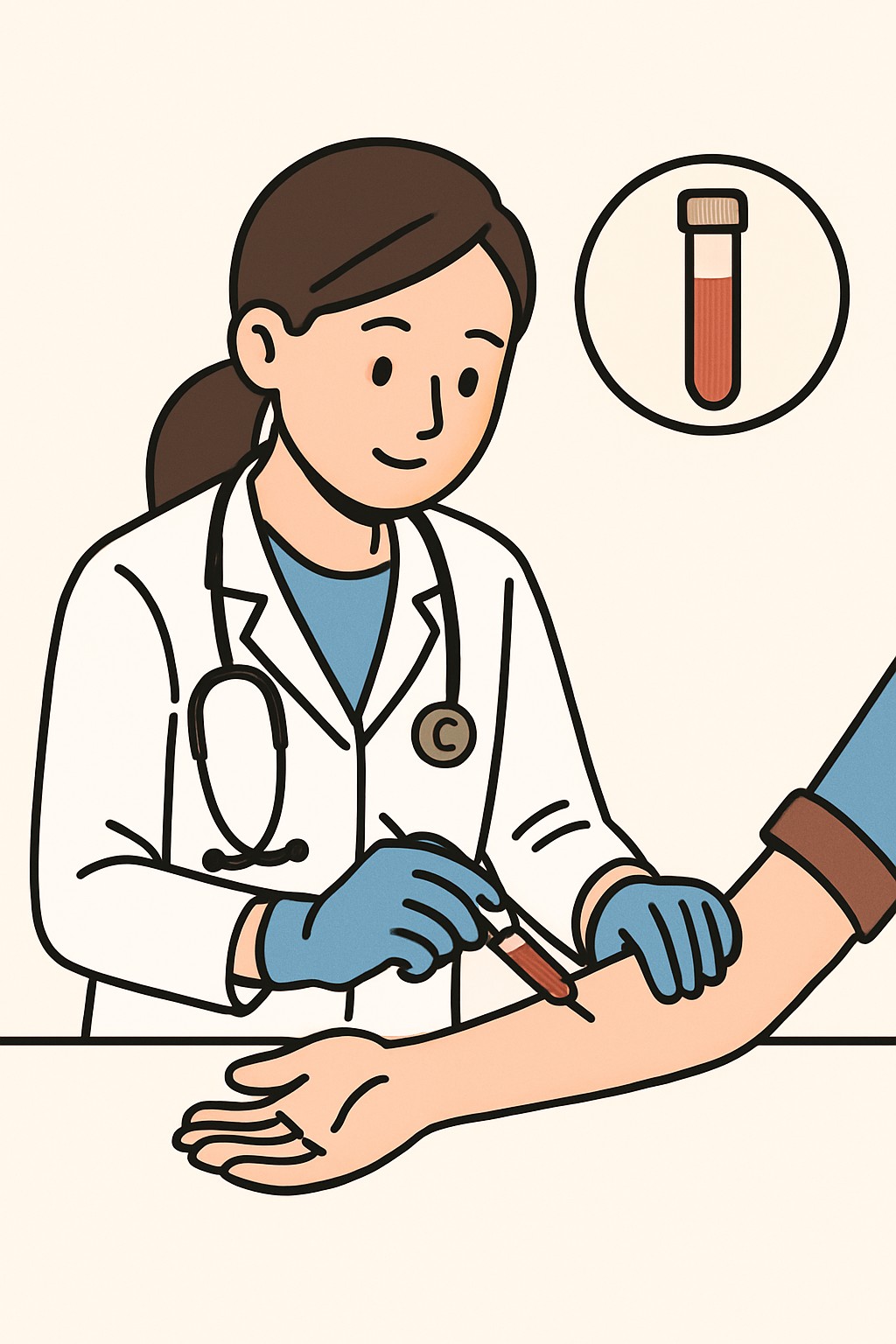
A lipid panel is a blood test that measures fats in your blood, including total cholesterol, LDL cholesterol, HDL cholesterol, and triglycerides.
Overview
A lipid panel is a blood test that measures fats in your blood, including total cholesterol, LDL cholesterol, HDL cholesterol, and triglycerides. These numbers help estimate your risk for heart disease and stroke. Clinicians use lipid panels to screen for high cholesterol, to monitor treatment like statins or lifestyle changes, and to check for very high triglycerides that can raise the risk of pancreatitis. Some labs accept nonfasting samples; others may ask you to fast first.
Also known as: Cholesterol test, Lipid profile, Fasting lipid panel
Preparation & Next Steps
Everything you need to know before and after your procedure
Before Care
- Confirm with the lab or ordering clinician whether fasting is required; many labs ask for 9–12 hours of fasting for an initial panel or high triglycerides
- If fasting is requested, drink water only and avoid food and most beverages during the fasting window unless told otherwise
- Bring your photo ID, insurance card, lab order, and a form of payment if needed
- Wear sleeves that roll up easily for a blood draw from the arm
- Carry an up-to-date list of medicines and supplements, including over-the-counter products
- Avoid unusually heavy exercise right before the test, which can change some lipid levels
- Ask the lab about hours, appointment needs, and whether a nonfasting sample is acceptable for your situation
- Plan a small snack for after the draw if you fasted
After Care
- Apply gentle pressure to the puncture site for several minutes and keep the bandage on for a few hours
- Resume normal eating and drinking after the draw unless you were given specific instructions
- Drink water and consider a light snack if you fasted and feel lightheaded
- Expect minor soreness or a small bruise at the site that usually improves in a day or two
- Check your patient portal or contact the lab for when results will be available
- Keep a copy of your results and prior lipid panels for comparison
- Contact a clinician if you have persistent bleeding, significant swelling, warmth, or pus at the site
- Plan how you will review results and next steps, such as lifestyle changes or medicine adjustments, with your care team
Clinical Information
Important medical details about this procedure
Indications
- Screening for high cholesterol
- Assessing cardiovascular risk
- Monitoring response to cholesterol-lowering treatment
- Evaluating high triglycerides and pancreatitis risk
- Follow-up of abnormal lipid results
- Family history of early heart disease or inherited lipid disorders
- Baseline testing before certain medicines that affect lipids
Alternatives
- Nonfasting lipid panel when acceptable
- Direct LDL cholesterol test
- Non-HDL cholesterol calculation from the panel
- Apolipoprotein B (ApoB) test
- Lipoprotein(a) [Lp(a)] test
- Point-of-care fingerstick lipid testing
- Use of cardiovascular risk calculators with existing data
Risks
- Bruising, soreness, or bleeding at the needle site
- Lightheadedness or fainting with blood draws
- Rare infection at the draw site
- Sample or lab issues that require a repeat test
- Results affected by recent food, alcohol, illness, or some medicines
Contraindications
- Active skin infection or injury at the draw site
- Uncontrolled bleeding disorders without special planning
- Recent eating or drinking when a fasting sample is required
- Severe needle phobia without available support
Recovery Timeline
What to expect during your recovery
There is no medical recovery period after a lipid panel blood draw. Most people continue normal activities right away.
Typical Range
Same day
Return to Work
Same day
Recovery Milestones
Resume normal daily activities
Remove bandage once bleeding has stopped
Expect mild soreness or bruising at the draw site to improve
Review results via portal or with your clinician
Frequently Asked Questions
Common questions and expert answers about this procedure
What does a lipid panel measure?
What does a lipid panel measure?
It measures total cholesterol, LDL cholesterol, HDL cholesterol, and triglycerides. Some reports also include non-HDL cholesterol.
Do I need to fast for a lipid panel?
Do I need to fast for a lipid panel?
Many labs accept nonfasting samples. Fasting for 9–12 hours is sometimes requested, especially for initial testing or when triglycerides are high.
How long does the test take and when will I get results?
How long does the test take and when will I get results?
The blood draw usually takes a few minutes. Results are often posted to your portal or sent to your clinician within a few days.
What affects my cholesterol numbers?
What affects my cholesterol numbers?
Recent food and alcohol, illness, pregnancy, weight changes, and some medicines can change lipid levels temporarily.
What is the difference between LDL and HDL?
What is the difference between LDL and HDL?
LDL is often called the main cholesterol linked to plaque buildup, while HDL helps carry cholesterol away. Both are considered when estimating risk.
How often is a lipid panel done?
How often is a lipid panel done?
Timing varies based on age, risk factors, and treatment plans. Screening and follow-up schedules are set by guidelines and your care team.
Is a fingerstick cholesterol test accurate?
Is a fingerstick cholesterol test accurate?
Point-of-care tests can give quick estimates. Many decisions still use standardized laboratory testing from a vein sample.
What are ApoB and Lp(a), and do they replace a lipid panel?
What are ApoB and Lp(a), and do they replace a lipid panel?
They are additional blood tests that can refine risk in some people. They supplement, not replace, a standard lipid panel.
References
Medical literature and sources