%20--%3e%3csvg%20version='1.0'%20id='Layer_1'%20xmlns='http://www.w3.org/2000/svg'%20xmlns:xlink='http://www.w3.org/1999/xlink'%20x='0px'%20y='0px'%20viewBox='0%200%20755.52%20814.35'%20style='enable-background:new%200%200%20755.52%20814.35;'%20xml:space='preserve'%3e%3cstyle%20type='text/css'%3e%20.st0{fill:%231ae5ce;stroke:%231ae5ce;stroke-width:7;stroke-miterlimit:10;}%20.st1{fill:%23FFFFFF;stroke:%231ae5ce;stroke-width:7;stroke-miterlimit:10;}%20.st2{fill:%231ae5ce;stroke:%23FFFFFF;stroke-width:7;stroke-miterlimit:10;}%20.st3{fill:%23FFFFFF;stroke:%23FFFFFF;stroke-width:6;stroke-miterlimit:10;}%20%3c/style%3e%3cg%20id='Dark_Logo_00000159431215648494653180000015900878925932721032_'%3e%3cpath%20id='shield_00000152259091539869183100000001926543869452564382_'%20class='st0'%20d='M711.13,173.42%20c-3.37-49.07-38.92-44.9-75.96-52.18c-67.4-13.25-130.47-34.47-192.36-63.92c-22.48-10.7-41.88-25.74-65.05-26.28%20c-23.17,0.54-42.58,15.59-65.05,26.28c-61.89,29.45-124.95,50.68-192.36,63.92c-37.04,7.28-72.59,3.11-75.96,52.18%20c-1.55,22.6,0.34,46.4,1.05,68.92c5.99,190.78,52.91,345.39,206.27,466.46c29.71,23.46,74.51,55.8,108.84,70.75%20c5.99,2.61,11.7,3.73,17.21,3.75c5.51-0.02,11.22-1.14,17.21-3.75c34.33-14.95,79.12-47.3,108.84-70.75%20c153.37-121.07,200.28-275.68,206.27-466.46C710.79,219.82,712.68,196.02,711.13,173.42z'/%3e%3cpath%20id='magnifyingglass_00000073685934697636024790000000342567780940956808_'%20class='st1'%20d='M648.78,624.21l-96.64-104.65%20c34.89-40.63,55.98-93.46,55.98-151.21c0-128.27-103.98-232.24-232.24-232.24S143.63,240.08,143.63,368.35%20s103.98,232.24,232.24,232.24c48.87,0,94.21-15.11,131.62-40.89l97.18,105.24c11.25,12.18,30.24,12.93,42.42,1.69l0,0%20C659.27,655.38,660.03,636.39,648.78,624.21z'/%3e%3ccircle%20id='ellipse_00000129904010550392394720000017056154833629780114_'%20class='st2'%20cx='375.87'%20cy='368.35'%20r='181.21'/%3e%3cpath%20id='dollarsign_00000057140127156649725250000003772530148495155891_'%20class='st3'%20d='M362.91,492.03v-23.91%20c0-2.01-1.58-3.69-3.59-3.77c-18.49-0.78-37.12-5.4-49.4-11.83c-1.75-0.92-2.53-3.01-1.76-4.84l5.87-13.89%20c0.86-2.02,3.23-2.88,5.2-1.89c12.94,6.52,30.45,11.44,49.18,11.44c26.02,0,43.6-12.73,43.6-30.43c0-17.08-14.29-27.63-41.4-36.95%20c-37.37-12.42-60.46-26.7-60.46-53.72c0-24.97,20.29-44.11,52.22-49.51c1.8-0.31,3.11-1.89,3.11-3.72v-24.35%20c0-2.09,1.69-3.78,3.78-3.78h15.16c2.09,0,3.78,1.69,3.78,3.78v22.71c0,2.01,1.58,3.67,3.58,3.77c17.85,0.92,30.88,4.75,40.61,9.1%20c1.92,0.86,2.79,3.09,1.94,5.01l-6.08,13.6c-0.85,1.91-3.09,2.77-4.99,1.91c-8.37-3.8-22.38-8.95-42.75-8.95%20c-28.21,0-38.84,14.28-38.84,26.7c0,16.15,13.56,24.22,45.44,35.4c37.74,13.04,56.79,29.19,56.79,56.82%20c0,23.85-19.05,46.23-54.78,52.3c-1.8,0.31-3.11,1.89-3.11,3.72v25.28c0,2.09-1.69,3.78-3.78,3.78h-15.53%20C364.6,495.81,362.91,494.12,362.91,492.03z'/%3e%3c/g%3e%3c/svg%3e)
Prothrombin Time / INR Laboratory Test
Prothrombin Time and International Normalized Ratio are blood tests that show how quickly blood forms a clot.
Overview
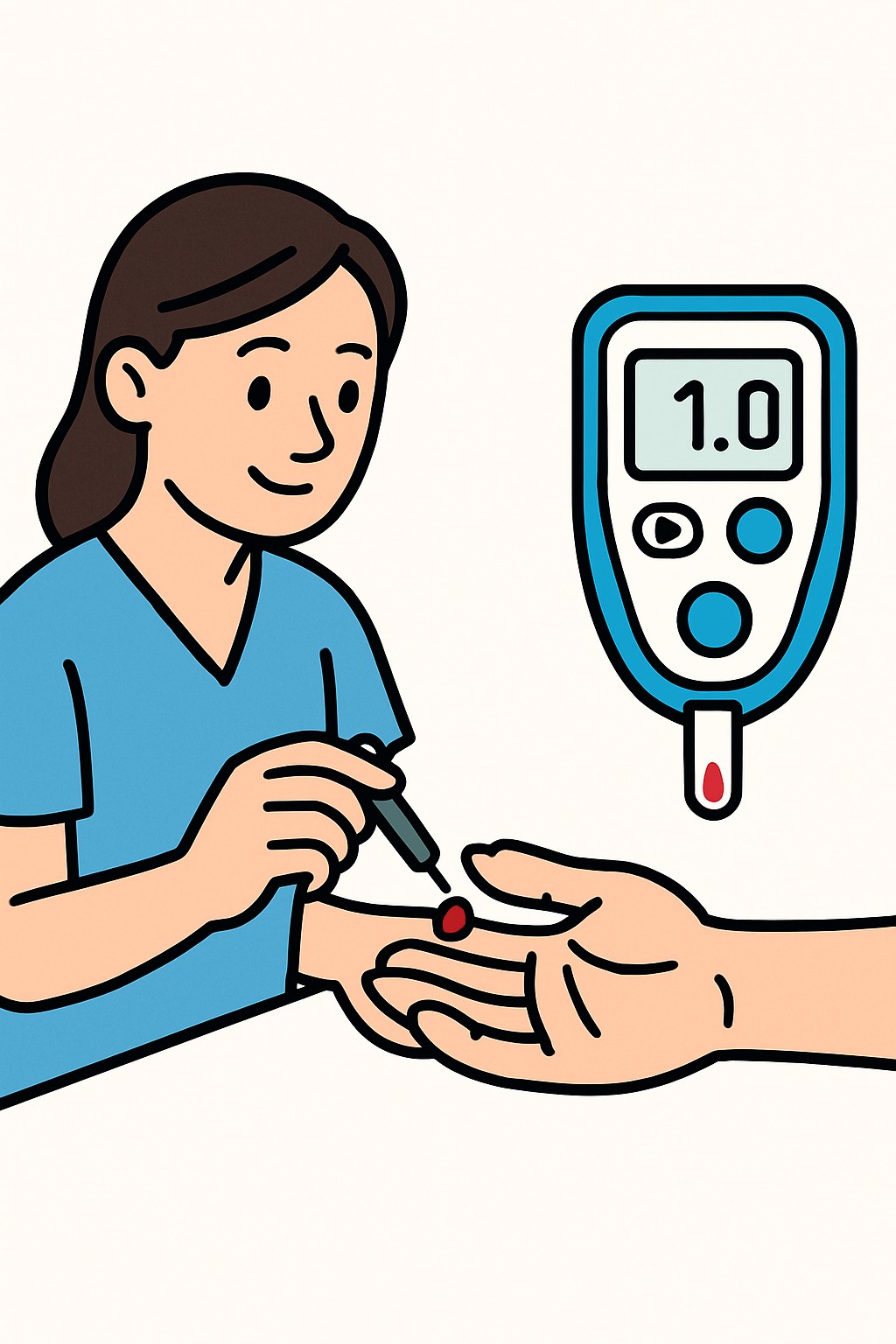
Prothrombin Time and International Normalized Ratio are blood tests that show how quickly blood forms a clot. PT measures clotting time in seconds. INR is a standardized number that lets results be compared across different labs. These tests are often used to monitor warfarin therapy, check for bleeding or clotting problems, and assess liver function. They can also be part of pre-surgery testing.
Also known as: PT test, INR test, Protime, PT/INR
Preparation & Next Steps
Everything you need to know before and after your procedure
Before Care
- Confirm test instructions from the ordering clinician or lab. Fasting is usually not required for PT/INR.
- Bring a government ID, insurance card, and the lab order or requisition.
- Carry an up-to-date list of all medicines and supplements, including over-the-counter items and herbals.
- Ask the lab about timing. For serial monitoring, draws are often done at consistent times of day.
- Be aware that vitamin K intake, alcohol, and new medicines can affect INR. Labs may ask for a consistent diet when monitoring warfarin.
- Drink water beforehand unless told otherwise to help with vein access.
- Wear short sleeves or clothing that allows easy access to the arm.
- Plan extra time in case the lab is busy or if repeat sampling is needed.
- If you have a history of fainting with blood draws, consider arranging a ride or support person.
After Care
- Keep firm pressure on the site for several minutes, then leave the bandage on for a few hours.
- Avoid heavy lifting or strenuous use of the drawn arm for the rest of the day if the site is sore.
- If bruising occurs, a cool compress may help during the first day.
- Watch for ongoing bleeding, increasing pain, warmth, redness, or swelling at the site and contact a clinician if these appear.
- Review results in your patient portal or as provided by the lab or clinic.
- Record the date, time, and lab that performed the test to track trends over time.
- Tell your care team about any new or changed medicines, supplements, or major diet changes since the last test.
- Follow the plan from your care team for the next PT/INR check if ongoing monitoring is needed.
- If you use a home INR device, follow the manufacturer instructions and your program’s quality checks.
Clinical Information
Important medical details about this procedure
Indications
- Monitoring warfarin anticoagulant therapy
- Unexplained bleeding, easy bruising, or nosebleeds
- Pre-operative coagulation screening
- Evaluation of liver disease or damage
- Suspected vitamin K deficiency
- Assessment for disseminated intravascular coagulation
- Follow-up of abnormal prior coagulation tests
Alternatives
- Activated partial thromboplastin time (aPTT)
- Anti-factor Xa level for certain anticoagulants
- Thrombin time
- Specific clotting factor assays
- Mixing studies for factor deficiencies or inhibitors
- Liver function panel when liver issues are suspected
Risks
- Minor pain or bruising at the needle site
- Bleeding or hematoma at the draw site
- Lightheadedness or fainting during or after the draw
- Very small risk of skin infection at the puncture site
- Results affected by medicines, diet, alcohol, or sample handling
Contraindications
- No absolute contraindications to routine venipuncture
- Avoid drawing from areas with infection, injury, or severe swelling
- Use caution in limbs with lymphedema or after lymph node removal
Recovery Timeline
What to expect during your recovery
This is a routine blood draw. Most people return to normal activities right away. The puncture site may be tender or bruise slightly for 1 to 2 days.
Typical Range
Same day
Return to Work
Same day
Recovery Milestones
Resume normal daily activities
Protect the draw site and avoid heavy arm strain if sore
Review results and note any instructions from the care team
Frequently Asked Questions
Common questions and expert answers about this procedure
What do PT and INR measure?
What do PT and INR measure?
PT measures how long blood takes to clot. INR converts that time into a standardized number so results from different labs can be compared.
Do I need to fast for a PT/INR test?
Do I need to fast for a PT/INR test?
Fasting is usually not needed. Some labs prefer a consistent time of day for repeat checks.
What can affect my INR result?
What can affect my INR result?
Warfarin, many prescription and over-the-counter medicines, herbal products, alcohol, illness, and vitamin K intake can change INR.
How quickly will I get results?
How quickly will I get results?
Many labs report results the same day. Point-of-care devices can provide results in minutes.
What does a high INR mean?
What does a high INR mean?
A higher INR means blood is taking longer to clot. In people not on anticoagulants, INR is often near 1.0. Target ranges for warfarin are set by the care team based on the condition.
Does PT/INR monitor newer blood thinners?
Does PT/INR monitor newer blood thinners?
PT/INR does not reliably monitor most direct oral anticoagulants. Other tests may be used if measurement is needed.
Can I test INR at home?
Can I test INR at home?
Home INR meters exist for selected patients on warfarin. Programs usually require training, periodic quality checks, and coordination with a clinician.