%20--%3e%3csvg%20version='1.0'%20id='Layer_1'%20xmlns='http://www.w3.org/2000/svg'%20xmlns:xlink='http://www.w3.org/1999/xlink'%20x='0px'%20y='0px'%20viewBox='0%200%20755.52%20814.35'%20style='enable-background:new%200%200%20755.52%20814.35;'%20xml:space='preserve'%3e%3cstyle%20type='text/css'%3e%20.st0{fill:%231ae5ce;stroke:%231ae5ce;stroke-width:7;stroke-miterlimit:10;}%20.st1{fill:%23FFFFFF;stroke:%231ae5ce;stroke-width:7;stroke-miterlimit:10;}%20.st2{fill:%231ae5ce;stroke:%23FFFFFF;stroke-width:7;stroke-miterlimit:10;}%20.st3{fill:%23FFFFFF;stroke:%23FFFFFF;stroke-width:6;stroke-miterlimit:10;}%20%3c/style%3e%3cg%20id='Dark_Logo_00000159431215648494653180000015900878925932721032_'%3e%3cpath%20id='shield_00000152259091539869183100000001926543869452564382_'%20class='st0'%20d='M711.13,173.42%20c-3.37-49.07-38.92-44.9-75.96-52.18c-67.4-13.25-130.47-34.47-192.36-63.92c-22.48-10.7-41.88-25.74-65.05-26.28%20c-23.17,0.54-42.58,15.59-65.05,26.28c-61.89,29.45-124.95,50.68-192.36,63.92c-37.04,7.28-72.59,3.11-75.96,52.18%20c-1.55,22.6,0.34,46.4,1.05,68.92c5.99,190.78,52.91,345.39,206.27,466.46c29.71,23.46,74.51,55.8,108.84,70.75%20c5.99,2.61,11.7,3.73,17.21,3.75c5.51-0.02,11.22-1.14,17.21-3.75c34.33-14.95,79.12-47.3,108.84-70.75%20c153.37-121.07,200.28-275.68,206.27-466.46C710.79,219.82,712.68,196.02,711.13,173.42z'/%3e%3cpath%20id='magnifyingglass_00000073685934697636024790000000342567780940956808_'%20class='st1'%20d='M648.78,624.21l-96.64-104.65%20c34.89-40.63,55.98-93.46,55.98-151.21c0-128.27-103.98-232.24-232.24-232.24S143.63,240.08,143.63,368.35%20s103.98,232.24,232.24,232.24c48.87,0,94.21-15.11,131.62-40.89l97.18,105.24c11.25,12.18,30.24,12.93,42.42,1.69l0,0%20C659.27,655.38,660.03,636.39,648.78,624.21z'/%3e%3ccircle%20id='ellipse_00000129904010550392394720000017056154833629780114_'%20class='st2'%20cx='375.87'%20cy='368.35'%20r='181.21'/%3e%3cpath%20id='dollarsign_00000057140127156649725250000003772530148495155891_'%20class='st3'%20d='M362.91,492.03v-23.91%20c0-2.01-1.58-3.69-3.59-3.77c-18.49-0.78-37.12-5.4-49.4-11.83c-1.75-0.92-2.53-3.01-1.76-4.84l5.87-13.89%20c0.86-2.02,3.23-2.88,5.2-1.89c12.94,6.52,30.45,11.44,49.18,11.44c26.02,0,43.6-12.73,43.6-30.43c0-17.08-14.29-27.63-41.4-36.95%20c-37.37-12.42-60.46-26.7-60.46-53.72c0-24.97,20.29-44.11,52.22-49.51c1.8-0.31,3.11-1.89,3.11-3.72v-24.35%20c0-2.09,1.69-3.78,3.78-3.78h15.16c2.09,0,3.78,1.69,3.78,3.78v22.71c0,2.01,1.58,3.67,3.58,3.77c17.85,0.92,30.88,4.75,40.61,9.1%20c1.92,0.86,2.79,3.09,1.94,5.01l-6.08,13.6c-0.85,1.91-3.09,2.77-4.99,1.91c-8.37-3.8-22.38-8.95-42.75-8.95%20c-28.21,0-38.84,14.28-38.84,26.7c0,16.15,13.56,24.22,45.44,35.4c37.74,13.04,56.79,29.19,56.79,56.82%20c0,23.85-19.05,46.23-54.78,52.3c-1.8,0.31-3.11,1.89-3.11,3.72v25.28c0,2.09-1.69,3.78-3.78,3.78h-15.53%20C364.6,495.81,362.91,494.12,362.91,492.03z'/%3e%3c/g%3e%3c/svg%3e)
Thyroid Stimulating Hormone (TSH) Laboratory Test
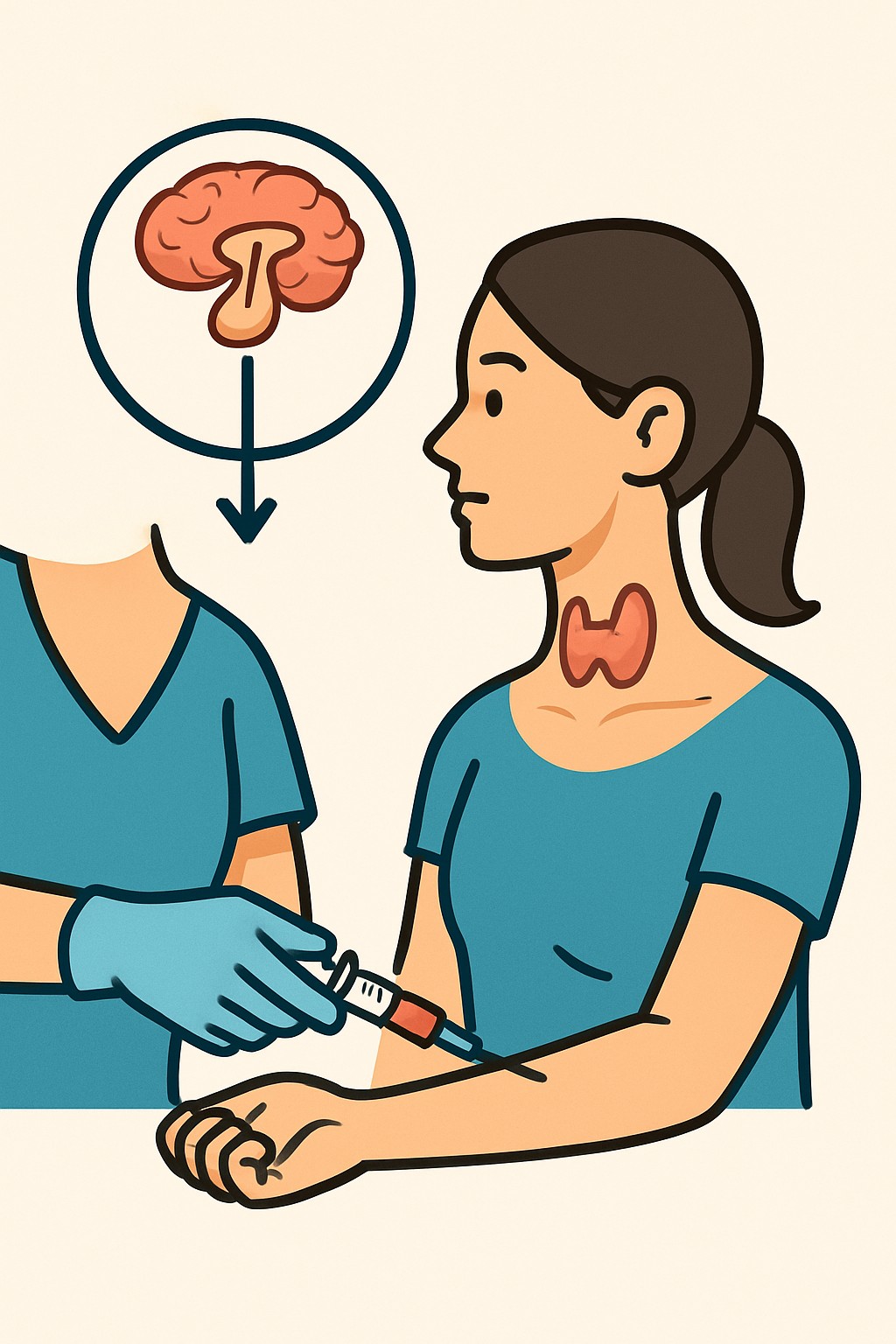
A Thyroid Stimulating Hormone (TSH) test is a blood test that measures the level of TSH, a hormone made by the pituitary gland that helps control how the thyroid works.
Overview
A Thyroid Stimulating Hormone (TSH) test is a blood test that measures the level of TSH, a hormone made by the pituitary gland that helps control how the thyroid works. TSH levels help show whether the thyroid is underactive, overactive, or responding to treatment. Clinicians often order TSH alone or with other thyroid tests to check symptoms, confirm a suspected thyroid condition, or monitor thyroid medicines over time.
Also known as: TSH test, Thyrotropin test, Thyroid-stimulating hormone test
Preparation & Next Steps
Everything you need to know before and after your procedure
Before Care
- Fasting is usually not needed for a TSH test; follow any instructions if other labs are ordered at the same time
- Bring a photo ID, your lab order, and insurance information
- Tell the lab about all medicines and supplements you take, especially biotin (vitamin B7) in hair, skin, and nail products, which can interfere with some tests
- If you use thyroid medicine or other hormones, confirm any timing instructions that came with your lab order
- Drink water and wear sleeves that roll up easily to help with the blood draw
- Let staff know before the draw if you have a bleeding disorder, take blood thinners, or have had fainting with blood draws
- Plan how you will receive results (patient portal, phone call, or follow-up visit)
- If repeat monitoring is planned, using a similar time of day and the same lab method may help with consistency
After Care
- Hold gentle pressure on the site after the needle is removed and keep the bandage on for about 15–30 minutes
- Expect mild soreness or a small bruise; a cold pack wrapped in cloth for short periods the first day may help
- Avoid heavy lifting or strenuous use of the draw arm for several hours
- Drink fluids and eat as usual unless other tests required fasting
- Check your patient portal or follow the lab’s process to view results and any comments
- Keep a copy of your results for your records, noting the lab’s reference range and date
- If bleeding does not stop, swelling increases, or the site becomes very painful, warm, or red, contact the ordering clinic
- Ask your clinician or lab about the expected timing for results and any planned follow-up
Clinical Information
Important medical details about this procedure
Indications
- Symptoms of underactive thyroid (fatigue, weight gain, cold intolerance, dry skin, constipation)
- Symptoms of overactive thyroid (weight loss, heat intolerance, palpitations, anxiety, tremor)
- Abnormal results on other thyroid tests
- Monitoring thyroid hormone replacement or antithyroid therapy
- Goiter or thyroid nodules as part of evaluation
- Pituitary or hypothalamic disorders that may affect TSH
- Screening when thyroid disease is suspected during pregnancy
Alternatives
- Free T4 and Free T3 blood tests
- Thyroid antibody tests (e.g., TPOAb, TRAb) when autoimmune disease is suspected
- TSH with reflex to Free T4 testing strategy
- Repeat testing after a short interval when results are borderline
- Clinical assessment and watchful waiting if appropriate
Risks
- Minor pain, bruising, or bleeding at the blood draw site
- Lightheadedness or fainting during or after the draw
- Infection at the puncture site (rare)
- Test interference from some medicines or supplements (for example, biotin)
- Unexpected out-of-pocket costs depending on coverage and network
Contraindications
- No common absolute contraindications to routine venipuncture
- Avoiding blood draw from an arm with active infection, severe skin injury, or an IV line is common practice
- Recent high-dose biotin use may prompt scheduling at a different time due to potential lab interference
Recovery Timeline
What to expect during your recovery
Most people resume normal activities right after a TSH blood draw. Mild soreness or bruising at the site can occur and usually fades within a few days.
Typical Range
Same day
Return to Work
Same day
Recovery Milestones
Resume normal daily activities
Manage minor bruising or soreness at the draw site as needed
Review results and note any follow-up plan
Frequently Asked Questions
Common questions and expert answers about this procedure
Do I need to fast for a TSH test?
Do I need to fast for a TSH test?
Fasting is usually not required for TSH alone. If other labs were ordered, follow any instructions that came with your order.
What does the TSH test show?
What does the TSH test show?
It helps assess thyroid function. High or low TSH can suggest an underactive or overactive thyroid and is also used to monitor thyroid treatment.
Can supplements or medicines affect my TSH result?
Can supplements or medicines affect my TSH result?
Yes. Biotin supplements can interfere with some lab methods. Illness and certain medicines can also affect results. Tell the lab what you take.
How is the test done?
How is the test done?
A health professional draws a small blood sample from a vein in your arm. The lab measures TSH in the sample.
What is TSH with reflex to Free T4?
What is TSH with reflex to Free T4?
It means the lab will automatically measure Free T4 if your TSH is outside the lab’s reference range, saving an extra visit.
When will I get my results?
When will I get my results?
Many labs release results within a couple of business days, but timing varies by lab and ordering clinic.
Why might I need repeat testing?
Why might I need repeat testing?
TSH can vary, and labs or clinicians may confirm borderline results or track trends after changes in health or medicines.
Is the TSH test used during pregnancy?
Is the TSH test used during pregnancy?
TSH is commonly measured during pregnancy, and reference ranges may differ. Follow the testing plan provided by your prenatal care team.
References
Medical literature and sources