%20--%3e%3csvg%20version='1.0'%20id='Layer_1'%20xmlns='http://www.w3.org/2000/svg'%20xmlns:xlink='http://www.w3.org/1999/xlink'%20x='0px'%20y='0px'%20viewBox='0%200%20755.52%20814.35'%20style='enable-background:new%200%200%20755.52%20814.35;'%20xml:space='preserve'%3e%3cstyle%20type='text/css'%3e%20.st0{fill:%231ae5ce;stroke:%231ae5ce;stroke-width:7;stroke-miterlimit:10;}%20.st1{fill:%23FFFFFF;stroke:%231ae5ce;stroke-width:7;stroke-miterlimit:10;}%20.st2{fill:%231ae5ce;stroke:%23FFFFFF;stroke-width:7;stroke-miterlimit:10;}%20.st3{fill:%23FFFFFF;stroke:%23FFFFFF;stroke-width:6;stroke-miterlimit:10;}%20%3c/style%3e%3cg%20id='Dark_Logo_00000159431215648494653180000015900878925932721032_'%3e%3cpath%20id='shield_00000152259091539869183100000001926543869452564382_'%20class='st0'%20d='M711.13,173.42%20c-3.37-49.07-38.92-44.9-75.96-52.18c-67.4-13.25-130.47-34.47-192.36-63.92c-22.48-10.7-41.88-25.74-65.05-26.28%20c-23.17,0.54-42.58,15.59-65.05,26.28c-61.89,29.45-124.95,50.68-192.36,63.92c-37.04,7.28-72.59,3.11-75.96,52.18%20c-1.55,22.6,0.34,46.4,1.05,68.92c5.99,190.78,52.91,345.39,206.27,466.46c29.71,23.46,74.51,55.8,108.84,70.75%20c5.99,2.61,11.7,3.73,17.21,3.75c5.51-0.02,11.22-1.14,17.21-3.75c34.33-14.95,79.12-47.3,108.84-70.75%20c153.37-121.07,200.28-275.68,206.27-466.46C710.79,219.82,712.68,196.02,711.13,173.42z'/%3e%3cpath%20id='magnifyingglass_00000073685934697636024790000000342567780940956808_'%20class='st1'%20d='M648.78,624.21l-96.64-104.65%20c34.89-40.63,55.98-93.46,55.98-151.21c0-128.27-103.98-232.24-232.24-232.24S143.63,240.08,143.63,368.35%20s103.98,232.24,232.24,232.24c48.87,0,94.21-15.11,131.62-40.89l97.18,105.24c11.25,12.18,30.24,12.93,42.42,1.69l0,0%20C659.27,655.38,660.03,636.39,648.78,624.21z'/%3e%3ccircle%20id='ellipse_00000129904010550392394720000017056154833629780114_'%20class='st2'%20cx='375.87'%20cy='368.35'%20r='181.21'/%3e%3cpath%20id='dollarsign_00000057140127156649725250000003772530148495155891_'%20class='st3'%20d='M362.91,492.03v-23.91%20c0-2.01-1.58-3.69-3.59-3.77c-18.49-0.78-37.12-5.4-49.4-11.83c-1.75-0.92-2.53-3.01-1.76-4.84l5.87-13.89%20c0.86-2.02,3.23-2.88,5.2-1.89c12.94,6.52,30.45,11.44,49.18,11.44c26.02,0,43.6-12.73,43.6-30.43c0-17.08-14.29-27.63-41.4-36.95%20c-37.37-12.42-60.46-26.7-60.46-53.72c0-24.97,20.29-44.11,52.22-49.51c1.8-0.31,3.11-1.89,3.11-3.72v-24.35%20c0-2.09,1.69-3.78,3.78-3.78h15.16c2.09,0,3.78,1.69,3.78,3.78v22.71c0,2.01,1.58,3.67,3.58,3.77c17.85,0.92,30.88,4.75,40.61,9.1%20c1.92,0.86,2.79,3.09,1.94,5.01l-6.08,13.6c-0.85,1.91-3.09,2.77-4.99,1.91c-8.37-3.8-22.38-8.95-42.75-8.95%20c-28.21,0-38.84,14.28-38.84,26.7c0,16.15,13.56,24.22,45.44,35.4c37.74,13.04,56.79,29.19,56.79,56.82%20c0,23.85-19.05,46.23-54.78,52.3c-1.8,0.31-3.11,1.89-3.11,3.72v25.28c0,2.09-1.69,3.78-3.78,3.78h-15.53%20C364.6,495.81,362.91,494.12,362.91,492.03z'/%3e%3c/g%3e%3c/svg%3e)
Closed treatment of ankle fracture (no manipulation) Orthopedic Surgery
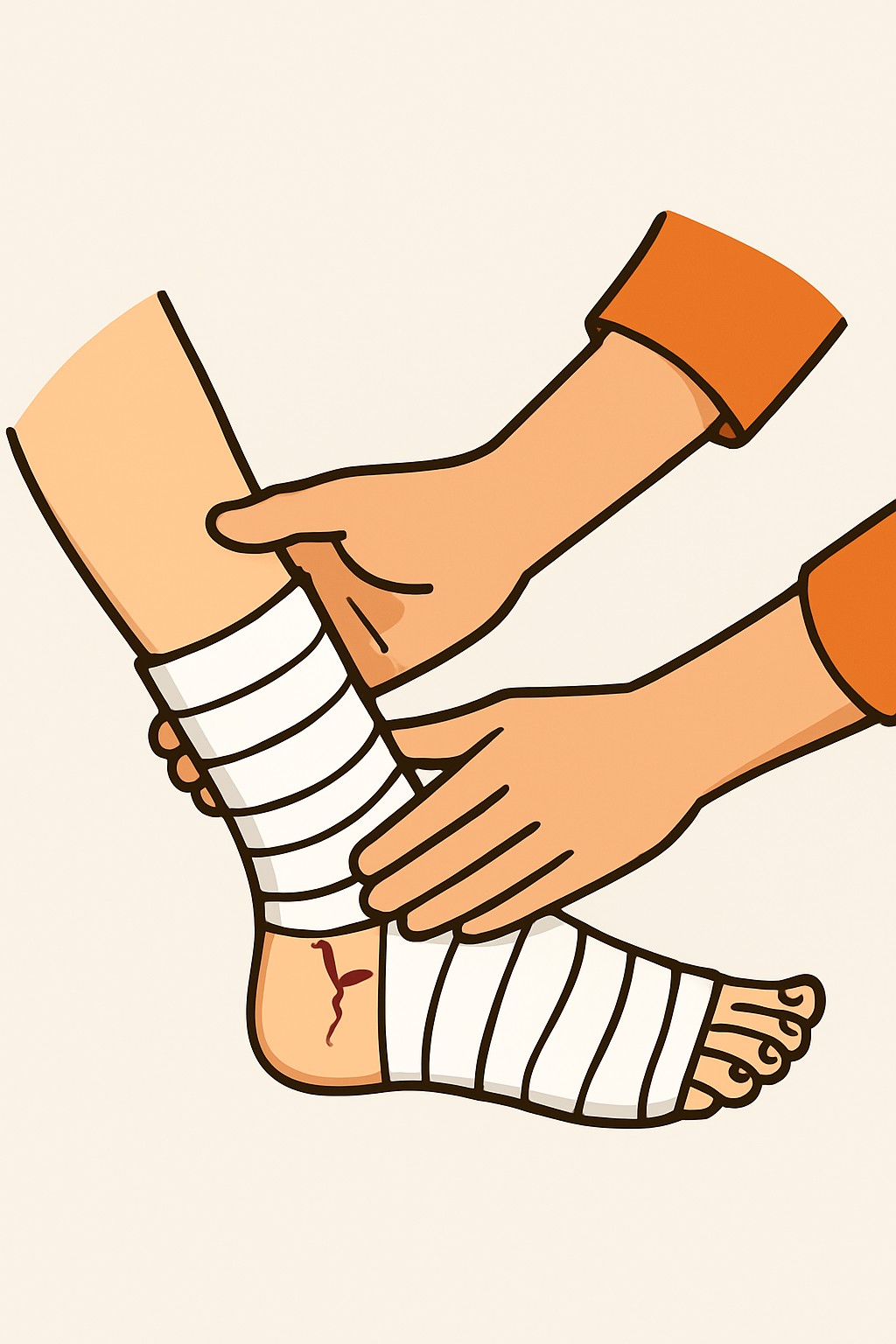
Closed treatment of an ankle fracture without manipulation is nonsurgical care for a broken ankle when the bones are already in an acceptable position.
Overview
Closed treatment of an ankle fracture without manipulation is nonsurgical care for a broken ankle when the bones are already in an acceptable position. No reduction (manual realignment) is done. The ankle is immobilized with a splint, cast, or removable walking boot to protect the bone while it heals. Follow-up visits and X-rays check alignment and healing, and the plan may be adjusted if the fracture shifts.
Also known as: Nonoperative ankle fracture care, Casting or boot for ankle fracture, Closed treatment without reduction
Preparation & Next Steps
Everything you need to know before and after your procedure
Before Care
- Expect an exam and X-rays to confirm the fracture type and that alignment is acceptable without reduction
- Wear loose clothing that can fit over a splint or cast and a shoe for the non-injured foot with good traction
- Arrange safe transportation; do not plan to drive with an immobilized or painful ankle
- Bring a list of your medicines and supplements, including any blood thinners
- Share any material allergies (for example, to fiberglass, plaster, or padding) and prior cast problems
- Plan for use of crutches, a cane, or a walker; clinic staff may size and teach safe use
- Plan time for swelling control during the first few days after immobilization
- Confirm the timing for your first follow-up visit and repeat X-rays
After Care
- Keep the splint, cast, or boot on as instructed to protect the fracture
- Keep the leg elevated on pillows when resting to help reduce swelling, especially in the first few days
- Keep casts dry; for bathing, use a waterproof cover or sponge baths to avoid soaking
- Do not insert objects into the cast for itching; keep the skin cool and dry
- Move your toes, knee, and hip regularly to help circulation and reduce stiffness
- Use cold packs over the splint or cast with a barrier to help with swelling if allowed
- Attend all follow-up appointments and X-rays to confirm the bone stays aligned
- Contact a clinician if pain increases, numbness or tingling develops, toes look pale or blue, the cast feels very tight or loose, or there is foul odor, drainage, fever, or new redness
Clinical Information
Important medical details about this procedure
Indications
- Stable or nondisplaced ankle fractures on X-ray
- Isolated lateral malleolus fracture with intact ankle stability
- Small avulsion fractures without joint displacement
- Patients where surgery is not indicated based on fracture pattern and stability
Alternatives
- Casting vs removable walking boot or functional brace
- Closed reduction with immobilization if alignment is unacceptable
- Surgical fixation (open reduction and internal fixation) for unstable or displaced fractures
- Activity modification and protected weight bearing per clinician guidance
- Physical therapy after immobilization to restore motion and strength
Risks
- Skin irritation or pressure sores from a cast or boot
- Joint stiffness and muscle weakness
- Blood clots in the leg (deep vein thrombosis)
- Delayed healing, nonunion, or malunion
- Loss of alignment that may later require reduction or surgery
- Nerve or blood vessel compression from swelling in a tight cast
Contraindications
- Open fracture or fracture with skin compromise
- Dislocation or clearly unstable fracture pattern
- Neurovascular compromise requiring urgent reduction
- Fractures needing surgical stabilization to restore ankle stability
Recovery Timeline
What to expect during your recovery
Stable ankle fractures treated without manipulation often heal over several weeks. Immobilization commonly lasts about 6 to 12 weeks, with a gradual return to activities after healing is confirmed. Full recovery, including strength and balance, can take longer.
Typical Range
42–84 days
Return to Work
Same day
Recovery Milestones
Elevate the leg and manage swelling while protected in a splint or boot
Use assistive devices for mobility; keep cast or boot clean and dry
Transition from splint to cast or walking boot after swelling improves
Continue immobilization; maintain toe, knee, and hip motion
Begin gradual increase in activities and weight bearing when cleared by imaging and clinician evaluation
Progress strength, balance, and return to higher-impact activities when healing is confirmed
Frequently Asked Questions
Common questions and expert answers about this procedure
What does closed treatment without manipulation mean?
What does closed treatment without manipulation mean?
It means the ankle bones are already in a good position, so no manual realignment is done. The ankle is immobilized in a cast, splint, or boot to allow healing.
Is surgery needed for this treatment?
Is surgery needed for this treatment?
No. This approach is nonsurgical. Surgery is usually reserved for fractures that are displaced or unstable.
Will I get a cast or a boot?
Will I get a cast or a boot?
Many stable fractures can be treated in a cast or a removable walking boot. The choice depends on fracture type, swelling, and clinician preference.
How long will I be immobilized?
How long will I be immobilized?
Bone healing often takes several weeks. Immobilization commonly continues until X-rays show healing and the ankle is stable for gradual activity.
Will I need follow-up X-rays?
Will I need follow-up X-rays?
Yes, repeat imaging is typically done to make sure the bones stay aligned and to monitor healing.
Can I shower with a cast?
Can I shower with a cast?
Casts should be kept dry. Use a waterproof cover or take sponge baths. A removable boot can sometimes be taken off if the clinician allows.
When can I put weight on my ankle?
When can I put weight on my ankle?
Weight bearing depends on fracture stability and healing on X-rays. Many people start increasing weight only after the bone shows progress.
Will I need physical therapy?
Will I need physical therapy?
Therapy is often used after immobilization to restore motion, strength, and balance. The plan depends on healing and your activity goals.
References
Medical literature and sources