%20--%3e%3csvg%20version='1.0'%20id='Layer_1'%20xmlns='http://www.w3.org/2000/svg'%20xmlns:xlink='http://www.w3.org/1999/xlink'%20x='0px'%20y='0px'%20viewBox='0%200%20755.52%20814.35'%20style='enable-background:new%200%200%20755.52%20814.35;'%20xml:space='preserve'%3e%3cstyle%20type='text/css'%3e%20.st0{fill:%231ae5ce;stroke:%231ae5ce;stroke-width:7;stroke-miterlimit:10;}%20.st1{fill:%23FFFFFF;stroke:%231ae5ce;stroke-width:7;stroke-miterlimit:10;}%20.st2{fill:%231ae5ce;stroke:%23FFFFFF;stroke-width:7;stroke-miterlimit:10;}%20.st3{fill:%23FFFFFF;stroke:%23FFFFFF;stroke-width:6;stroke-miterlimit:10;}%20%3c/style%3e%3cg%20id='Dark_Logo_00000159431215648494653180000015900878925932721032_'%3e%3cpath%20id='shield_00000152259091539869183100000001926543869452564382_'%20class='st0'%20d='M711.13,173.42%20c-3.37-49.07-38.92-44.9-75.96-52.18c-67.4-13.25-130.47-34.47-192.36-63.92c-22.48-10.7-41.88-25.74-65.05-26.28%20c-23.17,0.54-42.58,15.59-65.05,26.28c-61.89,29.45-124.95,50.68-192.36,63.92c-37.04,7.28-72.59,3.11-75.96,52.18%20c-1.55,22.6,0.34,46.4,1.05,68.92c5.99,190.78,52.91,345.39,206.27,466.46c29.71,23.46,74.51,55.8,108.84,70.75%20c5.99,2.61,11.7,3.73,17.21,3.75c5.51-0.02,11.22-1.14,17.21-3.75c34.33-14.95,79.12-47.3,108.84-70.75%20c153.37-121.07,200.28-275.68,206.27-466.46C710.79,219.82,712.68,196.02,711.13,173.42z'/%3e%3cpath%20id='magnifyingglass_00000073685934697636024790000000342567780940956808_'%20class='st1'%20d='M648.78,624.21l-96.64-104.65%20c34.89-40.63,55.98-93.46,55.98-151.21c0-128.27-103.98-232.24-232.24-232.24S143.63,240.08,143.63,368.35%20s103.98,232.24,232.24,232.24c48.87,0,94.21-15.11,131.62-40.89l97.18,105.24c11.25,12.18,30.24,12.93,42.42,1.69l0,0%20C659.27,655.38,660.03,636.39,648.78,624.21z'/%3e%3ccircle%20id='ellipse_00000129904010550392394720000017056154833629780114_'%20class='st2'%20cx='375.87'%20cy='368.35'%20r='181.21'/%3e%3cpath%20id='dollarsign_00000057140127156649725250000003772530148495155891_'%20class='st3'%20d='M362.91,492.03v-23.91%20c0-2.01-1.58-3.69-3.59-3.77c-18.49-0.78-37.12-5.4-49.4-11.83c-1.75-0.92-2.53-3.01-1.76-4.84l5.87-13.89%20c0.86-2.02,3.23-2.88,5.2-1.89c12.94,6.52,30.45,11.44,49.18,11.44c26.02,0,43.6-12.73,43.6-30.43c0-17.08-14.29-27.63-41.4-36.95%20c-37.37-12.42-60.46-26.7-60.46-53.72c0-24.97,20.29-44.11,52.22-49.51c1.8-0.31,3.11-1.89,3.11-3.72v-24.35%20c0-2.09,1.69-3.78,3.78-3.78h15.16c2.09,0,3.78,1.69,3.78,3.78v22.71c0,2.01,1.58,3.67,3.58,3.77c17.85,0.92,30.88,4.75,40.61,9.1%20c1.92,0.86,2.79,3.09,1.94,5.01l-6.08,13.6c-0.85,1.91-3.09,2.77-4.99,1.91c-8.37-3.8-22.38-8.95-42.75-8.95%20c-28.21,0-38.84,14.28-38.84,26.7c0,16.15,13.56,24.22,45.44,35.4c37.74,13.04,56.79,29.19,56.79,56.82%20c0,23.85-19.05,46.23-54.78,52.3c-1.8,0.31-3.11,1.89-3.11,3.72v25.28c0,2.09-1.69,3.78-3.78,3.78h-15.53%20C364.6,495.81,362.91,494.12,362.91,492.03z'/%3e%3c/g%3e%3c/svg%3e)
Thoracic vertebroplasty (spine cement injection) Orthopedic Surgery
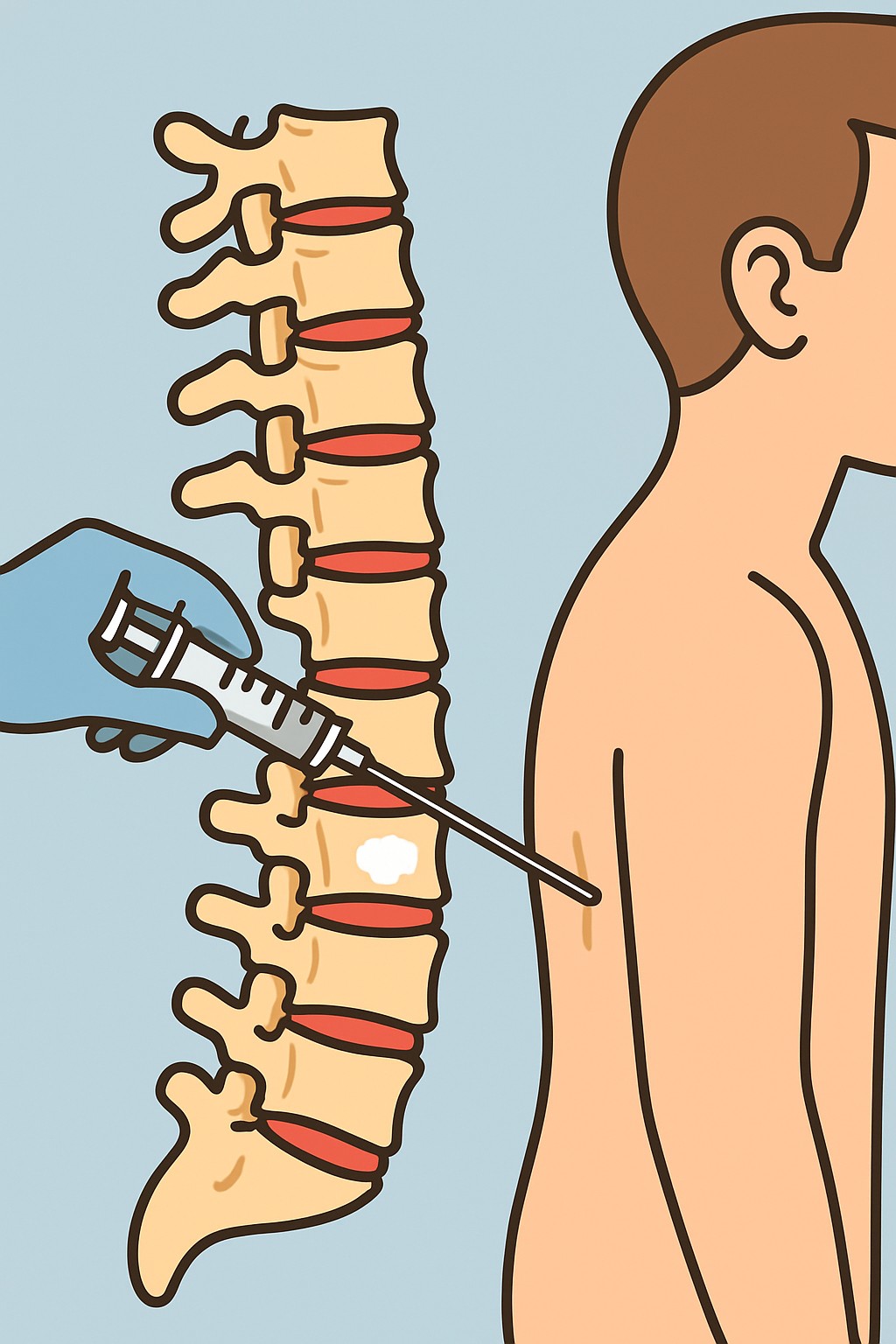
Thoracic vertebroplasty is a minimally invasive procedure that injects medical bone cement into a fractured vertebra in the mid-back (thoracic spine).
Overview
Thoracic vertebroplasty is a minimally invasive procedure that injects medical bone cement into a fractured vertebra in the mid-back (thoracic spine). The cement hardens quickly to stabilize the bone. It is typically used to help relieve pain from vertebral compression fractures caused by osteoporosis, cancer that has spread to bone, or certain injuries when other treatments have not provided enough relief.
Also known as: Percutaneous vertebroplasty, Vertebral cement augmentation, Spine cement injection, Thoracic spine vertebroplasty
Preparation & Next Steps
Everything you need to know before and after your procedure
Before Care
- Bring prior spine imaging reports and discs if available
- Confirm all medicines with the care team; blood thinners may need special planning
- Follow any fasting instructions if sedation or anesthesia is planned
- Arrange a responsible adult to drive you home after the procedure
- Tell the team about allergies to contrast dye, latex, or anesthesia medicines
- Report recent fevers, infections, or new neurologic symptoms before the visit
- Complete any ordered blood tests or imaging before the procedure date
- Wear comfortable clothing and leave jewelry at home
- Do not apply lotions or creams to the mid-back on the day of the procedure
- Plan light activities only for the first day after the procedure
After Care
- Keep the small bandage clean and dry for the first day; follow local care instructions
- Resume light activities as comfort allows; avoid heavy lifting for several days
- If you received sedation or anesthesia, do not drive or sign important documents for 24 hours
- Use pain relief as directed by your care team; some soreness at the puncture site is common
- Check the puncture area daily for redness, warmth, swelling, or drainage
- Note any new or worsening back pain, leg weakness or numbness, fever, chest pain, or trouble breathing, and contact your care team
- Drink fluids and eat when fully alert unless told otherwise
- Keep a simple pain and activity log to discuss at follow-up
- Follow instructions about when to remove the bandage and when you may shower
- Attend scheduled follow-up to review symptoms, activity, and any needed imaging
Clinical Information
Important medical details about this procedure
Indications
- Painful thoracic vertebral compression fracture not improving with rest, pain medicines, and bracing
- Osteoporotic compression fracture with ongoing pain that limits daily activities
- Painful vertebral fracture related to tumors or hemangiomas
- Select traumatic compression fractures without spinal canal compromise
Alternatives
- Pain medicines and activity modification
- Back bracing
- Physical therapy once pain allows
- Osteoporosis management to support bone health
- Kyphoplasty (a related cement procedure using a balloon)
- Radiation therapy for tumor-related bone pain when appropriate
Risks
- Cement leakage near nerves or the spinal canal
- Infection or bleeding at the injection site
- Allergic reaction to medicines, contrast dye, or materials
- New or worsened back pain
- Nerve injury causing numbness or weakness
- Blood clots or cement entering blood vessels, which can affect the lungs
- Fracture of nearby vertebrae
Contraindications
- Active infection in the body or spine
- Uncontrolled bleeding problems
- Asymptomatic or improving stable fracture
- Burst fracture with bone fragments pushing into the spinal canal
- Known allergy to cement components or contrast agents used for guidance
Recovery Timeline
What to expect during your recovery
Many people notice pain improvement within 1 to 2 days, though some take longer. Most resume light activities within a few days. Soreness at the injection site can last briefly.
Typical Range
1–7 days
Return to Work
2–7 days
Recovery Milestones
Walk short distances and perform self-care as comfort allows
Increase light daily activities; avoid heavy lifting and twisting
Return to most routine household tasks if symptoms are improving
Discuss return to strenuous work or exercise with your care team
Frequently Asked Questions
Common questions and expert answers about this procedure
What happens during thoracic vertebroplasty?
What happens during thoracic vertebroplasty?
A doctor uses live x-ray or CT to guide a needle into the fractured vertebra and injects medical bone cement to stabilize it. The cement hardens within minutes.
How is vertebroplasty different from kyphoplasty?
How is vertebroplasty different from kyphoplasty?
Kyphoplasty uses a balloon to create space before cement is placed and may help restore some height. Vertebroplasty injects cement directly without a balloon.
Will I be awake for the procedure?
Will I be awake for the procedure?
Many cases use local anesthesia and sedation so you are relaxed but comfortable. Some centers use general anesthesia based on your health and the plan.
How long does the procedure take?
How long does the procedure take?
It often takes about 1 hour per treated vertebra, plus time to prepare and recover. Many people go home the same day.
How soon will my pain improve?
How soon will my pain improve?
Some people feel relief soon after the procedure, while others notice improvement over 1 to 2 days or more. Results vary.
How many vertebrae can be treated at once?
How many vertebrae can be treated at once?
Often one or two levels are treated in a session. The exact number depends on imaging, symptoms, and safety considerations.
Are there long-term limits after vertebroplasty?
Are there long-term limits after vertebroplasty?
Most routine activities resume within days. Your team may suggest avoiding heavy lifting for a short time and focusing on bone health going forward.
Will I need follow-up imaging?
Will I need follow-up imaging?
Many clinicians schedule a follow-up visit to review symptoms and may order imaging if needed based on your progress.
References
Medical literature and sources