%20--%3e%3csvg%20version='1.0'%20id='Layer_1'%20xmlns='http://www.w3.org/2000/svg'%20xmlns:xlink='http://www.w3.org/1999/xlink'%20x='0px'%20y='0px'%20viewBox='0%200%20755.52%20814.35'%20style='enable-background:new%200%200%20755.52%20814.35;'%20xml:space='preserve'%3e%3cstyle%20type='text/css'%3e%20.st0{fill:%231ae5ce;stroke:%231ae5ce;stroke-width:7;stroke-miterlimit:10;}%20.st1{fill:%23FFFFFF;stroke:%231ae5ce;stroke-width:7;stroke-miterlimit:10;}%20.st2{fill:%231ae5ce;stroke:%23FFFFFF;stroke-width:7;stroke-miterlimit:10;}%20.st3{fill:%23FFFFFF;stroke:%23FFFFFF;stroke-width:6;stroke-miterlimit:10;}%20%3c/style%3e%3cg%20id='Dark_Logo_00000159431215648494653180000015900878925932721032_'%3e%3cpath%20id='shield_00000152259091539869183100000001926543869452564382_'%20class='st0'%20d='M711.13,173.42%20c-3.37-49.07-38.92-44.9-75.96-52.18c-67.4-13.25-130.47-34.47-192.36-63.92c-22.48-10.7-41.88-25.74-65.05-26.28%20c-23.17,0.54-42.58,15.59-65.05,26.28c-61.89,29.45-124.95,50.68-192.36,63.92c-37.04,7.28-72.59,3.11-75.96,52.18%20c-1.55,22.6,0.34,46.4,1.05,68.92c5.99,190.78,52.91,345.39,206.27,466.46c29.71,23.46,74.51,55.8,108.84,70.75%20c5.99,2.61,11.7,3.73,17.21,3.75c5.51-0.02,11.22-1.14,17.21-3.75c34.33-14.95,79.12-47.3,108.84-70.75%20c153.37-121.07,200.28-275.68,206.27-466.46C710.79,219.82,712.68,196.02,711.13,173.42z'/%3e%3cpath%20id='magnifyingglass_00000073685934697636024790000000342567780940956808_'%20class='st1'%20d='M648.78,624.21l-96.64-104.65%20c34.89-40.63,55.98-93.46,55.98-151.21c0-128.27-103.98-232.24-232.24-232.24S143.63,240.08,143.63,368.35%20s103.98,232.24,232.24,232.24c48.87,0,94.21-15.11,131.62-40.89l97.18,105.24c11.25,12.18,30.24,12.93,42.42,1.69l0,0%20C659.27,655.38,660.03,636.39,648.78,624.21z'/%3e%3ccircle%20id='ellipse_00000129904010550392394720000017056154833629780114_'%20class='st2'%20cx='375.87'%20cy='368.35'%20r='181.21'/%3e%3cpath%20id='dollarsign_00000057140127156649725250000003772530148495155891_'%20class='st3'%20d='M362.91,492.03v-23.91%20c0-2.01-1.58-3.69-3.59-3.77c-18.49-0.78-37.12-5.4-49.4-11.83c-1.75-0.92-2.53-3.01-1.76-4.84l5.87-13.89%20c0.86-2.02,3.23-2.88,5.2-1.89c12.94,6.52,30.45,11.44,49.18,11.44c26.02,0,43.6-12.73,43.6-30.43c0-17.08-14.29-27.63-41.4-36.95%20c-37.37-12.42-60.46-26.7-60.46-53.72c0-24.97,20.29-44.11,52.22-49.51c1.8-0.31,3.11-1.89,3.11-3.72v-24.35%20c0-2.09,1.69-3.78,3.78-3.78h15.16c2.09,0,3.78,1.69,3.78,3.78v22.71c0,2.01,1.58,3.67,3.58,3.77c17.85,0.92,30.88,4.75,40.61,9.1%20c1.92,0.86,2.79,3.09,1.94,5.01l-6.08,13.6c-0.85,1.91-3.09,2.77-4.99,1.91c-8.37-3.8-22.38-8.95-42.75-8.95%20c-28.21,0-38.84,14.28-38.84,26.7c0,16.15,13.56,24.22,45.44,35.4c37.74,13.04,56.79,29.19,56.79,56.82%20c0,23.85-19.05,46.23-54.78,52.3c-1.8,0.31-3.11,1.89-3.11,3.72v25.28c0,2.09-1.69,3.78-3.78,3.78h-15.53%20C364.6,495.81,362.91,494.12,362.91,492.03z'/%3e%3c/g%3e%3c/svg%3e)
Total shoulder replacement (arthroplasty) Orthopedic Surgery
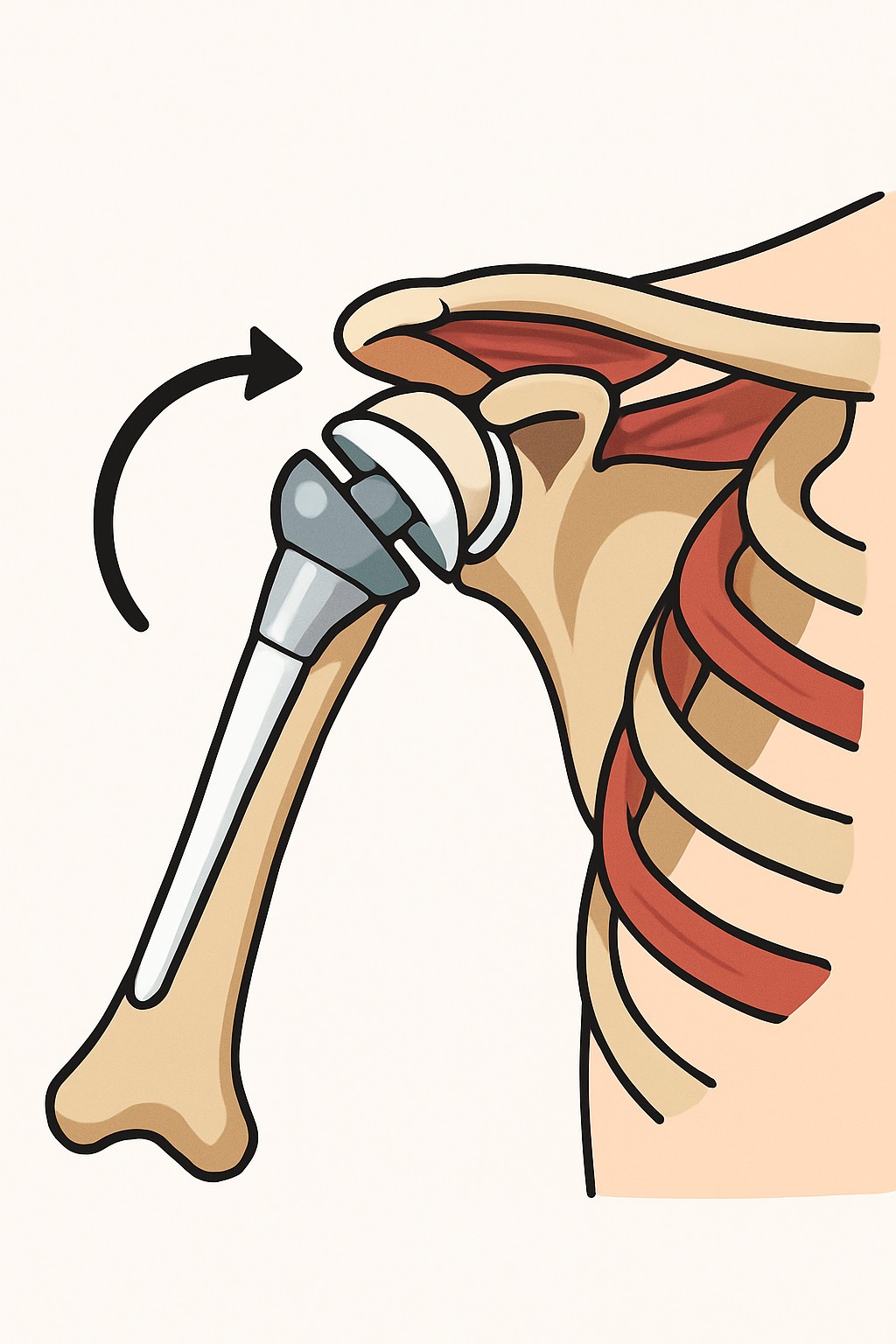
Total shoulder replacement (arthroplasty) is surgery to remove damaged parts of the shoulder joint and replace them with artificial parts.
Overview
Total shoulder replacement (arthroplasty) is surgery to remove damaged parts of the shoulder joint and replace them with artificial parts. In anatomic total shoulder replacement, the ball of the upper arm bone (humerus) and the socket of the shoulder blade (glenoid) are resurfaced with implants that mimic normal joint shape. It is typically done to reduce pain and improve motion when the joint is severely worn or damaged and non-surgical treatments are no longer helpful. It is performed under anesthesia through an incision over the shoulder, and recovery includes a period of sling use and physical therapy.
Also known as: Total shoulder arthroplasty, Anatomic shoulder replacement, Shoulder joint replacement, TSA
Preparation & Next Steps
Everything you need to know before and after your procedure
Before Care
- Complete preoperative evaluation and any ordered tests or imaging, and bring a current medication and allergy list
- Review all medicines and supplements with the care team and confirm which to take or hold, including blood thinners and diabetes medicines
- Follow the anesthesia fasting instructions about when to stop eating and drinking before surgery
- Arrange an adult to drive you home and stay with you the first night
- Plan your home setup so essentials are easy to reach and clear walkways to reduce fall risk
- Choose loose, front-opening shirts that fit over a sling
- Do any presurgical skin cleansing as instructed and avoid lotions, powders, or deodorant near the shoulder on surgery day if told
- Avoid shaving the surgical area the day before surgery unless instructed by the care team
- Confirm arrival time, location, parking, and what to bring, such as ID and insurance card
After Care
- Wear the sling as instructed, including during sleep, and remove it only when allowed
- Keep the incision clean and dry; follow directions for changing dressings and when it is safe to shower; do not soak the incision until cleared
- Use the pain control plan provided by your care team and apply cold therapy if recommended
- Move your fingers, wrist, and elbow several times a day as allowed to reduce stiffness
- Do not lift, push, pull, or reach suddenly with the operated arm until your clinician or therapist says it is safe
- Start and attend physical therapy as scheduled; expect a progression from passive motion to active motion and then strengthening
- Walk daily as allowed to support circulation and general recovery
- Protect the shoulder from falls; keep floors clear, use handrails, and take care on stairs
- Watch for concerning signs such as fever, increasing redness, warmth, drainage, numbness, chest pain, shortness of breath, or worsening pain, and contact your clinic if they occur
- Keep follow-up appointments for wound checks, suture or staple removal if used, therapy updates, and X-rays
Clinical Information
Important medical details about this procedure
Indications
- Severe glenohumeral osteoarthritis with pain and stiffness
- Inflammatory arthritis such as rheumatoid arthritis affecting the shoulder
- Osteonecrosis (avascular necrosis) of the humeral head
- Complex shoulder fracture not amenable to reconstruction
- Post-traumatic arthritis after prior injury
- Failed prior shoulder surgery with persistent pain and dysfunction
- Loss of daily function after trying non-surgical care
Alternatives
- Activity modification and rest
- Over-the-counter pain relievers such as acetaminophen or NSAIDs
- Physical therapy and a home exercise program
- Corticosteroid injections to the shoulder joint
- Arthroscopic debridement in selected cases
- Hemiarthroplasty (replacing only the ball) in specific situations
- Reverse shoulder replacement when the rotator cuff is not functional
Risks
- Infection around the implant
- Bleeding or blood clots
- Injury to nearby nerves or blood vessels
- Fracture of the bone during or after surgery
- Implant loosening, wear, or failure over time
- Instability or dislocation of the joint
- Stiffness or limited range of motion
- Anesthesia-related complications
- Persistent pain or need for revision surgery
Contraindications
- Active infection in or around the shoulder
- Uncontrolled medical conditions that make surgery unsafe
- Severe rotator cuff deficiency where reverse shoulder arthroplasty is usually preferred
- Insufficient bone or soft tissue coverage that cannot support an implant
- Inability to participate in required rehabilitation
Recovery Timeline
What to expect during your recovery
Most people improve over several months. Daily activities usually increase gradually over 3 to 6 months, with strength and flexibility gains continuing beyond that. Timelines vary based on health, shoulder condition, and therapy.
Typical Range
90–180 days
Return to Work
14–180 days
Recovery Milestones
Wear sling most of the time; move fingers, wrist, and elbow; begin gentle pendulum or passive motion if instructed
Wean from sling per plan; progress to active-assist shoulder motion
Start light strengthening and increase basic daily activities without lifting or sudden reaching
Resume many household and desk tasks; continue therapy toward overhead reach as allowed
Ongoing gains in comfort, strength, and flexibility
Frequently Asked Questions
Common questions and expert answers about this procedure
What happens during total shoulder replacement?
What happens during total shoulder replacement?
The surgeon removes damaged joint surfaces and replaces the ball and socket with implants. It is done under anesthesia through an incision over the shoulder.
How is total shoulder replacement different from reverse shoulder replacement?
How is total shoulder replacement different from reverse shoulder replacement?
Anatomic total shoulder replacement keeps the normal ball-and-socket orientation and usually needs a working rotator cuff. Reverse shoulder replacement switches the ball and socket positions and is often used when the rotator cuff is not functional.
How long is the hospital stay?
How long is the hospital stay?
Many people go home the same day or after an overnight stay, depending on health, pain control, and support at home.
Will I need a sling and for how long?
Will I need a sling and for how long?
A sling is typically used for several weeks to protect the repair and support early healing. Your team will guide when to reduce and stop using it.
When can I drive after shoulder replacement?
When can I drive after shoulder replacement?
Driving is usually delayed until you are off narcotic pain medicines, can safely control the arm, and are no longer using a sling. This often takes several weeks.
Do I need physical therapy?
Do I need physical therapy?
Yes, a structured program is common. It generally starts with gentle passive motion, progresses to active motion, and then to strengthening over time.
How long do shoulder implants last?
How long do shoulder implants last?
Many implants function well for years. Longevity varies with age, activity level, bone quality, and implant type. Wear or loosening can occur over time.
What activities are usually allowed after recovery?
What activities are usually allowed after recovery?
Low-impact activities like walking, swimming, golf, cycling, and light gym exercises are commonly allowed. Heavy lifting or contact sports may be limited.
References
Medical literature and sources