%20--%3e%3csvg%20version='1.0'%20id='Layer_1'%20xmlns='http://www.w3.org/2000/svg'%20xmlns:xlink='http://www.w3.org/1999/xlink'%20x='0px'%20y='0px'%20viewBox='0%200%20755.52%20814.35'%20style='enable-background:new%200%200%20755.52%20814.35;'%20xml:space='preserve'%3e%3cstyle%20type='text/css'%3e%20.st0{fill:%231ae5ce;stroke:%231ae5ce;stroke-width:7;stroke-miterlimit:10;}%20.st1{fill:%23FFFFFF;stroke:%231ae5ce;stroke-width:7;stroke-miterlimit:10;}%20.st2{fill:%231ae5ce;stroke:%23FFFFFF;stroke-width:7;stroke-miterlimit:10;}%20.st3{fill:%23FFFFFF;stroke:%23FFFFFF;stroke-width:6;stroke-miterlimit:10;}%20%3c/style%3e%3cg%20id='Dark_Logo_00000159431215648494653180000015900878925932721032_'%3e%3cpath%20id='shield_00000152259091539869183100000001926543869452564382_'%20class='st0'%20d='M711.13,173.42%20c-3.37-49.07-38.92-44.9-75.96-52.18c-67.4-13.25-130.47-34.47-192.36-63.92c-22.48-10.7-41.88-25.74-65.05-26.28%20c-23.17,0.54-42.58,15.59-65.05,26.28c-61.89,29.45-124.95,50.68-192.36,63.92c-37.04,7.28-72.59,3.11-75.96,52.18%20c-1.55,22.6,0.34,46.4,1.05,68.92c5.99,190.78,52.91,345.39,206.27,466.46c29.71,23.46,74.51,55.8,108.84,70.75%20c5.99,2.61,11.7,3.73,17.21,3.75c5.51-0.02,11.22-1.14,17.21-3.75c34.33-14.95,79.12-47.3,108.84-70.75%20c153.37-121.07,200.28-275.68,206.27-466.46C710.79,219.82,712.68,196.02,711.13,173.42z'/%3e%3cpath%20id='magnifyingglass_00000073685934697636024790000000342567780940956808_'%20class='st1'%20d='M648.78,624.21l-96.64-104.65%20c34.89-40.63,55.98-93.46,55.98-151.21c0-128.27-103.98-232.24-232.24-232.24S143.63,240.08,143.63,368.35%20s103.98,232.24,232.24,232.24c48.87,0,94.21-15.11,131.62-40.89l97.18,105.24c11.25,12.18,30.24,12.93,42.42,1.69l0,0%20C659.27,655.38,660.03,636.39,648.78,624.21z'/%3e%3ccircle%20id='ellipse_00000129904010550392394720000017056154833629780114_'%20class='st2'%20cx='375.87'%20cy='368.35'%20r='181.21'/%3e%3cpath%20id='dollarsign_00000057140127156649725250000003772530148495155891_'%20class='st3'%20d='M362.91,492.03v-23.91%20c0-2.01-1.58-3.69-3.59-3.77c-18.49-0.78-37.12-5.4-49.4-11.83c-1.75-0.92-2.53-3.01-1.76-4.84l5.87-13.89%20c0.86-2.02,3.23-2.88,5.2-1.89c12.94,6.52,30.45,11.44,49.18,11.44c26.02,0,43.6-12.73,43.6-30.43c0-17.08-14.29-27.63-41.4-36.95%20c-37.37-12.42-60.46-26.7-60.46-53.72c0-24.97,20.29-44.11,52.22-49.51c1.8-0.31,3.11-1.89,3.11-3.72v-24.35%20c0-2.09,1.69-3.78,3.78-3.78h15.16c2.09,0,3.78,1.69,3.78,3.78v22.71c0,2.01,1.58,3.67,3.58,3.77c17.85,0.92,30.88,4.75,40.61,9.1%20c1.92,0.86,2.79,3.09,1.94,5.01l-6.08,13.6c-0.85,1.91-3.09,2.77-4.99,1.91c-8.37-3.8-22.38-8.95-42.75-8.95%20c-28.21,0-38.84,14.28-38.84,26.7c0,16.15,13.56,24.22,45.44,35.4c37.74,13.04,56.79,29.19,56.79,56.82%20c0,23.85-19.05,46.23-54.78,52.3c-1.8,0.31-3.11,1.89-3.11,3.72v25.28c0,2.09-1.69,3.78-3.78,3.78h-15.53%20C364.6,495.81,362.91,494.12,362.91,492.03z'/%3e%3c/g%3e%3c/svg%3e)
Orthotic follow-up visit (check device fitting) Rehabilitation Therapy
An orthotic follow-up visit is a scheduled check to review how your brace or insert fits and functions after you have used it for a period of time.
Overview
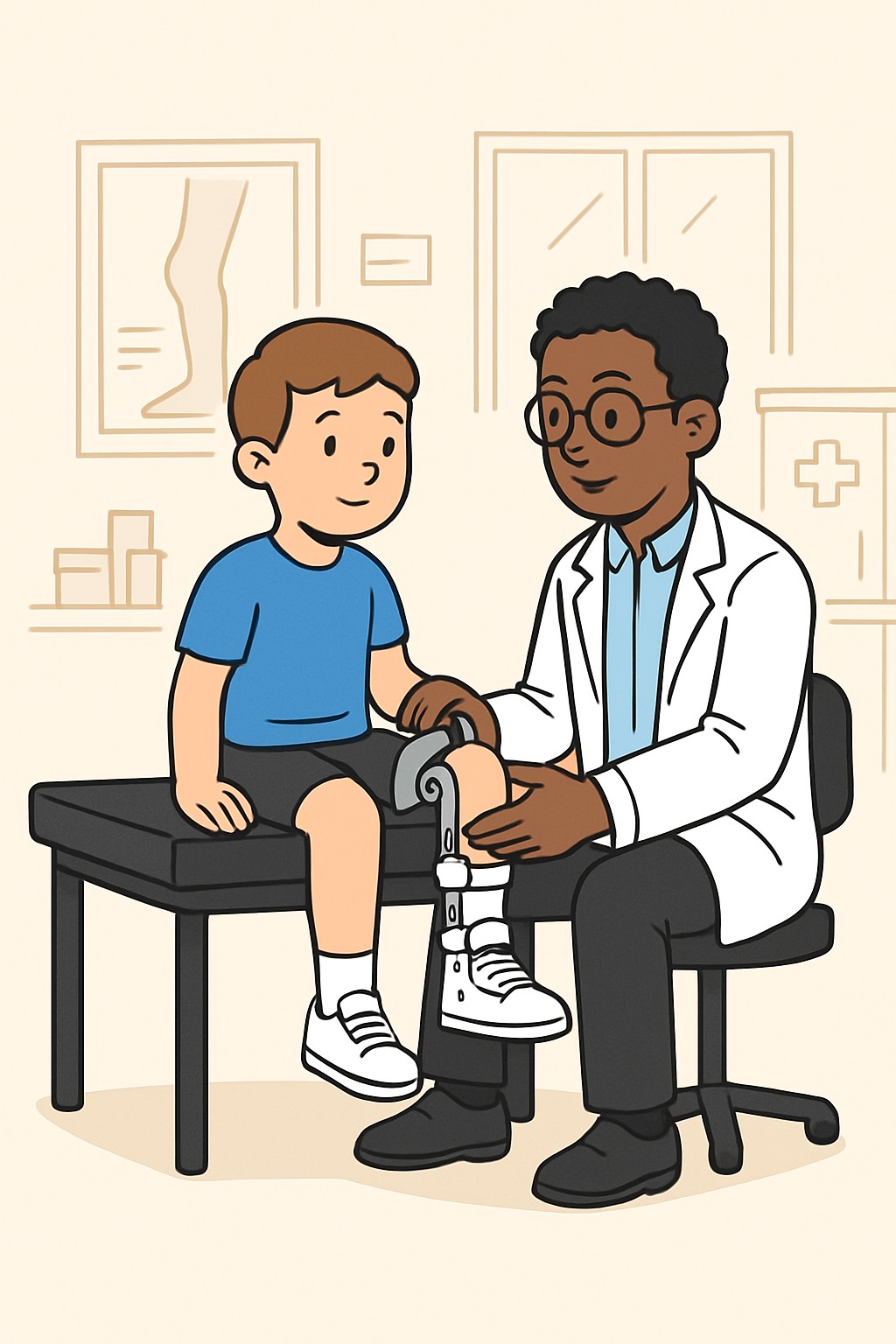
An orthotic follow-up visit is a scheduled check to review how your brace or insert fits and functions after you have used it for a period of time. The clinician looks at your skin, comfort, walking pattern, and wear patterns on the device. The visit may include adjustments, strap or padding changes, repairs, and education on wear time and care. The goal is to improve comfort and support so the device works as intended for daily activities.
Also known as: Orthotics adjustment visit, Brace fitting check, Orthosis follow-up
Preparation & Next Steps
Everything you need to know before and after your procedure
Before Care
- Bring the orthotic device, all straps and pads, and the shoes you use with it
- Wear or bring the socks or liners you usually use with the device
- Clean and dry the device and your skin before the visit
- Make a short list of comfort issues, skin changes, and times they occur
- Bring your original prescription or prior visit summary if available
- Charge batteries or check mechanical parts if your device has moving components
- Be ready to walk or perform simple movements during the check
- Avoid applying lotions or oils to contact areas right before the visit
- Arrive a bit early to allow time for paperwork and adjustments
- Confirm transportation in case the visit runs longer for repairs
After Care
- Check your skin after wearing for pressure spots that do not fade after removal
- Increase wear time gradually if advised by the clinic after an adjustment
- Keep the device clean and dry following the manufacturer’s care instructions
- Recheck straps, closures, and padding for proper placement and wear
- Use the shoes and socks that were tested at the visit for best fit
- Contact the clinic if pain, numbness, or sores develop or if the device malfunctions
- Monitor for changes in walking or balance and report concerns
- Schedule the next follow-up or repair visit as recommended by the clinic
- Store the device away from heat sources to protect materials
- Keep a simple log of comfort and skin checks for the next visit
Clinical Information
Important medical details about this procedure
Indications
- Pressure spots, redness, skin irritation, or blisters from the device
- Pain, numbness, or tingling when wearing the device
- Device slippage, looseness, or rubbing
- New or changed walking pattern or balance concerns
- Growth in children or changes in weight or activity
- Broken, worn, or noisy components
- Routine check after initial fitting
Alternatives
- Telehealth or video check-in if the clinic offers it
- Self-check of straps, socks, and footwear fit using clinic guidance
- Appointment with the prescribing clinician or physical therapist to reassess goals
- Device replacement or remanufacture if repairs or adjustments are not effective
Risks
- Temporary soreness or fatigue after adjustments
- Skin irritation or blisters if pressure points persist
- Device damage if parts are over-tightened or misaligned
- Tripping or imbalance if fit is poor
- Delay in addressing the underlying condition if problems are not resolved
Contraindications
- Open wounds or active skin infection at device contact areas
- Severe swelling that prevents safe fitting
- Suspected fracture or acute injury that needs urgent evaluation
- Intolerable pain with device application
Recovery Timeline
What to expect during your recovery
Most people return to normal activities the same day. Minor soreness or skin sensitivity can occur for a day or two after adjustments.
Typical Range
0–2 days
Return to Work
Same day
Recovery Milestones
Resume usual daily activities with the device
Gradually increase wear time and monitor skin for hot spots
Confirm comfort with typical walking distances
Assess durability of straps and pads and plan next check if needed
Frequently Asked Questions
Common questions and expert answers about this procedure
Who performs an orthotic follow-up visit?
Who performs an orthotic follow-up visit?
A certified orthotist or trained clinician evaluates fit and function, makes adjustments, and discusses care and wear time.
How long does the visit take?
How long does the visit take?
Most checks take 20 to 45 minutes. Extra time may be needed for adjustments or minor repairs.
What should I bring?
What should I bring?
Bring the device, the shoes and socks you use with it, and a list of comfort or skin issues you have noticed.
Will adjustments be made the same day?
Will adjustments be made the same day?
Many fit changes, strap replacements, and padding tweaks can be done during the visit. Complex changes may require a later appointment.
Do I need imaging or new molds?
Do I need imaging or new molds?
Not usually. Imaging or new measurements are considered if your condition or body shape has changed or the device no longer fits.
Can this be done by telehealth?
Can this be done by telehealth?
Some clinics offer video checks to review wear, alignment, and skin. Hands-on adjustments still require an in-person visit.
How often are follow-ups needed?
How often are follow-ups needed?
The schedule varies by device, activity level, and age. Growing children and high-use devices often need more frequent checks.
What if the device feels worse after the visit?
What if the device feels worse after the visit?
Stop using it if it causes significant pain or skin injury and notify the clinic so they can reassess the fit.
References
Medical literature and sources