%20--%3e%3csvg%20version='1.0'%20id='Layer_1'%20xmlns='http://www.w3.org/2000/svg'%20xmlns:xlink='http://www.w3.org/1999/xlink'%20x='0px'%20y='0px'%20viewBox='0%200%20755.52%20814.35'%20style='enable-background:new%200%200%20755.52%20814.35;'%20xml:space='preserve'%3e%3cstyle%20type='text/css'%3e%20.st0{fill:%231ae5ce;stroke:%231ae5ce;stroke-width:7;stroke-miterlimit:10;}%20.st1{fill:%23FFFFFF;stroke:%231ae5ce;stroke-width:7;stroke-miterlimit:10;}%20.st2{fill:%231ae5ce;stroke:%23FFFFFF;stroke-width:7;stroke-miterlimit:10;}%20.st3{fill:%23FFFFFF;stroke:%23FFFFFF;stroke-width:6;stroke-miterlimit:10;}%20%3c/style%3e%3cg%20id='Dark_Logo_00000159431215648494653180000015900878925932721032_'%3e%3cpath%20id='shield_00000152259091539869183100000001926543869452564382_'%20class='st0'%20d='M711.13,173.42%20c-3.37-49.07-38.92-44.9-75.96-52.18c-67.4-13.25-130.47-34.47-192.36-63.92c-22.48-10.7-41.88-25.74-65.05-26.28%20c-23.17,0.54-42.58,15.59-65.05,26.28c-61.89,29.45-124.95,50.68-192.36,63.92c-37.04,7.28-72.59,3.11-75.96,52.18%20c-1.55,22.6,0.34,46.4,1.05,68.92c5.99,190.78,52.91,345.39,206.27,466.46c29.71,23.46,74.51,55.8,108.84,70.75%20c5.99,2.61,11.7,3.73,17.21,3.75c5.51-0.02,11.22-1.14,17.21-3.75c34.33-14.95,79.12-47.3,108.84-70.75%20c153.37-121.07,200.28-275.68,206.27-466.46C710.79,219.82,712.68,196.02,711.13,173.42z'/%3e%3cpath%20id='magnifyingglass_00000073685934697636024790000000342567780940956808_'%20class='st1'%20d='M648.78,624.21l-96.64-104.65%20c34.89-40.63,55.98-93.46,55.98-151.21c0-128.27-103.98-232.24-232.24-232.24S143.63,240.08,143.63,368.35%20s103.98,232.24,232.24,232.24c48.87,0,94.21-15.11,131.62-40.89l97.18,105.24c11.25,12.18,30.24,12.93,42.42,1.69l0,0%20C659.27,655.38,660.03,636.39,648.78,624.21z'/%3e%3ccircle%20id='ellipse_00000129904010550392394720000017056154833629780114_'%20class='st2'%20cx='375.87'%20cy='368.35'%20r='181.21'/%3e%3cpath%20id='dollarsign_00000057140127156649725250000003772530148495155891_'%20class='st3'%20d='M362.91,492.03v-23.91%20c0-2.01-1.58-3.69-3.59-3.77c-18.49-0.78-37.12-5.4-49.4-11.83c-1.75-0.92-2.53-3.01-1.76-4.84l5.87-13.89%20c0.86-2.02,3.23-2.88,5.2-1.89c12.94,6.52,30.45,11.44,49.18,11.44c26.02,0,43.6-12.73,43.6-30.43c0-17.08-14.29-27.63-41.4-36.95%20c-37.37-12.42-60.46-26.7-60.46-53.72c0-24.97,20.29-44.11,52.22-49.51c1.8-0.31,3.11-1.89,3.11-3.72v-24.35%20c0-2.09,1.69-3.78,3.78-3.78h15.16c2.09,0,3.78,1.69,3.78,3.78v22.71c0,2.01,1.58,3.67,3.58,3.77c17.85,0.92,30.88,4.75,40.61,9.1%20c1.92,0.86,2.79,3.09,1.94,5.01l-6.08,13.6c-0.85,1.91-3.09,2.77-4.99,1.91c-8.37-3.8-22.38-8.95-42.75-8.95%20c-28.21,0-38.84,14.28-38.84,26.7c0,16.15,13.56,24.22,45.44,35.4c37.74,13.04,56.79,29.19,56.79,56.82%20c0,23.85-19.05,46.23-54.78,52.3c-1.8,0.31-3.11,1.89-3.11,3.72v25.28c0,2.09-1.69,3.78-3.78,3.78h-15.53%20C364.6,495.81,362.91,494.12,362.91,492.03z'/%3e%3c/g%3e%3c/svg%3e)
Speech therapy - individual session Rehabilitation Therapy
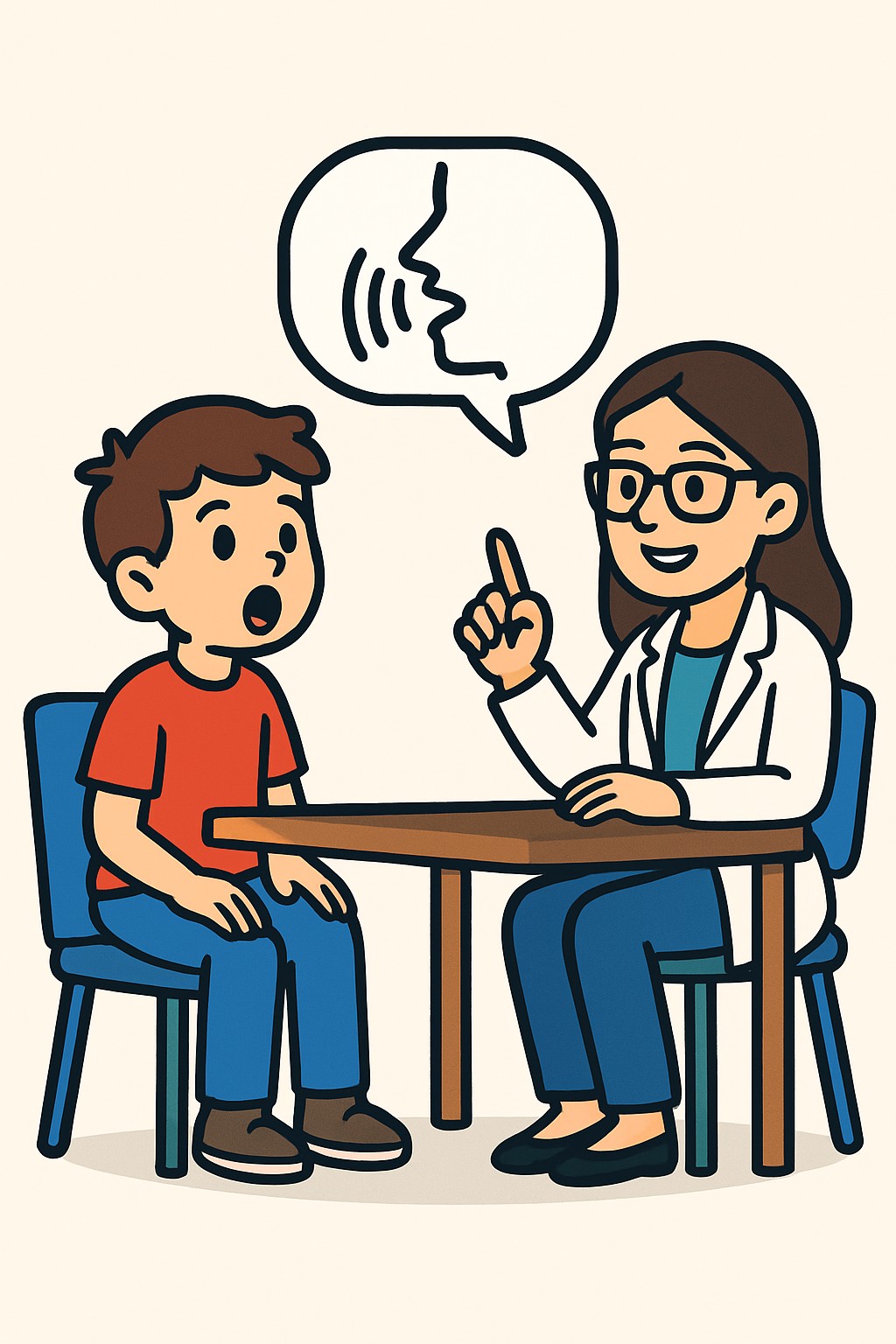
An individual speech therapy session is a one-on-one visit with a speech-language pathologist (SLP).
Overview
An individual speech therapy session is a one-on-one visit with a speech-language pathologist (SLP). The SLP evaluates communication needs and works on targeted skills such as speech sounds, language, voice, fluency, or cognitive-communication. Sessions often include guided practice, feedback, and home strategies. Goals are set based on the person’s needs and may be adjusted over time. Some sessions are in person; others may be done by telehealth when appropriate.
Also known as: Speech-language therapy session, SLP therapy visit, Speech therapy appointment, Speech-language pathology session
Preparation & Next Steps
Everything you need to know before and after your procedure
Before Care
- Bring a photo ID, insurance card, and any referral or prior authorization if required by your plan
- Carry prior evaluations, school IEP/504 plans, therapy notes, and recent test results if available
- Prepare a short list of top goals, concerns, and examples of when communication is hardest
- Have an up-to-date list of medicines, relevant medical history, and assistive devices used
- Share hearing test results if available; bring hearing aids or glasses if used
- Confirm session format (in person or telehealth) and location details or video link
- For telehealth, test your device, camera, microphone, internet, and required apps
- Arrange an interpreter or communication supports if needed
- Wear comfortable clothing and bring water, a notebook, and any communication tools (e.g., AAC)
- Arrive a few minutes early to complete forms and confirm contact and pharmacy details
After Care
- Review the session summary and home practice plan provided by your clinician
- Practice home exercises as outlined; use any worksheets, apps, or AAC tools provided
- Schedule upcoming sessions and note any testing or referrals
- Use voice care strategies if advised, such as hydration and brief voice breaks
- Track symptoms, triggers, and progress to discuss at the next session
- Share updates from school, work, or other therapies that may affect goals
- Store practice materials in one place and set reminders for practice times
- Confirm how to message the clinic for questions or to request adjustments
- Bring new concerns, device issues, or side effects from medicines to the next visit
- Contact the clinic if you notice new pain, repeated voice loss, or sudden changes in speech, language, or cognition after a session
Clinical Information
Important medical details about this procedure
Indications
- Speech sound disorders (articulation or phonological)
- Language disorders (expressive or receptive)
- Fluency disorders (stuttering)
- Voice disorders (hoarseness, vocal strain)
- Aphasia after stroke
- Dysarthria or apraxia of speech
- Cognitive-communication issues after brain injury
- Social communication challenges (pragmatics)
Alternatives
- Group speech therapy
- Telehealth speech therapy
- Home exercise program with periodic check-ins
- Caregiver training and home strategies
- School-based services or early intervention programs
- Support groups or peer practice
- Augmentative and alternative communication (AAC) training
Risks
- Temporary vocal fatigue or hoarseness after intensive voice work
- Frustration or emotional stress during challenging tasks
- Limited progress if practice is inconsistent
- Privacy concerns with telehealth or shared spaces
- Out-of-pocket costs depending on coverage and visit length
Contraindications
- Severe or life-threatening symptoms requiring emergency care
- Active illness that limits safe participation
- Unmanaged hearing or vision issues that interfere with therapy until addressed
- Recent throat surgery when voice rest is ordered by a clinician
- Behavioral crises that prevent safe, effective participation
Recovery Timeline
What to expect during your recovery
There is usually no medical recovery period after a speech therapy session. Some people may feel mentally tired or have mild vocal fatigue after intensive practice.
Typical Range
Same day
Return to Work
Same day
Recovery Milestones
Resume usual daily activities
Monitor for temporary vocal fatigue after voice-focused work
Begin or continue home practice plan as provided
Review progress and adjust goals during follow-up sessions
Frequently Asked Questions
Common questions and expert answers about this procedure
What happens in an individual speech therapy session?
What happens in an individual speech therapy session?
The SLP checks progress, targets specific skills, gives guided practice and feedback, and updates the plan. You may receive homework or strategies to use at home, school, or work.
How long is a typical session?
How long is a typical session?
Many sessions last 30 to 60 minutes, but timing varies by clinic, goals, and insurance rules.
How many sessions will I need?
How many sessions will I need?
The number depends on your goals, condition, and response to therapy. Plans are often revisited based on progress and practical factors like scheduling and coverage.
Can speech therapy be done by telehealth?
Can speech therapy be done by telehealth?
Yes, many services can be delivered by secure video. It depends on the goals, age, attention needs, and available equipment or supports.
What is the difference between speech and language therapy?
What is the difference between speech and language therapy?
Speech focuses on how sounds are produced and how the voice works. Language focuses on understanding and using words and sentences to communicate.
Do I need a referral or hearing test first?
Do I need a referral or hearing test first?
Some plans require a referral or prior authorization. Hearing checks are often helpful because hearing can affect communication, but requirements vary.
Can parents or caregivers join the session?
Can parents or caregivers join the session?
Many clinics welcome caregiver involvement, especially for children or adults who need support with home practice. Policies vary by clinic and setting.
What if I miss an appointment?
What if I miss an appointment?
Check the clinic’s cancellation policy and reschedule as soon as possible to keep momentum toward your goals.
References
Medical literature and sources