%20--%3e%3csvg%20version='1.0'%20id='Layer_1'%20xmlns='http://www.w3.org/2000/svg'%20xmlns:xlink='http://www.w3.org/1999/xlink'%20x='0px'%20y='0px'%20viewBox='0%200%20755.52%20814.35'%20style='enable-background:new%200%200%20755.52%20814.35;'%20xml:space='preserve'%3e%3cstyle%20type='text/css'%3e%20.st0{fill:%231ae5ce;stroke:%231ae5ce;stroke-width:7;stroke-miterlimit:10;}%20.st1{fill:%23FFFFFF;stroke:%231ae5ce;stroke-width:7;stroke-miterlimit:10;}%20.st2{fill:%231ae5ce;stroke:%23FFFFFF;stroke-width:7;stroke-miterlimit:10;}%20.st3{fill:%23FFFFFF;stroke:%23FFFFFF;stroke-width:6;stroke-miterlimit:10;}%20%3c/style%3e%3cg%20id='Dark_Logo_00000159431215648494653180000015900878925932721032_'%3e%3cpath%20id='shield_00000152259091539869183100000001926543869452564382_'%20class='st0'%20d='M711.13,173.42%20c-3.37-49.07-38.92-44.9-75.96-52.18c-67.4-13.25-130.47-34.47-192.36-63.92c-22.48-10.7-41.88-25.74-65.05-26.28%20c-23.17,0.54-42.58,15.59-65.05,26.28c-61.89,29.45-124.95,50.68-192.36,63.92c-37.04,7.28-72.59,3.11-75.96,52.18%20c-1.55,22.6,0.34,46.4,1.05,68.92c5.99,190.78,52.91,345.39,206.27,466.46c29.71,23.46,74.51,55.8,108.84,70.75%20c5.99,2.61,11.7,3.73,17.21,3.75c5.51-0.02,11.22-1.14,17.21-3.75c34.33-14.95,79.12-47.3,108.84-70.75%20c153.37-121.07,200.28-275.68,206.27-466.46C710.79,219.82,712.68,196.02,711.13,173.42z'/%3e%3cpath%20id='magnifyingglass_00000073685934697636024790000000342567780940956808_'%20class='st1'%20d='M648.78,624.21l-96.64-104.65%20c34.89-40.63,55.98-93.46,55.98-151.21c0-128.27-103.98-232.24-232.24-232.24S143.63,240.08,143.63,368.35%20s103.98,232.24,232.24,232.24c48.87,0,94.21-15.11,131.62-40.89l97.18,105.24c11.25,12.18,30.24,12.93,42.42,1.69l0,0%20C659.27,655.38,660.03,636.39,648.78,624.21z'/%3e%3ccircle%20id='ellipse_00000129904010550392394720000017056154833629780114_'%20class='st2'%20cx='375.87'%20cy='368.35'%20r='181.21'/%3e%3cpath%20id='dollarsign_00000057140127156649725250000003772530148495155891_'%20class='st3'%20d='M362.91,492.03v-23.91%20c0-2.01-1.58-3.69-3.59-3.77c-18.49-0.78-37.12-5.4-49.4-11.83c-1.75-0.92-2.53-3.01-1.76-4.84l5.87-13.89%20c0.86-2.02,3.23-2.88,5.2-1.89c12.94,6.52,30.45,11.44,49.18,11.44c26.02,0,43.6-12.73,43.6-30.43c0-17.08-14.29-27.63-41.4-36.95%20c-37.37-12.42-60.46-26.7-60.46-53.72c0-24.97,20.29-44.11,52.22-49.51c1.8-0.31,3.11-1.89,3.11-3.72v-24.35%20c0-2.09,1.69-3.78,3.78-3.78h15.16c2.09,0,3.78,1.69,3.78,3.78v22.71c0,2.01,1.58,3.67,3.58,3.77c17.85,0.92,30.88,4.75,40.61,9.1%20c1.92,0.86,2.79,3.09,1.94,5.01l-6.08,13.6c-0.85,1.91-3.09,2.77-4.99,1.91c-8.37-3.8-22.38-8.95-42.75-8.95%20c-28.21,0-38.84,14.28-38.84,26.7c0,16.15,13.56,24.22,45.44,35.4c37.74,13.04,56.79,29.19,56.79,56.82%20c0,23.85-19.05,46.23-54.78,52.3c-1.8,0.31-3.11,1.89-3.11,3.72v25.28c0,2.09-1.69,3.78-3.78,3.78h-15.53%20C364.6,495.81,362.91,494.12,362.91,492.03z'/%3e%3c/g%3e%3c/svg%3e)
Spinal Epidural Injection Therapeutic Procedure
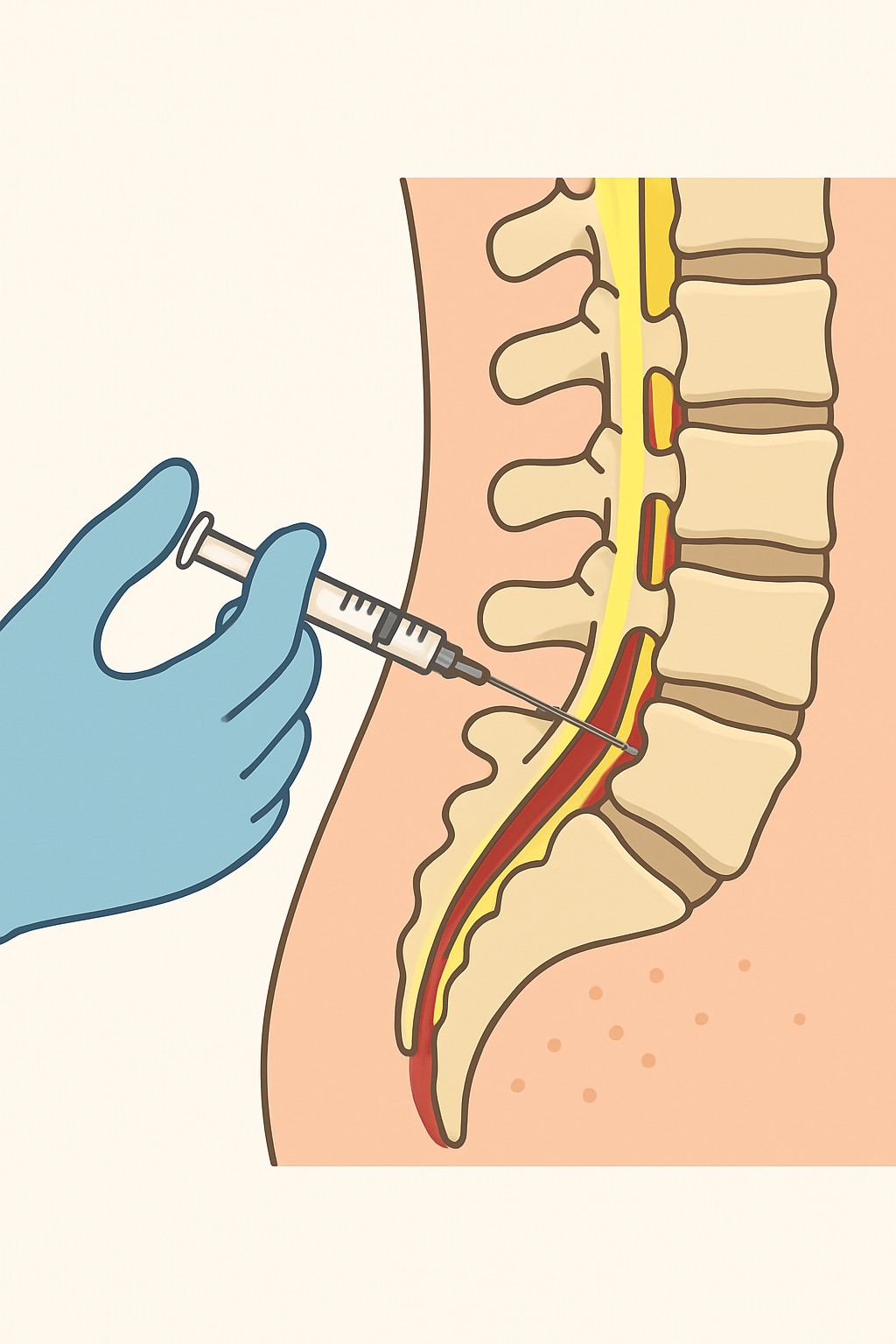
A spinal epidural injection is a procedure where medicine is placed into the epidural space, which sits just outside the protective covering of the spinal cord and nerves.
Overview
A spinal epidural injection is a procedure where medicine is placed into the epidural space, which sits just outside the protective covering of the spinal cord and nerves. The medicine is usually a corticosteroid to calm irritation and a local anesthetic to numb pain. This procedure is most often done in an outpatient setting with X-ray guidance. It aims to reduce nerve-related back, neck, arm, or leg pain and improve function so that daily activities and rehabilitation are easier.
Also known as: Epidural steroid injection, ESI, Lumbar epidural injection, Cervical epidural injection, Thoracic epidural injection, Transforaminal epidural injection, Interlaminar epidural injection, Caudal epidural injection
Preparation & Next Steps
Everything you need to know before and after your procedure
Before Care
- Bring recent spine imaging reports if available and a current medication list
- Tell the care team about allergies to contrast dye, steroid, or local anesthetic
- Ask the clinic about blood thinner management and any lab tests that may be needed
- Follow any fasting instructions if sedation is planned
- Arrange a ride if sedation is used or if leg or arm numbness is expected
- Wear comfortable clothing that allows access to the back or neck
- Confirm insurance authorization and arrival time to allow for consent and screening
- Share if you could be pregnant so imaging protections can be planned
- Plan light activities on the day of the procedure
- Bring a list of prior spine surgeries or procedures
After Care
- Keep the bandage on as instructed and keep the site clean and dry the first day
- Expect temporary numbness or heaviness; increase activity gradually as it fades
- Use a cold pack on the injection site for soreness in short intervals as instructed
- Resume regular medicines per clinic instructions; ask about blood thinners if paused
- Monitor blood sugar more closely if you have diabetes and report concerns to your clinician
- Track your pain level and function for 1 to 2 weeks to share at follow-up
- Avoid heavy lifting and strenuous exercise for 24 hours, then build up as tolerated
- Contact your clinician if you develop fever, worsening severe headache, new weakness, or increasing redness or drainage at the site
- Schedule or attend follow-up to review response and discuss next steps
- Keep a record of the date, side, level, and type of injection you received
Clinical Information
Important medical details about this procedure
Indications
- Radicular pain such as sciatica from a herniated disc
- Spinal stenosis with nerve irritation
- Cervical or lumbar nerve root inflammation
- Persistent arm or leg pain after conservative care
- Diagnostic use to help identify the pain source
Alternatives
- Physical therapy and exercise-based rehabilitation
- Over-the-counter or prescription pain medicines
- Activity modification and ergonomic changes
- Heat, ice, and topical pain relievers
- Cognitive behavioral therapy for pain coping
- Other injections such as facet joint or nerve blocks
- Surgical options when structural compression is severe
Risks
- Temporary soreness at the injection site
- Headache, including a spinal fluid leak headache
- Infection or bleeding
- Allergic reaction to medicines or contrast dye
- Increased blood sugar for a short time
- Transient numbness or weakness
- Very rare but serious nerve injury, stroke, or paralysis
Contraindications
- Active infection at the skin or in the body
- Uncontrolled bleeding disorder or certain blood thinners without a plan
- Known allergy to the planned steroid, anesthetic, or contrast
- Pregnancy when X-ray use is not planned with protections
- Lack of safe imaging access due to severe anatomy changes
Recovery Timeline
What to expect during your recovery
Most people have mild soreness for 1 to 3 days and return to normal activities within 1 to 2 days. Pain relief from the steroid may build over several days and can take up to two weeks to be felt.
Typical Range
1–3 days
Return to Work
0–2 days
Recovery Milestones
Rest the day of the injection and do light walking at home
Resume routine daily activities; avoid heavy lifting
Gradually increase exercise and physical therapy as tolerated
Assess pain relief and function to guide next steps with your clinician
Frequently Asked Questions
Common questions and expert answers about this procedure
How does a spinal epidural injection work?
How does a spinal epidural injection work?
It places anti-inflammatory medicine near irritated spinal nerves to reduce swelling and pain, which can make movement and rehabilitation easier.
When will I feel pain relief?
When will I feel pain relief?
Numbing medicine may help right away but can wear off the same day. Steroid effects often build over a few days and may take up to two weeks.
How long can relief last?
How long can relief last?
Relief varies. Some people have short-term benefit, while others get longer relief. The goal is to reduce pain enough to support activity and therapy.
What types of epidural injections are there?
What types of epidural injections are there?
Common approaches are interlaminar, transforaminal, and caudal. The choice depends on your symptoms, imaging, and the target nerve area.
Is imaging used during the procedure?
Is imaging used during the procedure?
Yes, most injections use fluoroscopy (live X-ray) and contrast dye to confirm needle position. Some centers use CT or ultrasound in selected cases.
Will I be awake?
Will I be awake?
Usually you are awake with local numbing. Some centers offer light sedation. If sedation is used, plan for a ride home.
How many injections might be done?
How many injections might be done?
The number is limited over time and varies by diagnosis, response, clinician practice, and insurance policies.
What if the injection does not help?
What if the injection does not help?
Your clinician may adjust the approach, consider other therapies or imaging, or discuss different procedures or surgery if appropriate.