%20--%3e%3csvg%20version='1.0'%20id='Layer_1'%20xmlns='http://www.w3.org/2000/svg'%20xmlns:xlink='http://www.w3.org/1999/xlink'%20x='0px'%20y='0px'%20viewBox='0%200%20755.52%20814.35'%20style='enable-background:new%200%200%20755.52%20814.35;'%20xml:space='preserve'%3e%3cstyle%20type='text/css'%3e%20.st0{fill:%231ae5ce;stroke:%231ae5ce;stroke-width:7;stroke-miterlimit:10;}%20.st1{fill:%23FFFFFF;stroke:%231ae5ce;stroke-width:7;stroke-miterlimit:10;}%20.st2{fill:%231ae5ce;stroke:%23FFFFFF;stroke-width:7;stroke-miterlimit:10;}%20.st3{fill:%23FFFFFF;stroke:%23FFFFFF;stroke-width:6;stroke-miterlimit:10;}%20%3c/style%3e%3cg%20id='Dark_Logo_00000159431215648494653180000015900878925932721032_'%3e%3cpath%20id='shield_00000152259091539869183100000001926543869452564382_'%20class='st0'%20d='M711.13,173.42%20c-3.37-49.07-38.92-44.9-75.96-52.18c-67.4-13.25-130.47-34.47-192.36-63.92c-22.48-10.7-41.88-25.74-65.05-26.28%20c-23.17,0.54-42.58,15.59-65.05,26.28c-61.89,29.45-124.95,50.68-192.36,63.92c-37.04,7.28-72.59,3.11-75.96,52.18%20c-1.55,22.6,0.34,46.4,1.05,68.92c5.99,190.78,52.91,345.39,206.27,466.46c29.71,23.46,74.51,55.8,108.84,70.75%20c5.99,2.61,11.7,3.73,17.21,3.75c5.51-0.02,11.22-1.14,17.21-3.75c34.33-14.95,79.12-47.3,108.84-70.75%20c153.37-121.07,200.28-275.68,206.27-466.46C710.79,219.82,712.68,196.02,711.13,173.42z'/%3e%3cpath%20id='magnifyingglass_00000073685934697636024790000000342567780940956808_'%20class='st1'%20d='M648.78,624.21l-96.64-104.65%20c34.89-40.63,55.98-93.46,55.98-151.21c0-128.27-103.98-232.24-232.24-232.24S143.63,240.08,143.63,368.35%20s103.98,232.24,232.24,232.24c48.87,0,94.21-15.11,131.62-40.89l97.18,105.24c11.25,12.18,30.24,12.93,42.42,1.69l0,0%20C659.27,655.38,660.03,636.39,648.78,624.21z'/%3e%3ccircle%20id='ellipse_00000129904010550392394720000017056154833629780114_'%20class='st2'%20cx='375.87'%20cy='368.35'%20r='181.21'/%3e%3cpath%20id='dollarsign_00000057140127156649725250000003772530148495155891_'%20class='st3'%20d='M362.91,492.03v-23.91%20c0-2.01-1.58-3.69-3.59-3.77c-18.49-0.78-37.12-5.4-49.4-11.83c-1.75-0.92-2.53-3.01-1.76-4.84l5.87-13.89%20c0.86-2.02,3.23-2.88,5.2-1.89c12.94,6.52,30.45,11.44,49.18,11.44c26.02,0,43.6-12.73,43.6-30.43c0-17.08-14.29-27.63-41.4-36.95%20c-37.37-12.42-60.46-26.7-60.46-53.72c0-24.97,20.29-44.11,52.22-49.51c1.8-0.31,3.11-1.89,3.11-3.72v-24.35%20c0-2.09,1.69-3.78,3.78-3.78h15.16c2.09,0,3.78,1.69,3.78,3.78v22.71c0,2.01,1.58,3.67,3.58,3.77c17.85,0.92,30.88,4.75,40.61,9.1%20c1.92,0.86,2.79,3.09,1.94,5.01l-6.08,13.6c-0.85,1.91-3.09,2.77-4.99,1.91c-8.37-3.8-22.38-8.95-42.75-8.95%20c-28.21,0-38.84,14.28-38.84,26.7c0,16.15,13.56,24.22,45.44,35.4c37.74,13.04,56.79,29.19,56.79,56.82%20c0,23.85-19.05,46.23-54.78,52.3c-1.8,0.31-3.11,1.89-3.11,3.72v25.28c0,2.09-1.69,3.78-3.78,3.78h-15.53%20C364.6,495.81,362.91,494.12,362.91,492.03z'/%3e%3c/g%3e%3c/svg%3e)
Urodynamic study (complex cystometry) Urologic Surgery
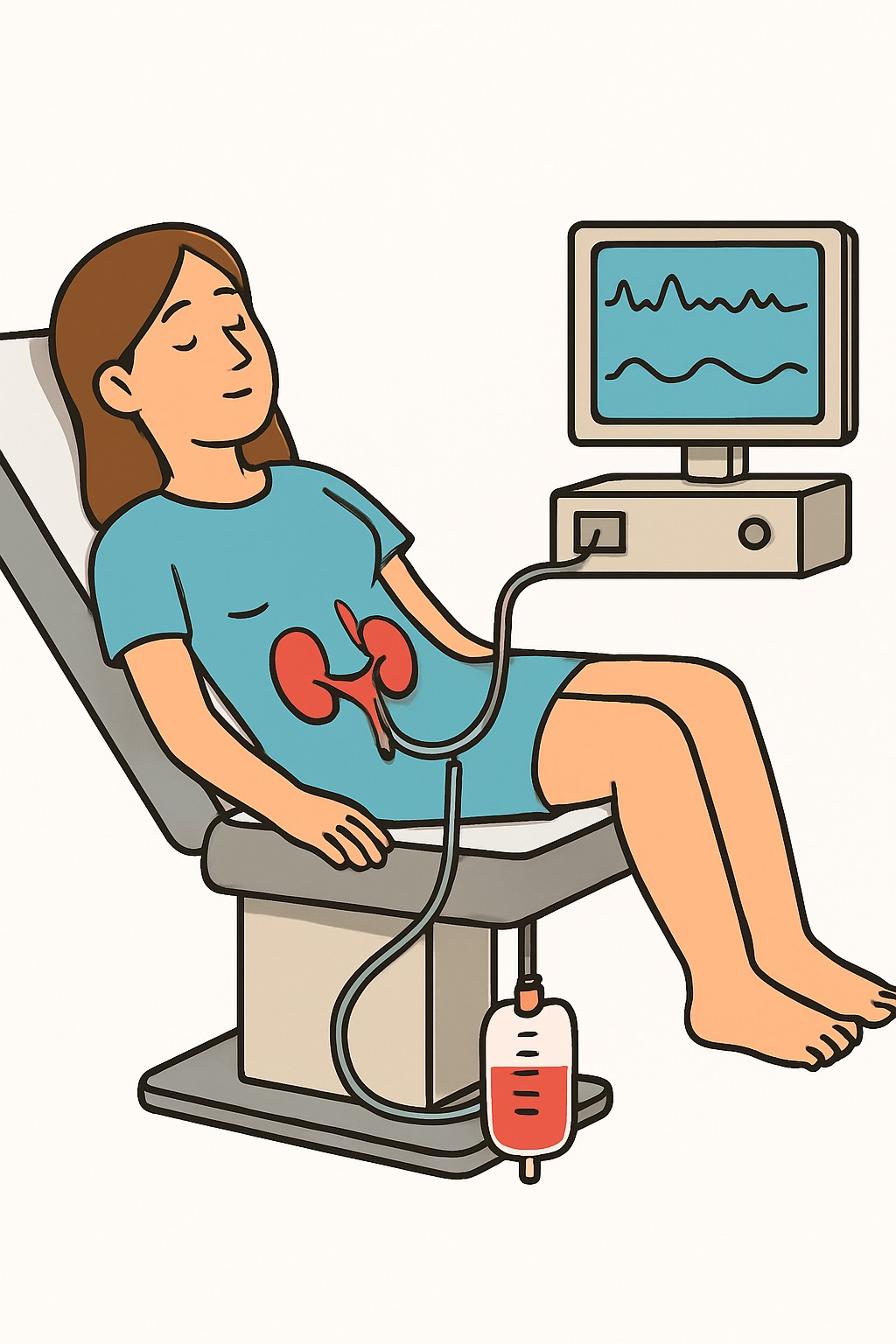
A urodynamic study with complex cystometry is a set of tests that measure how the bladder and urethra store and release urine.
Overview
A urodynamic study with complex cystometry is a set of tests that measure how the bladder and urethra store and release urine. Thin catheters are used to fill the bladder with sterile fluid and to record pressure changes while you feel fullness, cough, or try to urinate. These studies help find the cause of urine leakage, trouble starting or stopping, frequent urges, weak stream, or urinary retention. The results guide treatment choices for bladder problems, including those related to nerve conditions or after pelvic surgery.
Also known as: Urodynamic testing, Complex cystometry, Cystometrogram, Videourodynamics
Preparation & Next Steps
Everything you need to know before and after your procedure
Before Care
- Bring a list of your current medicines and supplements, including bladder or nerve medicines
- Keep a 2–3 day bladder diary if requested, noting drinks, bathroom trips, and any leaks
- Arrive with a comfortably full bladder if the clinic asked for a urine flow test first
- Follow any clinic instructions about holding or timing medicines that affect the bladder
- Tell the staff about allergies to latex, iodine, or local anesthetics
- Let the clinic know ahead of time if you have symptoms of a urinary tract infection
- Inform the team if you are pregnant, have a pacemaker or stimulator, or have spinal cord injury
- Plan enough time for check-in and the test, which may take 45–90 minutes
- Wear comfortable clothing that is easy to change and bring needed mobility aids
- Confirm how and when you will receive results and any follow-up appointment
After Care
- You can usually return to normal activities the same day
- Drink water over the next several hours unless you were told otherwise
- Expect mild burning with urination or a small amount of blood in the urine for up to 24–48 hours
- If an antibiotic was prescribed by the clinic, take it as directed
- Use the restroom when you feel the urge and avoid straining
- Avoid bladder irritants like caffeine and alcohol for a day if they worsen burning
- Monitor for signs of infection such as fever, worsening burning, strong-smelling or cloudy urine
- Contact the clinic if you cannot urinate, have heavy bleeding, severe pain, or fever
- Review how results will be shared and schedule any recommended follow-up
- Keep your bladder diary updated if you were asked to track symptoms after testing
Clinical Information
Important medical details about this procedure
Indications
- Stress, urge, or mixed urinary incontinence
- Overactive bladder symptoms such as urgency and frequency
- Difficulty starting urination or weak stream
- Incomplete emptying or urinary retention
- Recurrent urinary tract symptoms without a clear cause
- Evaluation of neurogenic bladder in conditions like spinal cord injury or multiple sclerosis
- Pre-surgical assessment for incontinence or pelvic organ prolapse
Alternatives
- History and physical exam with bladder symptom questionnaire
- Bladder diary to track fluid intake, voiding times, and leakage
- Urinalysis and urine culture
- Post-void residual measurement by ultrasound
- Noninvasive uroflowmetry alone
- Pelvic floor muscle therapy and bladder training
- Trial of bladder medicines under clinician guidance
- Cystoscopy or pelvic imaging when indicated
Risks
- Temporary burning with urination or mild discomfort
- Small amount of blood in urine
- Urinary tract infection
- Temporary difficulty urinating after the test
- Autonomic dysreflexia in people with high spinal cord injury
- Low radiation exposure if X-ray imaging is used during the test
Contraindications
- Active urinary tract infection
- Recent injury or surgery to the urethra or bladder that has not healed
- Pregnancy if fluoroscopy imaging is planned
- Severe latex or antiseptic allergy without suitable alternatives available
Recovery Timeline
What to expect during your recovery
Most people resume normal activity right after testing. Mild burning or spotting may last up to 1–2 days.
Typical Range
0–2 days
Return to Work
0–1 days
Recovery Milestones
Resume routine daily activities
Increase fluids as tolerated to help ease burning
Expect mild urinary discomfort to improve
Receive results or schedule a visit to review findings
Frequently Asked Questions
Common questions and expert answers about this procedure
What happens during complex cystometry?
What happens during complex cystometry?
Thin catheters are placed to fill the bladder with sterile fluid while sensors measure pressure in the bladder and abdomen. You may be asked to cough, bear down, or urinate so the team can record how the bladder stores and releases urine.
How long does the test take?
How long does the test take?
Most urodynamic studies take about 45 to 90 minutes, depending on which measurements are done.
Will it be painful?
Will it be painful?
You may feel brief discomfort when the catheters are placed and mild burning when you urinate afterward. These symptoms usually fade within a day or two.
Is radiation used?
Is radiation used?
Sometimes. If video urodynamics is done, X-ray images are taken during filling and voiding. Standard cystometry does not use radiation.
Do I need to stop my bladder medicines?
Do I need to stop my bladder medicines?
Some centers ask patients to hold certain medicines before testing to see natural bladder function. Follow the instructions provided by your clinic.
Will I have a catheter?
Will I have a catheter?
Yes. A small flexible catheter goes into the bladder, and a second sensor may go into the rectum or vagina to measure abdominal pressure.
What are the risks of infection?
What are the risks of infection?
Urinary tract infection can occur after catheter-based tests, but it is uncommon. Drinking fluids and following clinic instructions may help reduce risk.
How are the results used?
How are the results used?
Results help identify problems like overactivity, poor compliance, blockage, or weak bladder muscle, and they guide choices such as pelvic floor therapy, medicines, or procedures.
References
Medical literature and sources