%20--%3e%3csvg%20version='1.0'%20id='Layer_1'%20xmlns='http://www.w3.org/2000/svg'%20xmlns:xlink='http://www.w3.org/1999/xlink'%20x='0px'%20y='0px'%20viewBox='0%200%20755.52%20814.35'%20style='enable-background:new%200%200%20755.52%20814.35;'%20xml:space='preserve'%3e%3cstyle%20type='text/css'%3e%20.st0{fill:%231ae5ce;stroke:%231ae5ce;stroke-width:7;stroke-miterlimit:10;}%20.st1{fill:%23FFFFFF;stroke:%231ae5ce;stroke-width:7;stroke-miterlimit:10;}%20.st2{fill:%231ae5ce;stroke:%23FFFFFF;stroke-width:7;stroke-miterlimit:10;}%20.st3{fill:%23FFFFFF;stroke:%23FFFFFF;stroke-width:6;stroke-miterlimit:10;}%20%3c/style%3e%3cg%20id='Dark_Logo_00000159431215648494653180000015900878925932721032_'%3e%3cpath%20id='shield_00000152259091539869183100000001926543869452564382_'%20class='st0'%20d='M711.13,173.42%20c-3.37-49.07-38.92-44.9-75.96-52.18c-67.4-13.25-130.47-34.47-192.36-63.92c-22.48-10.7-41.88-25.74-65.05-26.28%20c-23.17,0.54-42.58,15.59-65.05,26.28c-61.89,29.45-124.95,50.68-192.36,63.92c-37.04,7.28-72.59,3.11-75.96,52.18%20c-1.55,22.6,0.34,46.4,1.05,68.92c5.99,190.78,52.91,345.39,206.27,466.46c29.71,23.46,74.51,55.8,108.84,70.75%20c5.99,2.61,11.7,3.73,17.21,3.75c5.51-0.02,11.22-1.14,17.21-3.75c34.33-14.95,79.12-47.3,108.84-70.75%20c153.37-121.07,200.28-275.68,206.27-466.46C710.79,219.82,712.68,196.02,711.13,173.42z'/%3e%3cpath%20id='magnifyingglass_00000073685934697636024790000000342567780940956808_'%20class='st1'%20d='M648.78,624.21l-96.64-104.65%20c34.89-40.63,55.98-93.46,55.98-151.21c0-128.27-103.98-232.24-232.24-232.24S143.63,240.08,143.63,368.35%20s103.98,232.24,232.24,232.24c48.87,0,94.21-15.11,131.62-40.89l97.18,105.24c11.25,12.18,30.24,12.93,42.42,1.69l0,0%20C659.27,655.38,660.03,636.39,648.78,624.21z'/%3e%3ccircle%20id='ellipse_00000129904010550392394720000017056154833629780114_'%20class='st2'%20cx='375.87'%20cy='368.35'%20r='181.21'/%3e%3cpath%20id='dollarsign_00000057140127156649725250000003772530148495155891_'%20class='st3'%20d='M362.91,492.03v-23.91%20c0-2.01-1.58-3.69-3.59-3.77c-18.49-0.78-37.12-5.4-49.4-11.83c-1.75-0.92-2.53-3.01-1.76-4.84l5.87-13.89%20c0.86-2.02,3.23-2.88,5.2-1.89c12.94,6.52,30.45,11.44,49.18,11.44c26.02,0,43.6-12.73,43.6-30.43c0-17.08-14.29-27.63-41.4-36.95%20c-37.37-12.42-60.46-26.7-60.46-53.72c0-24.97,20.29-44.11,52.22-49.51c1.8-0.31,3.11-1.89,3.11-3.72v-24.35%20c0-2.09,1.69-3.78,3.78-3.78h15.16c2.09,0,3.78,1.69,3.78,3.78v22.71c0,2.01,1.58,3.67,3.58,3.77c17.85,0.92,30.88,4.75,40.61,9.1%20c1.92,0.86,2.79,3.09,1.94,5.01l-6.08,13.6c-0.85,1.91-3.09,2.77-4.99,1.91c-8.37-3.8-22.38-8.95-42.75-8.95%20c-28.21,0-38.84,14.28-38.84,26.7c0,16.15,13.56,24.22,45.44,35.4c37.74,13.04,56.79,29.19,56.79,56.82%20c0,23.85-19.05,46.23-54.78,52.3c-1.8,0.31-3.11,1.89-3.11,3.72v25.28c0,2.09-1.69,3.78-3.78,3.78h-15.53%20C364.6,495.81,362.91,494.12,362.91,492.03z'/%3e%3c/g%3e%3c/svg%3e)

The rising cost of healthcare, coupled with confusing medical bills, has created a crisis of financial anxiety for millions of Americans. For too long, the price of a procedure has been hidden until after the service is rendered, leading to devastating surprise medical bills and suffocating amounts of medical debt.
Price transparency is no longer just an obscure policy goal; it is the fundamental right of every patient to know the real cost of their care before they receive it. This knowledge is the single most powerful tool for consumers seeking to make informed decisions and protect themselves from financial harm in the U.S. healthcare system.
The Core Components of Healthcare Price Transparency
Price transparency requires publishing the true, comprehensive cost of medical services. Federally mandated rules require hospitals and health insurers to publish two primary types of data:
- Standard Charges: Hospitals must disclose their discounted cash price and the payer-specific in-network negotiated rate for all items and services.
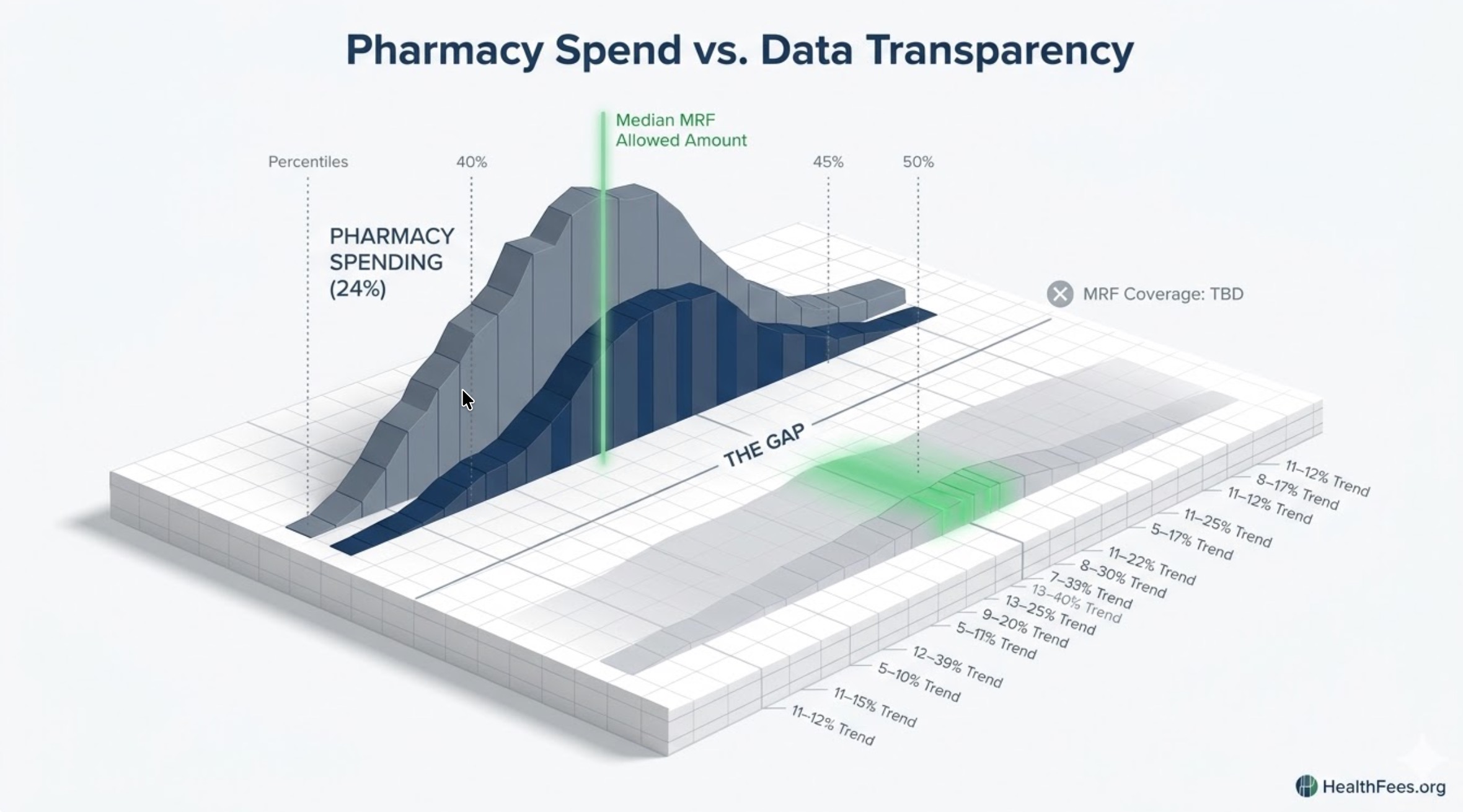
- Machine-Readable Files (MRFs): These large datasets contain the underlying pricing information, including rates negotiated between health plans and providers, making the data accessible for analysis and public scrutiny.
These requirements were designed to end an opaque system where only the insurance company and the hospital knew the true price. And there could be any number of insurance companies paying different prices. While the hospital price transparency rule has been enforced for five years, lack of compliance continues to plague the system, limiting consumer options and inflating the costs of delivering healthcare.
Key Findings
- A significant portion of U.S. hospitals are still not fully complying with the federal rule, making it nearly impossible for consumers to find essential pricing data.
- The absence of clear pricing prevents meaningful competition in the healthcare market, leading to inflated charges that ultimately raise the cost of insurance and care for everyone.
- Without access to in-network negotiated rates, consumers cannot effectively compare costs for shoppable services, exposing them to unnecessary financial risk.
Context & Verification: Why Transparency Matters
At its heart, price transparency empowers patients. When you know the price of a car or a television, you can shop around for the best value; you deserve the same right when it comes to your healthcare and shoppable services. Informed healthcare decisions based on comparable pricing allow a consumer to choose a high-value provider, reducing the chance of a costly mistake. For example, knowing the true in-network negotiated rate for an MRI can save a patient hundreds, or even thousands, of dollars. For insurance companies the costs of overpaying for services are in the millions.
Additionally, transparent pricing is a crucial safeguard against financial harm. The promise of price transparency was meant to virtually eliminate the common scenario of receiving an unexpected medical bill months after a procedure. When hospitals and insurers clearly document and publish their pricing agreements, it discourages the practice of setting exorbitant initial prices and promotes fair reimbursement practices across the board.
Patient Shoppable Services
When hospitals unable to publish pricing information or provide incomplete or malformed data in their MRFs, they are forcing you to take a financial gamble with your health. The lack of adherence to transparency rules directly impacts your budget and has put several families into bankruptcy.
- What This Means for You:
- You may be overpaying for routine services that are available for a lower cost just a few miles away.
- You have to spend hours trying to decode your own bill after the fact, rather than planning ahead.
- You face a higher risk of accruing massive medical debt due to charges that were intentionally obscured.
This is why accountability matters. Federal rules demand that hospitals reveal negotiated rates for services, but lack of enforcement has allowed non-compliance to persist. There have been 27 fines handed out by CMS and less than one-third of 6000+ hospitals are compliant with price transparency guidelines.
What’s Next for Hospital Price Transparency?
The path forward requires continuous scrutiny and a commitment to holding hospital systems accountable. Patients deserve accountability and full transparency from their healthcare providers.
We will not back down from demanding that hospitals fully adhere to the laws meant to protect patients. As the data becomes more structured and accessible, consumers will have an unprecedented ability to compare prices and demand fair value for their care.